



Showing 1 - 9 of 9

Time to rethink the casino debate
Oped, Andrew W Scott, Published on 13/06/2025
» I've been visiting and studying the world's casinos since 1986, particularly those in Asia. And boy, have they changed a lot in the past 40 years.

Uniting against cyber-scam gangs
Oped, Fuad Adriansyah & David Scott, Published on 11/12/2024
» In recent years, a novel form of criminality has rapidly expanded across Southeast Asia, leaving in its wake a trail of human exploitation, financial harm, and, in many parts of the region, a weakening of the rule of law. Cyber-scam centres, operated by sophisticated transnational organised criminal groups, have emerged as a serious threat to both national and human security across Southeast Asia.
Decarbonisation needs joint effort
Oped, Francesco La Camera & Bruce Douglas, Published on 21/05/2024
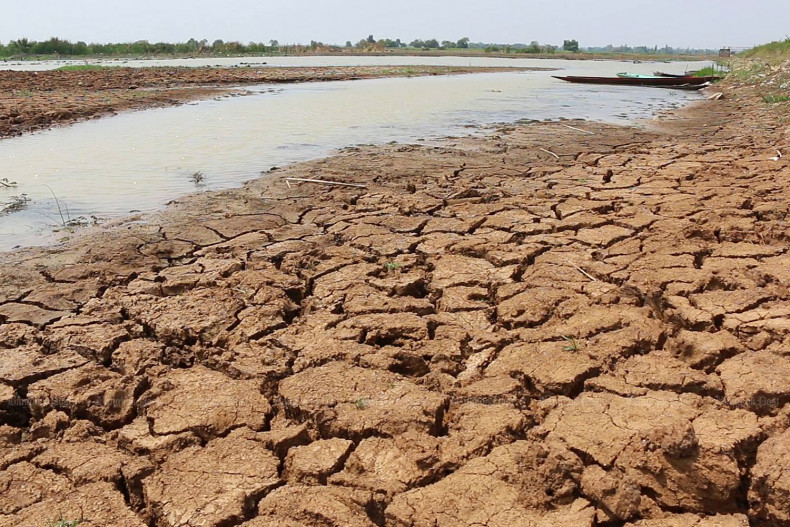
» As countries around the world experienced record temperatures last year, United Nations Secretary-General António Guterres declared, "We must turn a year of burning heat into a year of burning ambition." But to move away from fossil fuels and unlock the green transition's economic benefits, such as job creation and universal access to clean energy, industry leaders and policymakers must work together to translate the commitments made at the UN Climate Change Conference in Dubai (COP28) into actual renewable gigawatts.

The rise of consumer cryptocurrency
News, Steve Kaczynski and Scott Duke Kominers, Published on 26/02/2024
» Since its inception with the launch of Bitcoin in 2008, blockchain technology has gone through numerous cycles of public attention. Over time, growing interest and investment in the best-known cryptocurrencies has led to greater acceptance, as highlighted by the US Securities and Exchange Commission's approval of a spot Bitcoin ETF (exchange-traded fund) in January. While blockchains and their associated "crypto" assets have yet to be adopted by a truly broad base of consumers, that is starting to change, owing to a shift in how these technologies are being used.
How to enforce climate deals with trade measures
Oped, Scott Barrett, Noah Kaufman & Joseph E Stiglitz, Published on 06/02/2024
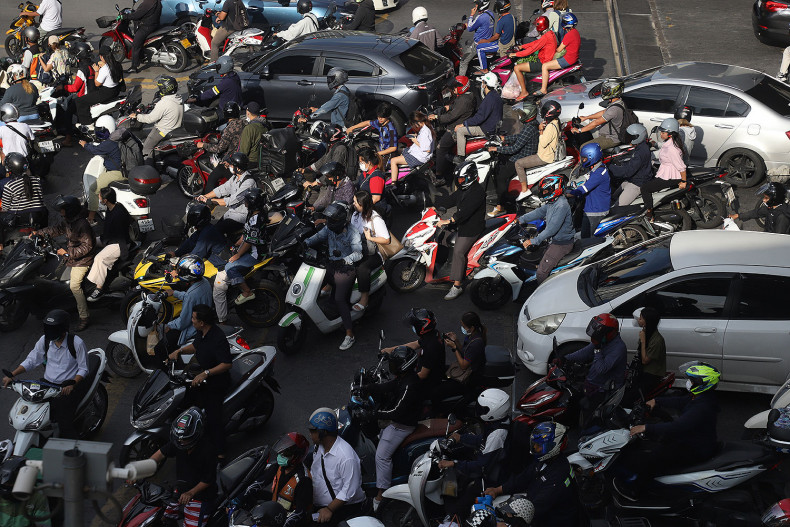
» Casual observers of the recent United Nations Climate Change Conference in Dubai (COP28) can be forgiven for attributing high stakes to the event.

The challenge of digital governance
Oped, Peerasit Kamnuansilpa and Bruce Gilley, Published on 12/11/2022
» Thailand was an early adopter of the internet for government services, creating an e-government system as early as 1997. But political turmoil in 2006 caused the kingdom to fall behind. When the United Nations ranked countries by e-government in 2012, Thailand was a dismal 92nd out of 193.

Innovation in an era of debt brake
News, Peerasit Kamnuansilpa and Bruce Gilley, Published on 07/03/2022
» In the 21 years after the Asian financial crisis of 1997, Thailand's government ran a budget deficit 18 times. However, due to ineffective management, excessive fiscal spending did not produce the intended effect of economic acceleration.

English proficiency in Thailand still a ways to go
News, Alexander Franco & Scott S. Roach, Published on 09/07/2018
» Past assessments of English proficiency within Thailand have been disappointing. English First (EF), a private company that collects data based on results from English proficiency tests, found that Thailand ranked 53 out of 80 countries globally and 15 out of 20 Asian countries examined. These scores actually reflect an improvement over prior years with Thailand now outscoring some of its neighbours, namely Cambodia and Laos. Myanmar's dedication to English proficiency is so low that it does not even have an EF presence. However, Thailand is still outranked by regional countries like China, Malaysia, Singapore and Vietnam.
Canada takes lead on curbing methane emissions
News, Scott Vaughan & Durwood Zaelke, Published on 01/05/2018
» In the fight against climate change, carbon dioxide attracts the bulk of regulators' attention. But while long-lived CO2 is a key contributor to rising temperatures, it is not the only culprit. Other short-lived super pollutants are also warming the planet, and none is in greater need of regulation than methane.