



Showing 1 - 10 of 11
Lesson from India to avoid the middle-income trap
Oped, Arvind Panagariya, Published on 18/03/2026
» Among Indian Prime Minister Narendra Modi's most ambitious goals is to transform his country into a developed economy by Aug 15, 2047 -- the centenary of Indian independence. Given India's growth record over the past two decades, the speed and scale of its infrastructure development in recent years, and the Modi government's willingness to enact large-scale economic reforms, India is likely to become one of the few developing countries to avoid the middle-income trap.
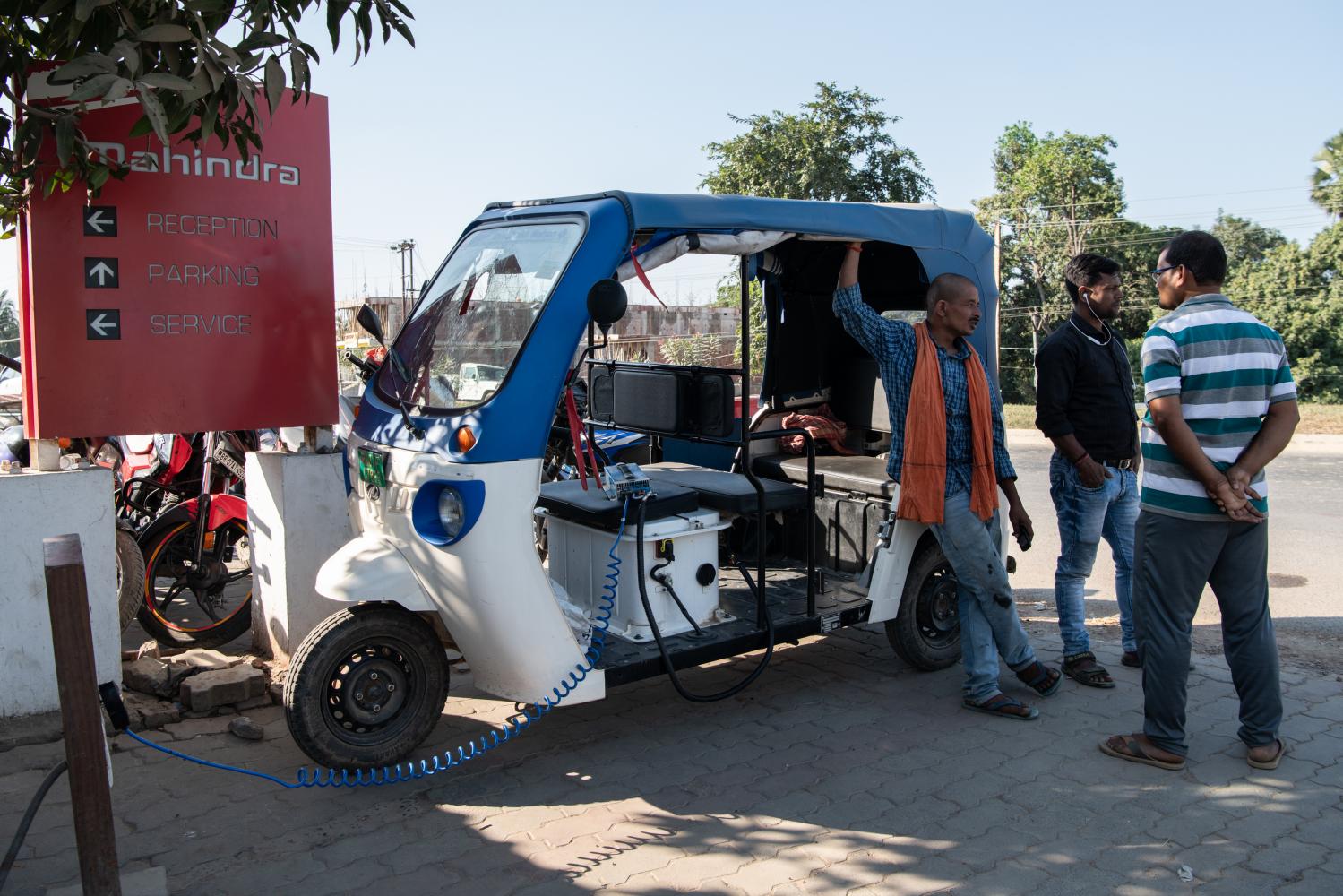
India's power sector needs reform
Oped, Arvind Subramanian, Navneeraj Sharma, Abhishek Anand & Praveen Ravi, Published on 06/08/2025
» As the use of energy-guzzling AI grows, the countries that embrace renewables will gain an obvious competitive advantage. And on this front, China has established a substantial lead. According to the Financial Times, the country is on track to source 50% of its power from renewables (mainly solar and wind, but also nuclear, hydro, and battery-storage systems) by 2028.

Trump's return presents an opportunity for India
Oped, Arvind Subramanian, Published on 10/12/2024
» It might be tempting to assume that Donald Trump's return to the White House augurs stability in US-India relations. After all, there is strong bipartisan support in Washington for deeper ties, particularly as a counterbalance to China's growing economic and geopolitical influence.

China's globalisation paradox
Oped, Arvind Subramanian, Published on 30/08/2024
» China's trading partners are once again fretting about the country's supposedly unfair economic practices. This time, the focus is on China's alleged attempt to export its excess capacity, especially in emerging sectors such as electric vehicles (EVs), and to undermine domestic industries in the United States and Europe.

What do Indian women want from poll?
Oped, Sanjukta Sharma, Published on 25/05/2024
» Since April 19, the day general elections began in India, voters have queued up outside polling booths, braving a muggy, scorching heatwave. The mood appears mostly upbeat. Voters talk to TV news reporters. They articulate wishes for change or belief in the incumbent leader.

'New Welfarism' becoming India's soothing balm
Oped, Arvind Subramanian & Josh Felman, Published on 06/05/2023
» During the height of the Covid-19 pandemic, many Indian economists and commentators believed the economy would skyrocket as soon as life returned to normal. But, despite the country's robust recovery in the two years since the pandemic's peak, the predicted boom has not materialised, nor does it seem imminent.
Global accord not necessary in climate battle
Oped, Arvind Subramanian, Published on 12/11/2022
» This week's United Nations Climate Change Conference (COP27) in Egypt highlights the growing consensus that multilateral cooperation is necessary to avert environmental catastrophe. But with geopolitical tensions spiking and the US-China rivalry heating up, such efforts seem doomed to fail, much like previous efforts to promote global coordination on vaccines, trade, technological innovation, and macroeconomic policy.

The West has got its Russia sanctions all wrong
Oped, Arvind Subramanian & Josh Felman, Published on 14/05/2022
» The West responded to Russia's invasion of Ukraine with sanctions of unprecedented severity and scope. By the standard of proportionality, the reaction of the United States, the European Union, and their allies seem appropriate. Serious international aggression demands a serious response. But by the standards of consistency, efficiency, and fairness, it is far from clear that the West has chosen the correct strategy. Governments may need to rethink the design of the sanctions regime.

India's Covid-19 meltdown exposes new front in digital divide
News, Saurabh Sharma & Roli Srivastava, Published on 24/04/2021
» As India's daily coronavirus cases set global records, people desperately searching for hospital beds and oxygen cylinders are finding help on social media. But for others like Ruby Yadav, who has never heard of Twitter, time and hope is running out.

India's creating its own West Bank in Kashmir
News, Mihir Sharma, Bloomberg Opinion, Published on 07/08/2019
» Prime Minister Narendra Modi's government in India often claims that its actions are unprecedented -- that no government in India's history has been bold enough to do what it does. Most of the time this is, to put it mildly, an exaggeration. But on Monday, they certainly went far beyond what any previous Indian government has done about the troubled state of Jammu and Kashmir. And that's a big, big problem.