




Showing 1 - 10 of 1,047
Trump's pressure campaign fails to break Iran
Oped, Gwynne Dyer, Published on 24/04/2026
» TACO! Of course. US President Donald Trump always chickens out, but it's a feature, not a bug. If his threats aren't working, he will generally drop them and try something else.

Bangkok gets better
Oped, Postbag, Published on 24/04/2026
» Re: "What's up, governor?", (Editorial, April 23). The editorial presents a cautious view of Chadchart Sittipunt's tenure, but risks overlooking the scale of everyday improvements across the city.

The global AI threat has arrived
Oped, S Alex Yang and Angela Huyue Zhang, Published on 24/04/2026
» Anthropic's new artificial intelligence (AI) model, Claude Mythos Preview, has alarmed business leaders and policymakers around the world because of its extraordinary ability to find and exploit vulnerabilities in major operating systems and web browsers. Even the Trump administration, which has feuded with Anthropic in recent months over certain military uses of its models, now seems keen to work with the company to protect critical government infrastructure from cyberattacks.
How can we future-proof the global economy?
Oped, Mohamed A El-Erian, Published on 23/04/2026
» An uncomfortable reality is becoming increasingly difficult to ignore. The global economy is in a period of "more frequent and violent shocks", as Nobel laureate Michael Spence puts it. Instead of facing isolated and temporary disruptions, we are confronting a structural shift towards unsettling volatility, deepening fragmentation, and a wider dispersion of outcomes for countries, companies, and households. The old world is gone, and virtually everyone risks losing out in the new one. The question is by how much and what to do about it.
Rupture, reform and how to rebuild
Oped, Robert F Godec, Published on 23/04/2026
» The world is teetering on the edge of a cliff. Russia, China, and the United States are using their military and economic power in the ruthless pursuit of power and domination. In doing so, they have ruptured an international system that for 80 years was characterised by rules, institutions, and a measure of cooperation.

Forget births, cut Thai deaths first
Oped, Sergei Scherbov & Vipan Prachuabmoh, Published on 23/04/2026
» Thailand's demographic debate is too often framed as though the country had only one option: raise fertility or accept a shrinking workforce. That view is understandable, but for the next two decades, it is mostly the misaligned policy horizon. If the question is how Thailand can strengthen its workforce before mid-century, the fastest answer is not higher fertility, but rather lower mortality.

Water crisis still unsolved
Oped, Editorial, Published on 22/04/2026
» Prime Minister Anutin Charnvirakul's trip to Chiang Mai on Monday only confirms one certainty: his government -- whether Anutin 1.0 or the current 2.0 version -- does not have a coherent policy for water management.
The war and its likely consequences
Oped, Thitinan Pongsudhirak, Published on 17/04/2026
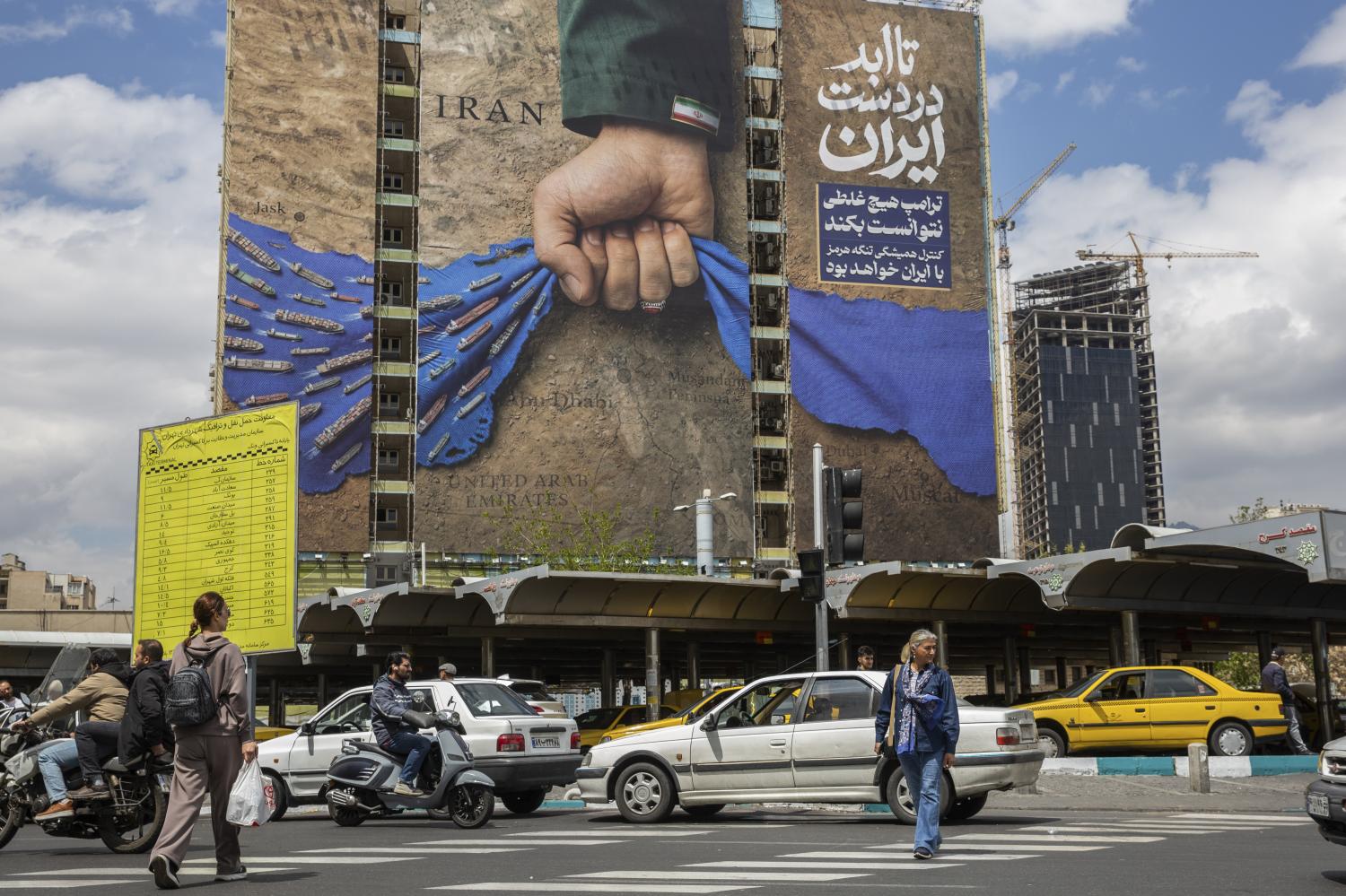
» As the joint attack between the United States and Israel against Iran that resulted in a wider regional conflict in the Middle East approaches its two-month mark, the directions of the war remain precarious while some of the longer-lasting consequences appear evident. Unsurprisingly, the war has been detrimental and damaging for all states and societies concerned, not just within the affected region but the wider world. Already we can start counting some of the long-term costs.
Climate fixation fails world's poor
Oped, Bjorn Lomborg, Published on 17/04/2026
» This week in Washington, more than 10,000 delegates, finance ministers, and central bankers are gathering for the World Bank and IMF Spring Meetings. Their stated goal: accelerate global development, drive economic growth, and lift billions out of poverty.

When will the IMF ever learn?
Oped, Timothy Kaldas, Published on 16/04/2026
» This year's International Monetary Fund Spring Meetings come at a time of heightened economic uncertainty and intense scrutiny of the institution's capabilities and approach. Critics on the left argue that the IMF imposes regressive austerity measures on borrowers, exacerbating poverty, hampering economic growth, and undermining their ability to achieve debt sustainability. On the right, US President Donald Trump's administration has accused the IMF of "mission creep," claiming that it has strayed from its core mandate of maintaining macroeconomic stability.