




Showing 1 - 10 of 120
Japanese PM Takaichi comes out on top
Oped, Taniguchi Tomohiko, Published on 11/02/2026
» Japanese Prime Minister Sanae Takaichi has just scored an unprecedented victory in the country's general election. The ruling Liberal Democratic Party (LDP), which she leads, won 316 seats in the 465-member House of Representatives (the Diet's lower house), up sharply from 198. The combined strength of two parties that had merged hastily -- despite their fundamentally opposing platforms -- in an effort to bring Ms Takaichi down fell from 167 seats to just 49. The LDP, which celebrated its 70th anniversary last year, has never looked more robust.

How world order looks after 2025
Oped, Yuen Yuen Ang, Published on 05/01/2026
» For mathematicians, 2025 may stand out as a "perfect square": 45 multiplied by 45, a rare symmetry. But its significance goes far beyond numerical elegance -- it marks the year the postwar global order expired and a new one began.
America will pay for pushing India away
Oped, Brahma Chellaney, Published on 11/12/2025
» At a time when US policy towards India has become distinctly punitive, Indian Prime Minister Narendra Modi's warm reception for Russian President Vladimir Putin in New Delhi last week could not have been more pointed. Mr Modi's message was clear: India is a sovereign power that will not be dragooned into choosing sides in a widening rift between "the West and the rest".

Early education transforms lives
Oped, Justin van Fleet & Pia Rebello Britto, Published on 09/12/2025
» The leaders' declaration adopted at the end of the recent G20 summit in South Africa reaffirmed the group's commitment to tackling some of the world's most pressing challenges, from inequality and long-running conflicts to AI and climate change. It also marked a historic milestone: for the first time, the G20 identified education as one of its top global priorities.
How a bad Trump edit became a global controversy
Oped, Gwynne Dyer, Published on 14/11/2025
» I have spent thousands of hours sitting alongside video editors working on productions quite similar to the Panorama documentary that has landed the British Broadcasting Corporation with the threat of a billion-dollar libel suit by Donald Trump. I think I know what happened.
Why climate finance is no longer enough
Oped, Laura Carvalho, Published on 11/11/2025
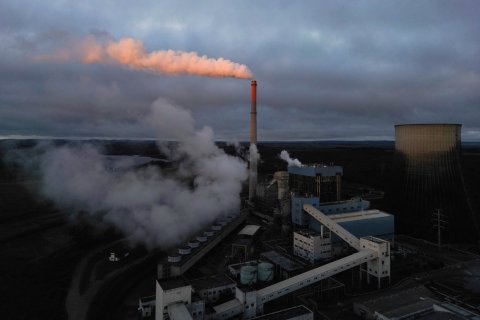
» With the UN Climate Conference (COP30) in Belém, Brazil, kicking off, it is clear that the world's widely shared commitment to a just energy transition is falling by the wayside. In the year since governments signed on to the agreement at COP29 to scale up climate finance -- with a goal of mobilising $1.3 trillion (42 trillion baht) annually by 2035 -- wealthy countries have been retreating from their pledges. Worse, these signs of bad faith are coming just as the costs of climate adaptation and decarbonisation in developing countries are mounting.
Trump returns to Asean with a bang
Oped, Kavi Chongkittavorn, Published on 28/10/2025
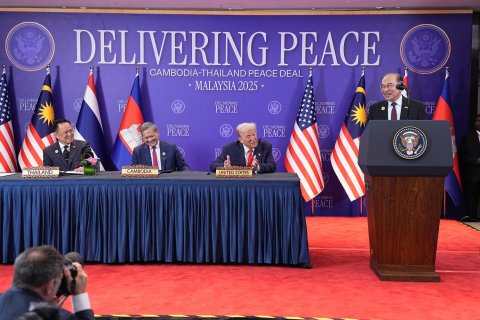
» The Asean chair, Malaysian Prime Minister Anwar Ibrahim, said it all. Acknowledging US President Donald Trump's presence during the signing ceremony on Thailand-Cambodia relations on Sunday, he stated: "We, of course, admire your tenacity and courage because the world needs leaders who promote peace strongly."
Brazil, Asean prospering together
Oped, Luiz Inácio Lula da Silva, Published on 24/10/2025
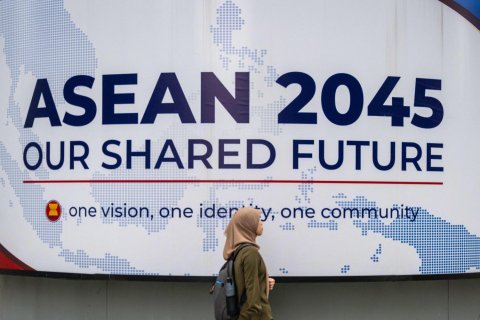
» The partnership between Brazil and the Association of Southeast Asian Nations (Asean) exemplifies how a future of peace, stability and sustainable growth can be built. With complementary and dynamic economies and a shared vision of a fair and inclusive international order, we demonstrate how dialogue and cooperation within the Global South can bridge distances and generate mutual benefits.
How G20 could help end hunger
Oped, Raj Patel & Refiloe Joala, Published on 21/10/2025
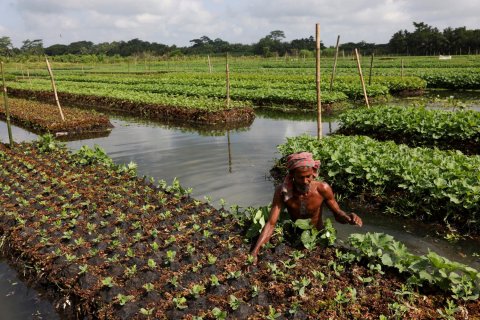
» Upon assuming the G20 presidency in December, South Africa chose "solidarity, equality, and sustainability" as its theme. Far from being an empty slogan, this vision reflects the principles on which any credible international response to today's hunger crisis must rest.
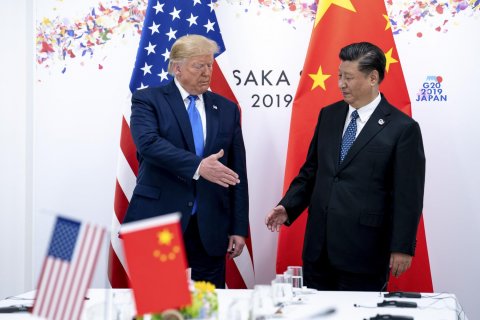
Southeast Asia amid the US-China rift
Oped, Thitinan Pongsudhirak, Published on 03/10/2025
» The rivalry between the United States and China has become the defining contest of the 21st century. Barely two decades ago, Washington and Beijing were partners in prosperity. America's support for China's entry into the World Trade Organization in 2001 epitomised the high-water mark of engagement, reflecting the belief that economic integration would lead to greater political cooperation. Today, that partnership has morphed into suspicion and confrontation. Relations between the United States and China have deteriorated so swiftly that many observers now describe them as locked in a "new Cold War". The more pressing question, however, is not whether this analogy holds, but whether confrontation can be managed short of outright conflict.