




Showing 1 - 10 of 13
Keeping Asia's growth engine on track
News, Thomas Noto Suoneto & Genevieve Donnellon-May, Published on 28/02/2026
» Asia stands at a decisive crossroads. The region remains the world's most powerful growth engine, with many Asean economies expanding above 5% and Asia-wide growth projected to exceed 4% in 2026 -- well above the global average of roughly 3.1%. Strong domestic demand, rising middle classes, and rapid technological adoption continue to propel the region forward, cementing its role as the central driver of global economic growth.
Asean's moment of truth is now
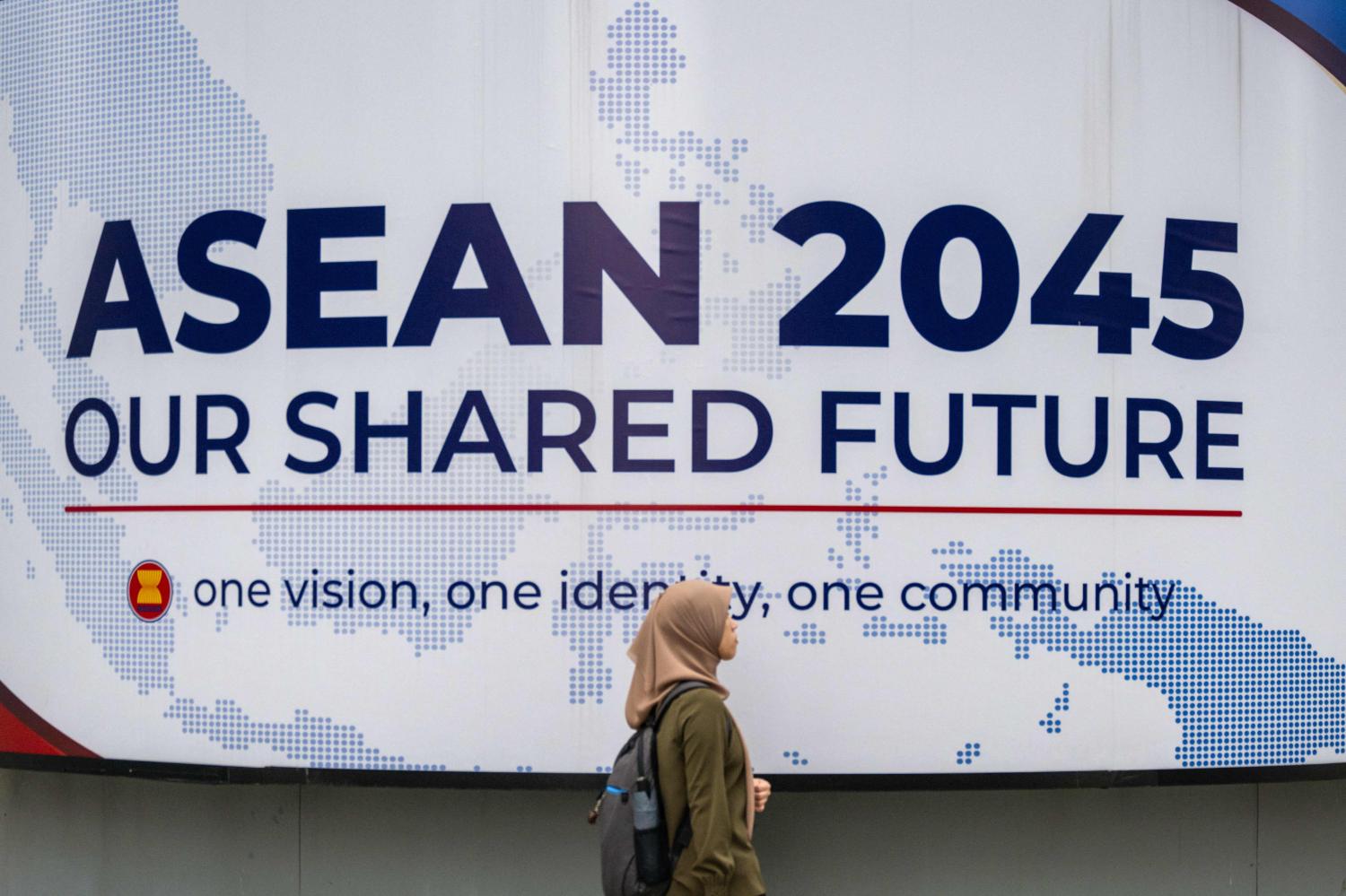
Oped, Mari Elka Pangestu & Tan Sri Rebecca Fatimah Sta Maria, Published on 05/11/2025
» For decades, integration into the global trading system has been vital to economic growth and development. Now, however, integration implies vulnerability, as powerful actors -- beginning with the US -- wield tariffs, export restrictions, and financial sanctions. For Southeast Asia, this turn of events represents both a warning and a call to action: countries must work together to shape their own destiny or others will decide their fate for them.
The next war comes to a city near you
Oped, Joe Mathews, Published on 03/07/2025
» I was to visit Ukraine this week, but didn't make the trip. Because the same war I would have seen there had already come to Los Angeles.

Timor-Leste's membership divides Asean
Oped, Kavi Chongkittavorn, Published on 13/05/2025
» Timor-Leste's long-awaited bid to join the Association of Southeast Asian Nations (Asean) is in jeopardy. It has encountered unexpected headwinds -- this time from the Philippines. The sudden diplomatic friction stems from Dili's refusal to extradite Arnolfo "Arnie" Teves Jr, a former Filipino congressman accused of terrorism and multiple murders, back to Manila.
Covid's lessons have now all been forgotten
Oped, Antara Haldar, Published on 03/01/2025
» In December 2019, as the world was looking ahead to a new year, a novel virus was quietly spreading in China. Soon, the Covid-19 pandemic would bring the world to a grinding halt, forcing billions of people into unprecedented lockdowns and shuttering economies worldwide. Five years on, we are still grappling with the effects of this "grey rhino": a high-probability risk that was nonetheless neglected or ignored.

New government is new wine in old bottle
Oped, Thitinan Pongsudhirak, Published on 13/09/2024
» On the face of it, the new government under Prime Minister Paetongtarn Shinawatra appears to be a generational shift and gender breakthrough. Ms Paetongtarn is the youngest prime minister ever at 38 and only the second female government leader after her aunt Yingluck Shinawatra in 2011-14. The Paetongtarn cabinet features a record eight women among 36 with more ministers in their 30s-50s and fewer above 60. Yet on closer scrutiny, the new and younger faces are largely family legacies and proxies, surrounded by old-style politicians, while the new government's policy directions sound dated not well-suited for the times ahead.
Israel-Hamas war can only be stopped by Biden
Oped, Gwynne Dyer, Published on 28/02/2024
» More than four months into the sixth Arab-Israeli War, with about 1,500 Israelis dead and 30,000 Palestinians dead, all the major local actors are stuck. Only the United States can stop the killing -- if it chooses to do so.

How we can break free from polio
Oped, Andrew Stein, Published on 25/10/2023
» Eradicating polio has taken far longer than anyone expected. But the last 35 years of efforts to immunise every child against polio represent a major win for global health: a 99% reduction in cases means that nearly 20 million people are walking today who otherwise would have been paralysed.

Funding an end to scourge of polio
Oped, Minda Dentler, Published on 17/05/2022
» Growing up in India, I did not have access to the polio vaccine, and the disease paralysed my legs when I was an infant. As a result, I have undergone many surgeries and cannot walk without leg braces and crutches. My story is not unique. When the Global Polio Eradication Initiative (GPEI) was established in 1988 (I was ten at the time), the disease paralysed an estimated 350,000 children worldwide each year.

War-hit Russian economy could fold
Oped, Chartchai Parasuk, Published on 10/03/2022
» It is a new kind of war -- economic war. Western allies, led by the United States, United Kingdom and European Union, are imposing trade and financial restrictions on Russia's economic activities. The aim is to freeze Russian assets abroad, paralyse financial transactions, obstruct cross-border trade flow, trigger high inflation and, most of all, provoke massive unemployment.