




Showing 1 - 10 of 3,830
Implications of conservative triumph
Oped, Thitinan Pongsudhirak, Published on 13/02/2026
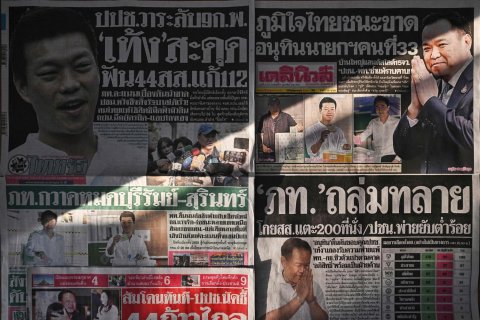
» The incumbent and conservative Bhumjaithai (BJT) Party has surprisingly swept Thailand's Feb 8 election with a commanding win. With the previously poll-leading and progressive People's Party (PP) coming in a distant second, Thailand appears headed for a conservative coalition government revolving around BJT and like-minded junior partners. Known for its conservative stance and being pro-status quo, it would not be surprising if the BJT-led coalition government, led by Prime Minister-elect Anutin Charnvirakul, were not challenged by the Constitutional Court, the Election Commission, and other supervisory agencies, which have derailed and dissolved reform-minded winning parties in the past.

Selective blame
Oped, Postbag, Published on 13/02/2026
» Re: "NACC timing questioned", (Editorial, Feb 11).Re: "NACC timing questioned", (Editorial, Feb 11).

How world's super-rich are rewriting the rules
Oped, Joseph E Stiglitz & Jayati Ghosh, Published on 13/02/2026
» Ongoing efforts to derail multilateral tax cooperation lie at the heart of a global programme to replace democratic governance with coercive rule by the extremely wealthy -- or what we call 21st-century Caesarism. Any strategy to counter this programme, therefore, must recognise that taxing extreme wealth is essential to saving democracy.
Surviving the collapse of the population
Oped, Gwynne Dyer, Published on 13/02/2026
» 'To them that hath shall [more] be given" is generally a reliable guide, especially in economic matters, but it doesn't work if the beneficiaries are too stupid to take advantage of the gift. The scarce and precious commodity in this case being people, who are in increasingly short supply.

Election Commission under new pressure
Oped, Editorial, Published on 12/02/2026
» As accusations of vote-counting irregularities mount, the Election Commission (EC) is encountering a crisis of confidence amid fading levels of public trust.

Next government won't be a grey one
Oped, Nattaya Chetchotiros, Published on 12/02/2026
» The formula for the new government will be an amalgamation of three colours -- navy blue representing the Bhumjaithai Party (BJT), red symbolising Pheu Thai (PT), and light blue, the colour code of the Democrat Party.
Emerging markets stand strong
Oped, Kristalina Georgieva and Mohammed Al-Jadaan, Published on 12/02/2026
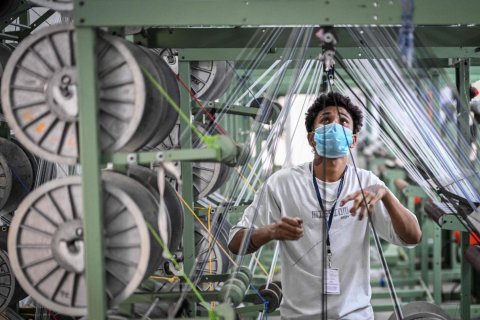
» It used to be that when advanced economies sneezed, emerging markets caught a cold. That is no longer true. Following recent global shocks, such as the post-pandemic inflation surge and a new wave of tariffs, emerging markets have held up well. Inflation has continued to slow, currencies have generally retained their value, and debt issuance costs have remained at manageable levels. There has been no sign of the kind of financial turbulence that came with past economic shocks.

Ground game
Oped, Postbag, Published on 12/02/2026
» Re: "BJT win bodes well for conservatives", (BP, Feb 11). Given the tallies of the nationwide party list vote, I don't understand the justification for the following assertions: "BJT's landslide victory reflects a surge of nationalist sentiment" (5.9M votes); the PP suffered from "lingering voter scepticism" and "eroded public confidence" (9.8M votes).

NACC timing questioned
Oped, Editorial, Published on 11/02/2026
» As winning political parties begin forming alliances and the public waits for a new government to address bread-and-butter issues, the National Anti-Corruption Commission's (NACC) decision to move against former MPs from the People's Party is, to say the least, poorly timed.
Reinvent Thailand to revive growth
Oped, Boonwara Sumano, Published on 11/02/2026
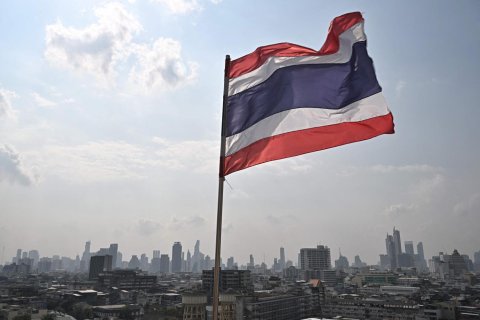
» In the 1990s, Thailand ranked second in Asean for state performance, behind only Singapore. Today, we trail several neighbours. This decline has unfolded gradually over three decades -- through repeated economic crises, institutional stagnation, and reforms that never quite went far enough. What is different today is that the cost of inaction has become far more dangerous.