




Showing 1 - 10 of 2,390
Nato 1.0 is dead. Long live Nato 2.0
News, Gwynne Dyer, Published on 17/02/2026
» Every year about this time, the North Atlantic Treaty Organisation (Nato), the world's most powerful alliance for the past 77 years, holds a conference in Munich to examine its state of health.

AI 'partners' reshaping hospitals
News, Watcharin Ariyaprakai, Published on 17/02/2026
» Artificial intelligence (AI) is no longer a distant innovation confined to technology firms. It is quietly entering hospitals, medical schools and administrative offices. What appears today as a productivity tool may in fact represent a structural shift in how healthcare operates.

BJT's chance to rebuild
News, Editorial, Published on 17/02/2026
» With 193 seats, the Bhumjaithai Party (BJT) has secured far more than a clear electoral victory. For the first time, a party that came only third in the 2023 national election now holds enough leverage to call the shots and shape the national political landscape in its own image.
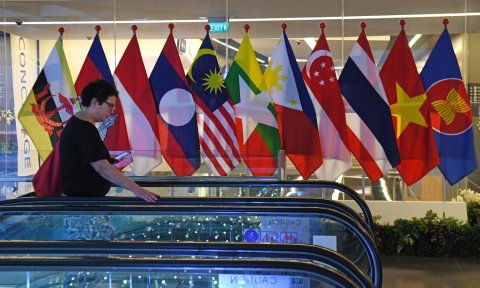
Asean's role in a new world order
Oped, Chartsiri Sophonpanich, Published on 16/02/2026
» Profound shifts are reshaping the global economy as political uncertainty, geopolitical rivalry and changing trade patterns disrupt the old world order, while a new one has yet to fully emerge.

Corruption keeps getting worse
Editorial, Published on 15/02/2026
» Everyone knows corruption in Thailand is bad, but few realise how bad. By global standards, Thailand is slipping into the bottom tier.

Navigating between global superpowers
News, Vitit Muntarbhorn, Published on 14/02/2026
» Both China and the US issued new national security policies over the past year. At first glance, they seem to diverge markedly, portending a deep rupture in the world order. Yet, they may also bear some similarities in terms of self-interest and self-advancement. Collateral to that, other countries seeking to forge a middle path may wish to navigate a perspicacious route towards global equilibrium.

Where's the probe?
Postbag, Published on 14/02/2026
» Re: "EC must act, not observe", (Editorial, Feb 2).
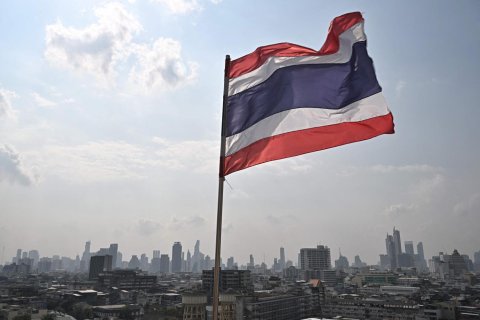
Reinvent Thailand to revive growth
Oped, Boonwara Sumano, Published on 11/02/2026
» In the 1990s, Thailand ranked second in Asean for state performance, behind only Singapore. Today, we trail several neighbours. This decline has unfolded gradually over three decades -- through repeated economic crises, institutional stagnation, and reforms that never quite went far enough. What is different today is that the cost of inaction has become far more dangerous.

SSO under strain
Postbag, Published on 10/02/2026
» Re: "Reality check for SSF", (Editorial, Jan 30).
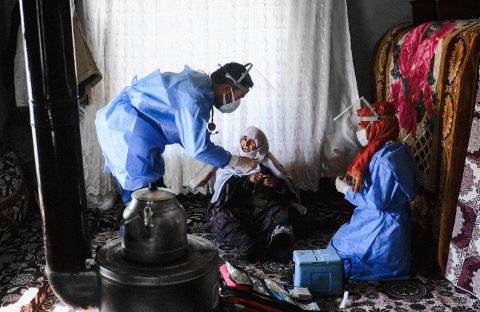
Rethinking global health finance
Oped, Walter O Ochieng & Tom Achoki, Published on 06/02/2026
» For the past half-century, the economics of global health were straightforward. Under the so-called "grant-based" approach, rich countries donate to poor countries, which use the funds to meet their populations' health needs. Success was measured by services provided or lives saved, rather than by balance sheets. While this model was far from perfect, the latest approach replacing it -- focused on using tools like guarantees and blended finance to crowd in private capital -- threatens to produce even worse outcomes.