



Showing 1 - 10 of 41

Climate disasters demand swift action
Oped, Genevieve Donnellon-May, Published on 10/12/2025
» Southeast Asia is in crisis. Less than a week after the United Nations Climate Change Conference (COP30) concluded in Brazil, the region is grappling with devastating floods and landslides, underscoring the urgent climate challenges that countries have repeatedly raised on the global stage.
Rising heat needs urgent response
Oped, Armida Salsiah Alisjahbana, Published on 24/11/2025
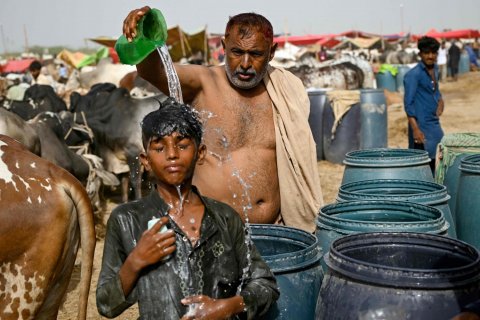
» 2024 was the hottest on record globally. In Asia and the Pacific, Bangladesh was the worst-hit country, with about 33 million people affected by lower crop yields that destabilised food systems, along with extensive school closures and many cases of heatstroke and related diseases. Children, the elderly and low-wage earners in poor and densely populated urban areas suffered the most, as they generally had less access to cooling systems or to water supplies and adequate healthcare. India, too, was badly affected, with around 700 heat-related deaths mostly in informal settlements.
Conflict undermines cooperation
Oped, David Jay Green, Published on 05/08/2025
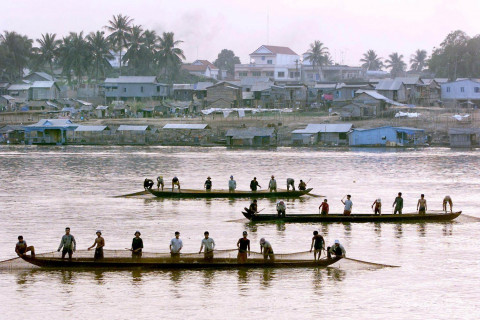
» The long-standing border dispute between Cambodia and Thailand has again escalated to actual conflict. Dozens of people have been killed, more have been injured, and more than 170,000 people have had to flee their homes. Cross-border trade and tourism are on hold. As I write this piece, a fragile ceasefire is still in place, but we need more than this; we need an end to hostilities between the two countries.
It's time to go geoengineering on climate issue
Oped, Gwynne Dyer, Published on 05/06/2025
» This is the second anniversary of the arrival of the emergency but practically nobody is mentioning it. Instead people are choosing to worry about more familiar problems like global trade wars, the rise of fascism and genocidal wars. It's kind of a global displacement activity: if we don't mention it, maybe it will go away.

We can't escape climate migration, it's inevitable
Oped, Gaia Vince, Published on 15/02/2025
» Not quite a quarter of the way through this 21st century and horrifying scenes of inferno are again broadcast across the world -- this time, from Los Angeles. Among the tens of thousands of dazed citizens forced to evacuate are the world's wealthiest climate refugees: business moguls and Hollywood stars.

Climate crisis is also a costly one
Oped, Mónica Araya & Saliem Fakir, Published on 08/01/2025
» Global inflation in recent years has pushed the prices of food, energy, and basic goods to unprecedented levels. As a result, the rising cost of living has dominated political discussion around the world, but especially in G20 countries. Ahead of this year's presidential election in the United States, for example, 41% of Americans cited inflation as their top economic issue.
The link between climate and talk of 'remigration'
Oped, Gwynne Dyer, Published on 12/10/2024
» 'Remigration": the word had a harmless origin, as a term academics used to describe the phenomenon of migrants who failed to thrive in their new home and decided to go back to their birth country.
The world is headed towards uncharted waters
Oped, Gwynne Dyer, Published on 17/09/2024
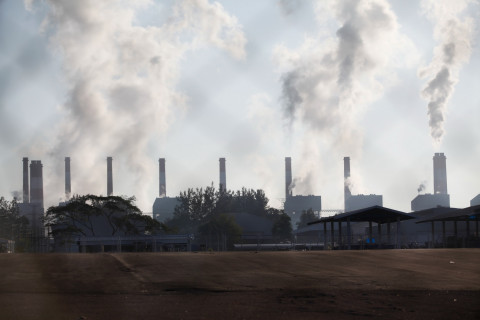
» No sirens are blaring, nobody even looks frightened, but they should be. Last week, the world moved into uncharted territory. The "aspirational" goal of never allowing the average global temperature to rise more than 1.5 degrees Celsius higher than the pre-industrial norm (+1.5C) has been breached for a whole year -- and probably forever.

Let's double down on resilience
Oped, Rick Holland, Published on 10/06/2024
» This year has already seen a cascade of extreme weather events -- from devastating floods in Pakistan, to scorching heatwaves in the Sahel and West Africa -- leaving an indelible mark on many parts of the world. The increasing number of lives (now already in the tens of millions) affected by extreme weather events further reminds us how vulnerable we are in the face of an increasingly volatile climate and water system.

Climate change poses health threat
Oped, Manica Balasegaram, Published on 17/05/2024
» It is widely believed that climate change is the single biggest threat to human health. A global temperature increase of 2C -- a threshold that will likely be exceeded by the end of the century -- could claim as many as one billion lives, with extreme weather events, heatwaves, droughts, flooding, infectious disease outbreaks, and food shortages among the causes of death. But the situation may, in fact, be far worse because the current forecasts fail to account for the inevitable increase in antimicrobial resistance (AMR).