




Showing 1 - 10 of 382

When will the IMF ever learn?
Oped, Timothy Kaldas, Published on 16/04/2026
» This year's International Monetary Fund Spring Meetings come at a time of heightened economic uncertainty and intense scrutiny of the institution's capabilities and approach. Critics on the left argue that the IMF imposes regressive austerity measures on borrowers, exacerbating poverty, hampering economic growth, and undermining their ability to achieve debt sustainability. On the right, US President Donald Trump's administration has accused the IMF of "mission creep," claiming that it has strayed from its core mandate of maintaining macroeconomic stability.

Oil shock risks wider chain reaction
Oped, Chartchai Parasuk, Published on 16/04/2026
» There is no such thing as a free lunch. When global oil prices rise sharply, as they are doing now, someone must bear the cost. Some countries choose to absorb it through government support, as in Japan, while others pass the burden on to consumers, as in Thailand. Neither approach is inherently right or wrong; each carries different economic consequences. Policymakers must decide which set of outcomes is more acceptable and act accordingly.

Orban's fall seen as a populist turning point
Oped, Gwynne Dyer, Published on 16/04/2026
» Polish Prime Minister Donald Tusk sent a message congratulating Hungary's newly elected prime minister, Peter Magyar, for having evicted long-serving populist leader Viktor Orban (aka "The Viktator") from power. All the usual welcoming words, but Mr Tusk's message ended with two slightly mysterious words in Hungarian: "Ruszkik haza" -- Russians go home.
The fatal flaw of AI-driven business models
Oped, Joachim Klement, Published on 02/04/2026
» Hundreds of billions of dollars are riding on the assumption that artificial intelligence will be reliable enough for high-stakes work. New research suggests it may never be. The AI tools that power ChatGPT and its rivals -- known as large language models, or LLMs -- are a genuine productivity-enhancing innovation. But they have serious shortcomings, most notably, their tendency to hallucinate, or make things up.

The silent engines of Asean realism
Oped, Imran Khalid, Published on 30/03/2026
» The global economy is currently tackling what may be the most significant energy disruption since the 1970s. The effective throttling of the Strait of Hormuz -- now seeded with Iranian Maham mines and subject to a tense, IRGC-monitored tolling system -- has physically severed the energy arteries that sustain the industrial heart of Southeast Asia.

Numbers don't add up
Oped, Postbag, Published on 30/03/2026
» Re: "PTIT denies oil refineries profiting from war", (Business, March 27).

PM's crisis-coping skills again in doubt
Oped, Nattaya Chetchotiros, Published on 26/03/2026
» A joint military attack on Iran by the United States and Israel appears to have had a profound political impact on the Anutin government. Prime Minister Anutin Charnvirakul and his ministers have come under heavy criticism from the public and commentators alike for what is widely seen as a failure to handle the oil supply situation effectively.
Iran war: One miscalculation after another
Oped, Gwynne Dyer, Published on 24/03/2026
» Still not four full weeks into the war, and already Donald Trump's "short-term excursion" -- decapitate the Iranian regime with a surprise attack and impose harsh terms on the defeated survivors -- has morphed into a global economic crisis and a region-wide war that could destroy the wealth of all the countries on both sides of the Gulf. At the very least.

Strait attack unacceptable
Oped, Editorial, Published on 13/03/2026
» The adverse impact of the war between Iran, the United States and Israel has spilt over to other nations beyond the Middle East, as Tehran ramps up its attacks on cargo ships in the Strait of Hormuz.
Students need learning exemplars
Oped, Mariano Miguel Carrera, Published on 05/03/2026
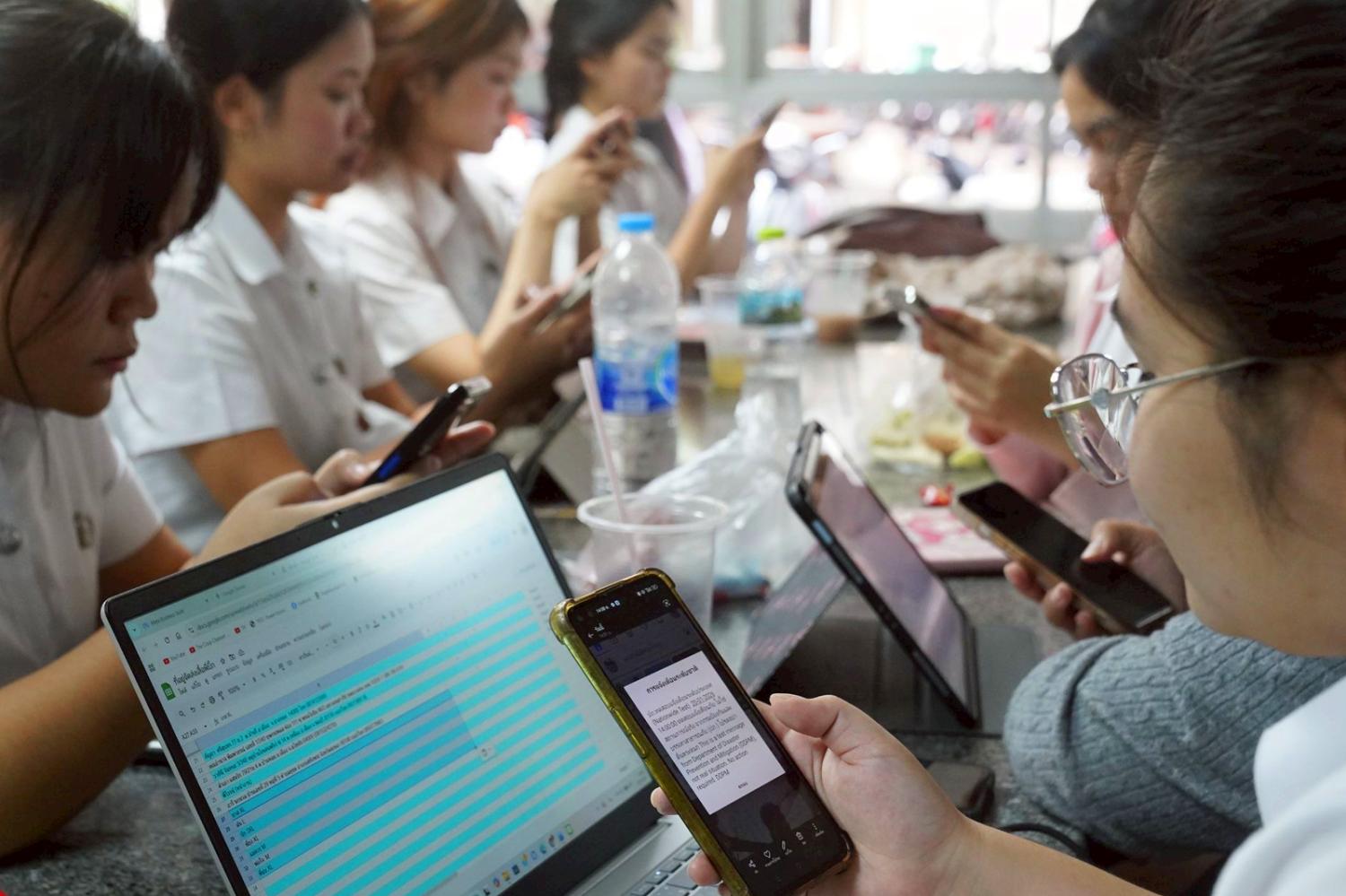
» Recently, a student mentioned feeling unheard while giving a presentation because the teacher was on the phone. I smiled and, at first, thought that she might realise that is how teachers feel when students are on their devices, scrolling through social media or playing games in class.