Showing 1 - 10 of 23

New tech disrupts global order
Oped, Mark Blyth & Daniel Driscoll, Published on 18/11/2025
» News media tend to focus on the world's major powers because they command more resources by dint of their relatively larger economies, militaries and energy endowments. But there are costs to such dominance. For example, a single American Gerald R Ford-class aircraft carrier costs $13 billion (421.6 billion baht), while the F-35 fighter jet costs about $100 million. So, if you can build your military equipment for less than your opponent, you can gain a strategic advantage.

How Italy managed to beat fascism after WWII
Oped, Mark Gilbert, Published on 22/01/2025
» Americans are alarmed by their country's stark political divisions. But they shouldn't despair. After WWII, Italy was even more politically polarised than today. Yet by the mid-1950s, it had succeeded, against the odds, in turning the page on its fascist past and constructing a contentious but functioning democracy.
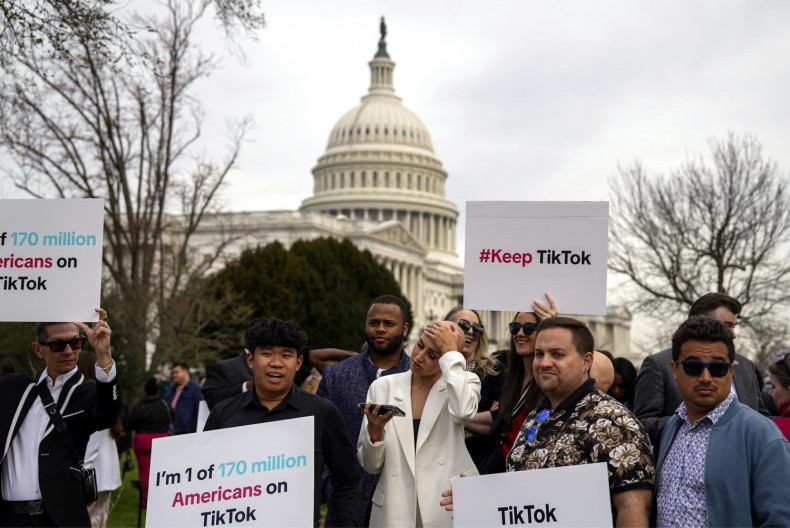
America's technology blind spot
News, S Alex Yang and Angela Huyue Zhang, Published on 09/12/2024
» Nationalism has emerged as a potent force shaping global tech policy, nowhere more so than in the United States. With Donald Trump returning to the White House for a second term, his vision for America's technological future is coming into sharper focus.
The link between climate and talk of 'remigration'
Oped, Gwynne Dyer, Published on 12/10/2024
» 'Remigration": the word had a harmless origin, as a term academics used to describe the phenomenon of migrants who failed to thrive in their new home and decided to go back to their birth country.
A small Slovak assassination bid; few hurt
Oped, Gwynne Dyer, Published on 21/05/2024
» Madeleine Albright, the former US Secretary of State, once called Slovakia "the black hole at the heart of Europe", which seems a harsh judgement on five million Slovaks. The assassination attempt on Prime Minister Robert Fico was alarming, but we can narrow the problem down to a more specific group of people.

Are all of us ready for AI creative destruction?
Oped, Daron Acemoglu, Published on 24/04/2024
» The ancient Chinese concept of yin and yang attests to humans' tendency to see patterns of interlocked opposites in the world around us, a predilection that has lent itself to various theories of natural cycles in social and economic phenomena. Just as the great medieval Arab philosopher Ibn Khaldun saw the path of an empire's eventual collapse imprinted in its ascent, the twentieth-century economist Nikolai Kondratiev postulated that the modern global economy moves in "long wave" super-cycles.

Henry Kissinger brought Germany redemption
News, Andreas Kluth, Published on 01/12/2023
» His timbre was just one reason I always looked forward to hearing Henry Kissinger, who died yesterday after living a full century, expound on international relations. It was gravelly and deep, and grew only more so over the years. But it wasn't just the voice. It was his unique accent, eccentric to some but strangely familiar to me.

Tax havens are fuelling autocracy
Oped, Yuriy Gorodnichenko and Ilona Sologoub, Published on 23/02/2023
» People have been trying to dodge paying taxes since time immemorial, but globalisation has turned tax avoidance and evasion, as well as money laundering, into a lucrative business model. Over the past few decades, offshore tax havens such as the Cayman Islands, Bermuda, Cyprus, and Ireland have enabled corporations and wealthy individuals to conceal profits and private wealth on an unprecedented scale.
Trussonomics: No better than 'liberty' lettuce
Oped, Antara Haldar, Published on 29/10/2022
» Following the brutal market backlash against her plans for unfunded tax cuts and tens of billions of pounds in additional spending, Liz Truss resigned as British prime minister, succeeded by her Tory rival, Rishi Sunak. The international media is now struggling to make sense of it all, but the task may be impossible. I have been working at it for over a decade and remain perplexed.