



Showing 1 - 6 of 6
There's no happy ending for the Chagos Islands
Oped, Gwynne Dyer, Published on 25/10/2024
» If you believe the British government (which you should never do), a new agreement will bring justice for the people of the Chagos Islands, who have lived in exile for more than half a century after the main island, Diego Garcia, was turned into a giant American airbase in the middle of the Indian Ocean.
Sports stadiums echo ancient divisions
Oped, EDWARD WATTS, Published on 20/08/2022
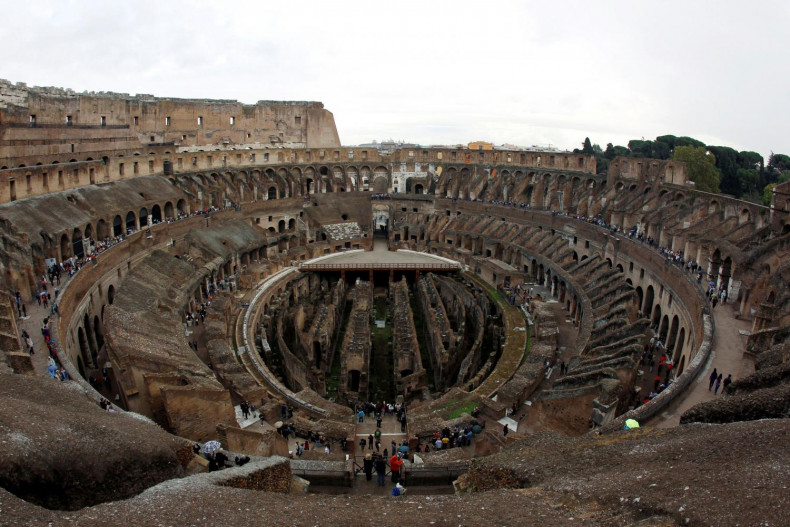
» More than 230 amphitheatres, among the largest and most memorable monuments left to us by the Romans, survive in cities from northern England to the banks of the Jordan River. The Romans built amphitheatres for more than 500 years in a range of sizes -- from a capacity of a few thousand to 50,000 in the Colosseum -- using a variety of techniques. The amphitheatre at Pompeii was built in the first century BCE by workers who excavated hillsides, placed terraced seating on the packed soil, and erected retaining walls to hold the rows of seats in place. The amphitheatre in Bordeaux was built nearly 300 years later as a freestanding oval fashioned out of brick, concrete, and cut stone.

Mexico's cart ban marks generic shift
Oped, Aldo Solano Rojas, Published on 25/06/2022
» In April, the government of Mexico City's central Cuauhtémoc alcaldía, or borough, mandated that all its rótulos -- the hand-painted signs decorating street vendors' kiosks -- be erased.
Chagos: a 50-year-old UK-US crime
Oped, Gwynne Dyer, Published on 24/02/2022
» 'The object of the exercise is to get some rocks which will remain ours.... There will be no indigenous population except seagulls," wrote Sir Paul Gore-Booth, a senior official at the British Foreign Office, as the plan to expel the 2,000 Chagos Islanders from their homes was taking shape in 1966. "We must surely be very tough about this."

Signs of integration with the freedom of the veil
Oped, Diego Gambetta & Ozan Aksoy, Published on 23/12/2021
» The latest controversy over the hijab, the headscarf worn by Muslim women, erupted at the end of October. Ironically, the trigger was an anti-discrimination campaign launched by the Council of Europe.
Far worse is coming for world with climate change
Oped, Mario Molina & Durwood Zaelke, Published on 23/10/2020
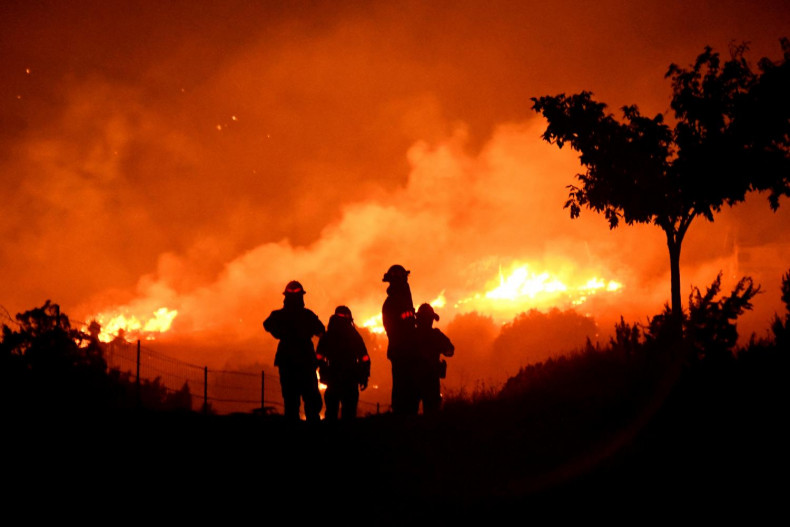
» It is hard to imagine more devastating effects of climate change than the fires that have been raging in California, Oregon, and Washington, or the procession of hurricanes that have approached -- and, at times, ravaged -- the Gulf Coast. There have also been deadly heat waves in India, Pakistan, and Europe, and devastating flooding in Southeast Asia. But there is far worse ahead, with one risk, in particular, so great that it alone threatens humanity itself: the rapid depletion of Arctic sea ice.