



Showing 1 - 10 of 11
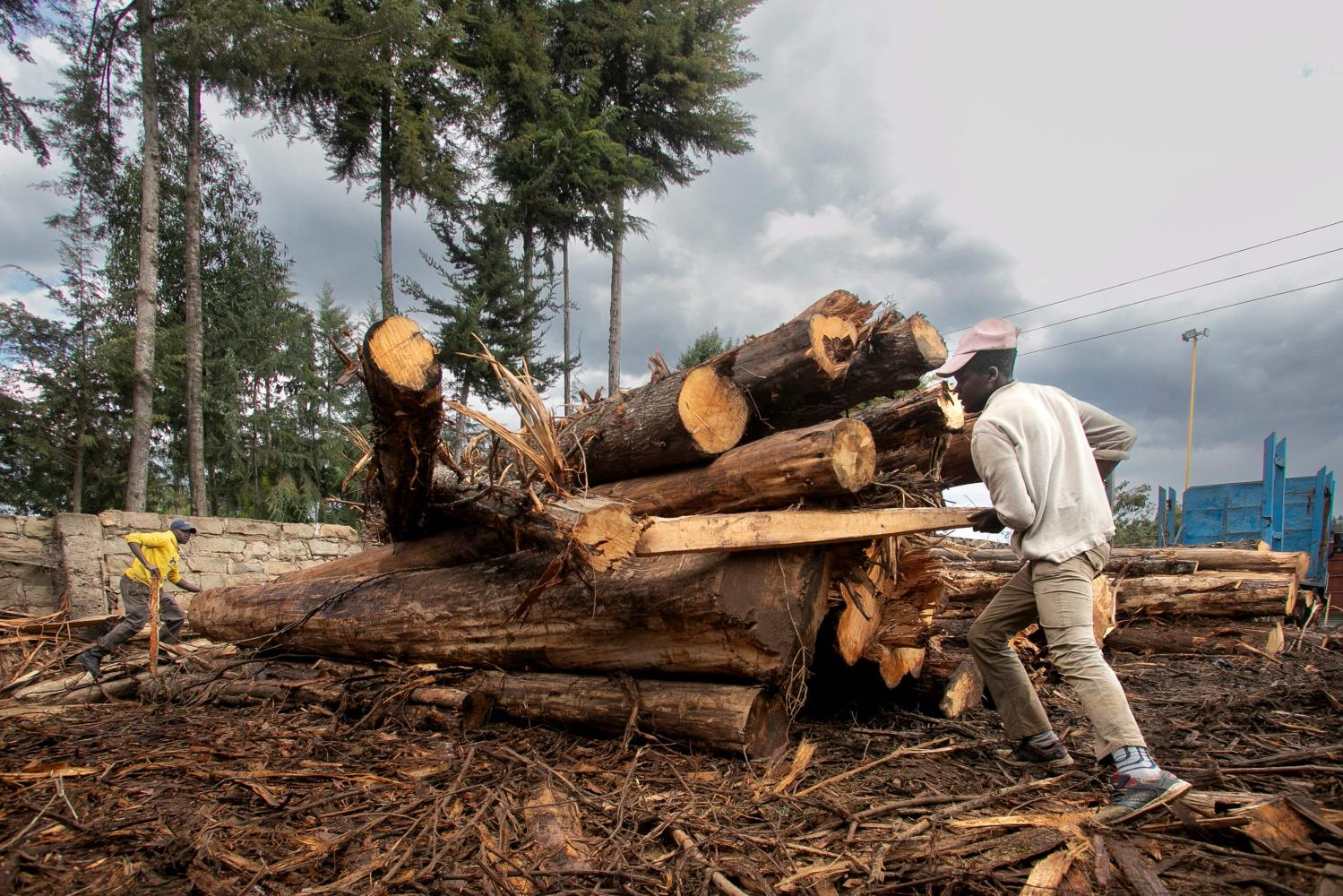
The economy depends on forests
Oped, Zhimin Wu, Published on 23/03/2026
» Money may not grow on trees, but much of our prosperity does.

Electricity will decide who wins the great AI race
News, Jeffrey Wu, Published on 20/10/2025
» The next stage of the global AI race will be decided not by algorithms or chips, but by electricity -- and that puts China at a distinct advantage. While Western tech giants are emphasising closed, capital-intensive models that demand enormous computing power, China is embracing open source AI and massively expanding its renewable- and nuclear-energy capacity, thereby positioning itself to deploy powerful AI technologies at scale without breaking the bank.

China's unbeatable new export is not a product
Oped, Jeffrey Wu, Published on 24/07/2025
» The Chinese "cannot be allowed to export their way back to prosperity", argues US Secretary of the Treasury Scott Bessent, who claims that China's economy is the "most unbalanced in history". Such remarks reflect the growing fear in Washington that China's overcapacity, subsidies, and dumping are distorting global trade.

Taiwan signals new openness to nuclear power
News, Matthew Winkler, Miaojung Lin, Debby Wu and Yian Lee, Published on 23/10/2024
» Taiwan is "very open" to using new nuclear technology to meet surging demand from chipmakers devouring electricity in the AI boom, according to Premier Cho Jung-tai -- one of the strongest signs yet that the government is rethinking its opposition to reactors.

Technology brings SDG goals closer
News, Zhimin Wu, Published on 22/07/2024
» In the face of escalating threats to achieving the Sustainable Development Goals by 2030, the global community stands at a crossroads.

Let's have green spaces everywhere
Oped, Zhimin Wu, Published on 20/10/2023
» A few years ago, a university professor came up with the "3-30-300" rule. It envisions a world where everyone can see at least three trees from their window, live in a neighbourhood with at least 30% tree cover, and be no more than 300 metres away from high-quality urban green spaces.

Stopping mangrove deforestation
Oped, Zhimin Wu, Published on 26/07/2023
» Over the past 40 years, over 20% of mangroves globally were lost due to both human activities and natural retraction.

Lush forests mean healthy people
Oped, Zhimin Wu, Published on 21/03/2023
» Today, more than half of the world's population live in urban areas. By 2050, this is expected to increase to almost 70%. Yet even people living in cities have begun to realise how vital access to forests, urban parks, and green spaces is for our mental health and well-being.

Reimagining a tougher UN system with Taiwan
News, Jaushieh Joseph Wu, Published on 30/08/2021
» After more than 200 million infections and over 4 million deaths and counting, the Covid-19 pandemic has raged across the globe. This has created a profoundly devastating socio-economic impact on our interconnected world, with virtually no countries spared. The pandemic has disrupted global trade, exacerbated poverty, impeded education and compromised gender equality, with middle to low income nations bearing the brunt of the burden.

Anatomy of the coronavirus collapse
Asia focus, Eswar Prasad and Ethan Wu, Published on 27/04/2020
» The world economy is on the precipice of its worst crisis since World War II. Economic activity, financial markets and private-sector confidence are all cratering. And if international cooperation remains at its current level, a far more severe collapse is yet to come.