



Showing 1 - 10 of 13

Thailand's path to inclusive growth
Oped, Peerasit Kamnuansilpa & Suradech Taweesaengsakulthai, Published on 07/02/2024
» Thailand's decision to implement a 10,000-baht Digital Wallet Scheme (DWS) marks a significant step in its ambition to bolster economic competitiveness and growth.

How did China surpass Thailand?
Oped, Peerasit Kamnuansilpa and Wei Yang, Published on 22/12/2022
» Thailand revolutionised its political and administrative systems in 1932, well before China, which did not start until 1949. The shared drive for this revolution was the economic hardship of the populace. Both Thailand and China were poor nations. Their economy stagnated and was under the control of the privileged groups, the elite rulers in the case of Thailand, and the bourgeois in China. People in the countryside were left with economic plight and suffering. Initially, Thailand had taken a leap toward reform by changing into a constitutional monarchy following a coup led by Khana Ratsadon (the People's Party), supported by young military personnel and Thai students who graduated overseas, to spur economic development and improve the economic well-being of the public.

The challenge of digital governance
Oped, Peerasit Kamnuansilpa and Bruce Gilley, Published on 12/11/2022
» Thailand was an early adopter of the internet for government services, creating an e-government system as early as 1997. But political turmoil in 2006 caused the kingdom to fall behind. When the United Nations ranked countries by e-government in 2012, Thailand was a dismal 92nd out of 193.

Innovation in an era of debt brake
News, Peerasit Kamnuansilpa and Bruce Gilley, Published on 07/03/2022
» In the 21 years after the Asian financial crisis of 1997, Thailand's government ran a budget deficit 18 times. However, due to ineffective management, excessive fiscal spending did not produce the intended effect of economic acceleration.
Path to economic progress: A tale of two nations
News, Peerasit Kamnuansilpa & Le Anh Khanh Minh, Published on 17/04/2020
» The present pandemic, which has generated concerns over Asean countries' economic sustainability and global food supplies, reminds us that Thailand and Vietnam are primarily agrarian societies, competing with each other as major rice-exporting countries. In the 1960s, both were classified as economically less developed countries before moving a notch higher to "developing countries". Presently, both countries are ranked as middle-income, although Thailand is slightly ahead since its advancement to the category's upper tier in 2011, while Vietnam has remained in the lower tier since 2013. It is expected that Thailand will not be able to progress much over the next 20 years, while Vietnam could achieve high-income status by 2045. Still, this relative decline is not inevitable.

Thailand's 'wicked' development trap
News, Peerasit Kamnuansilpa and Le Anh Khan Minh, Published on 19/09/2019
» For almost five decades now, Thailand has been a victim of the middle-income trap. From the 1970s to the 2000s, the country was ranked by the World Bank as lower-middle-income, advancing to upper-middle status in 2011. Considering the ongoing political uncertainty and weak governance institutions, the prognosis is that Thailand will likely remain at this ranking for many years. This has become a "wicked problem" for the country's economic and social development.

Ethnic inequality 'extreme', says study
News, John Draper & Peerasit Kamnuansilpa, Published on 21/02/2019
» In the spirit of Sustainable Development Goal 10, which seeks to reduce inequality, Thailand's first major national study on differences in development by ethnicity was recently published.

It's time to root out endemic graft
News, Peerasit Kamnuansilpa & Sirisak Laochankham, Published on 16/05/2018
» For 85 years, Thailand has been trapped in a quagmire of political crises. It all began in 1933, when there were two coups in as many months.
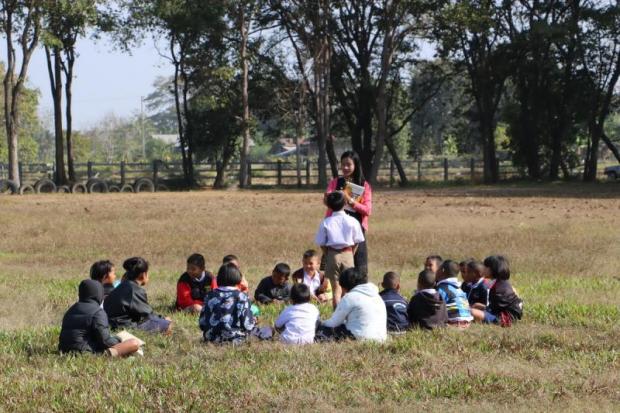
English literacy just the tip of the iceberg
News, Daniel Maxwell and Peerasit Kamnuansilpa, Published on 21/04/2018
» An ambitious initiative being planned by the Thai Ministry of Education to place thousands of young foreign teachers in rural schools across Thailand has the potential to dramatically improve English-language abilities. However, quality control is likely to prove problematic, as is culture shock. In addition, students in rural communities face myriad educational challenges far beyond foreign language proficiency, which restrict equality of opportunity.

Let's have bureaucrats empower people
News, Peerasit Kamnuansilpa and Sirisak Laochankham, Published on 07/04/2018
» The outcry about the Khon Kaen deputy governor's letter last month to launch a programme to "stop citizens from being stupid" has largely been placated, following public apologies. But this incident reflects the flaws in the long-standing attitude of the bureaucracy in Thailand towards citizens. Right from the very start, the Thai bureaucracy was designed to control the destiny of the populace, not empower them.