



Showing 1 - 10 of 33
Solving the conflict in Myanmar
News, Charles Petrie, Published on 15/09/2025
» The Myanmar military has recently launched a new offensive in different parts of the country, determined to claw back territory it has steadily lost since the coup of Feb 1, 2021. These operations, though at times tactically successful, are being carried out through brute force: airstrikes, mortar attacks, and the increasing use of drones. Entire areas are being destroyed. What will follow is not liberation, but military occupation. But how viable and effective will be the administrative structures that the generals will impose to govern these shattered spaces?

Time to rethink the casino debate
Oped, Andrew W Scott, Published on 13/06/2025
» I've been visiting and studying the world's casinos since 1986, particularly those in Asia. And boy, have they changed a lot in the past 40 years.

The crisis in West's AI industry needs attention
News, Charles Ferguson, Published on 10/02/2025
» The release of the Chinese DeepSeek-R1 large language model, with its impressive capabilities and low development cost, shocked financial markets and led to claims of a "Sputnik moment" in artificial intelligence. But a powerful, innovative Chinese model achieving parity with US products should come as no surprise. It is the predictable result of a major US and Western policy failure, for which the AI industry itself bears much of the blame.

Supporting Ukraine is in Donald Trump's interest
Oped, Michael Froman & Charles A Kupchan, Published on 02/01/2025
» Even before taking office, Donald Trump has launched a diplomatic effort to end Russia's war against Ukraine, calling for an "immediate ceasefire" after meeting Ukrainian President Volodymyr Zelensky in Paris in early December.

Uniting against cyber-scam gangs
Oped, Fuad Adriansyah & David Scott, Published on 11/12/2024
» In recent years, a novel form of criminality has rapidly expanded across Southeast Asia, leaving in its wake a trail of human exploitation, financial harm, and, in many parts of the region, a weakening of the rule of law. Cyber-scam centres, operated by sophisticated transnational organised criminal groups, have emerged as a serious threat to both national and human security across Southeast Asia.

New IMF debt deal needs a rejig
Oped, C P Chandrasekhar & Martín Guzmán & Jayati Ghosh & Charles Abugre, Published on 03/10/2024
» Ranil Wickremesinghe, Sri Lanka's president, recently lost his re-election bid after voters overwhelmingly rejected the debt-restructuring deals he negotiated with the International Monetary Fund (IMF) and other creditors. Instead, Sri Lankans elected Anura Kumara Dissanayake, leader of the left-wing National People's Power (NPP) alliance and a vocal critic of IMF-imposed austerity measures, who has vowed to renegotiate the country's agreement with the fund.

The rise of consumer cryptocurrency
News, Steve Kaczynski and Scott Duke Kominers, Published on 26/02/2024
» Since its inception with the launch of Bitcoin in 2008, blockchain technology has gone through numerous cycles of public attention. Over time, growing interest and investment in the best-known cryptocurrencies has led to greater acceptance, as highlighted by the US Securities and Exchange Commission's approval of a spot Bitcoin ETF (exchange-traded fund) in January. While blockchains and their associated "crypto" assets have yet to be adopted by a truly broad base of consumers, that is starting to change, owing to a shift in how these technologies are being used.

How to enforce climate deals with trade measures
Oped, Scott Barrett, Noah Kaufman & Joseph E Stiglitz, Published on 06/02/2024
» Casual observers of the recent United Nations Climate Change Conference in Dubai (COP28) can be forgiven for attributing high stakes to the event.
When do we die? Disputing the definition of death
Oped, Peter Singer & Charles Camosy, Published on 14/11/2023
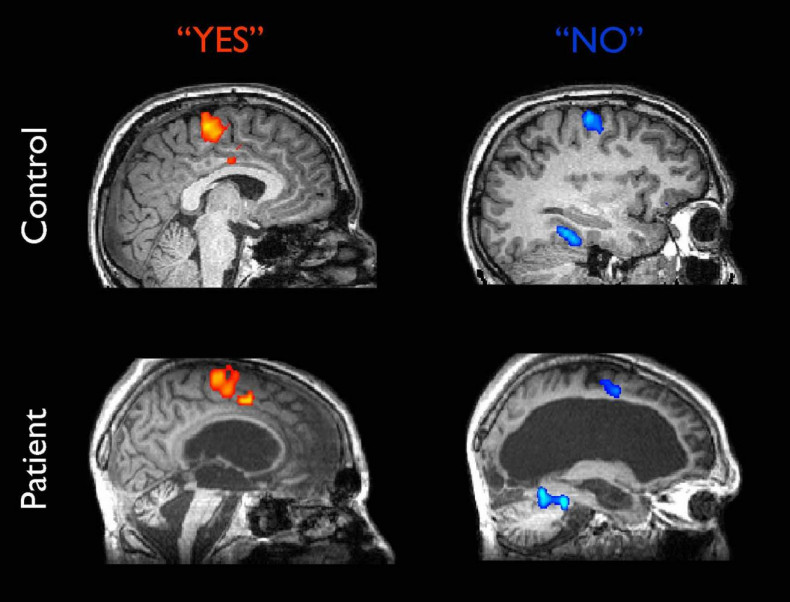
» 'What is it you don't understand? She's dead, dead, dead." That is how David Durand, Chief Medical Officer of Oakland's Children's Hospital, attempted to convince the family of Jahi McMath that the standard medical tests for brain death had shown that their teenage daughter was no longer alive.
Local community key to delivering Myanmar aid
Oped, Charles Petrie, Published on 11/05/2023
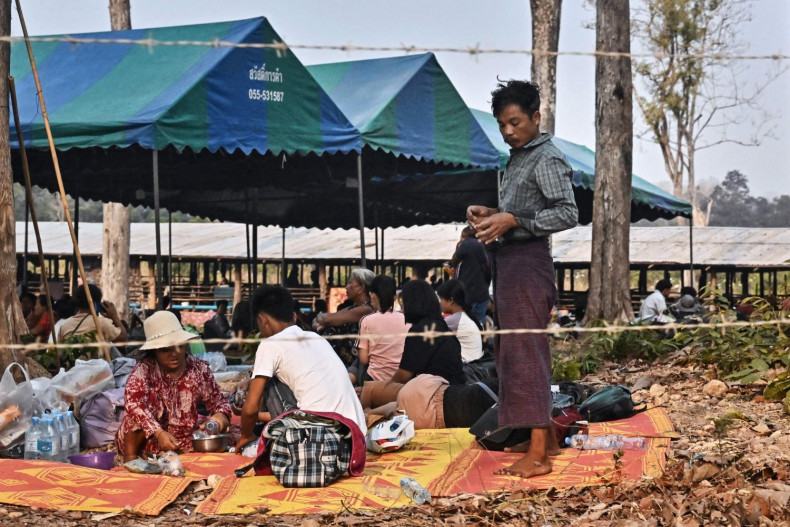
» Last month, I undertook a 10-day trip along the Thai-Myanmar border. In part its purpose was to explore further the nature and workings of the local governance structures which Scott Guggenheim and I had argued needed to be supported by the international community in our piece entitled "Taking risk and supporting local governance", published in the Bangkok Post on March 24.