



Showing 1 - 10 of 11
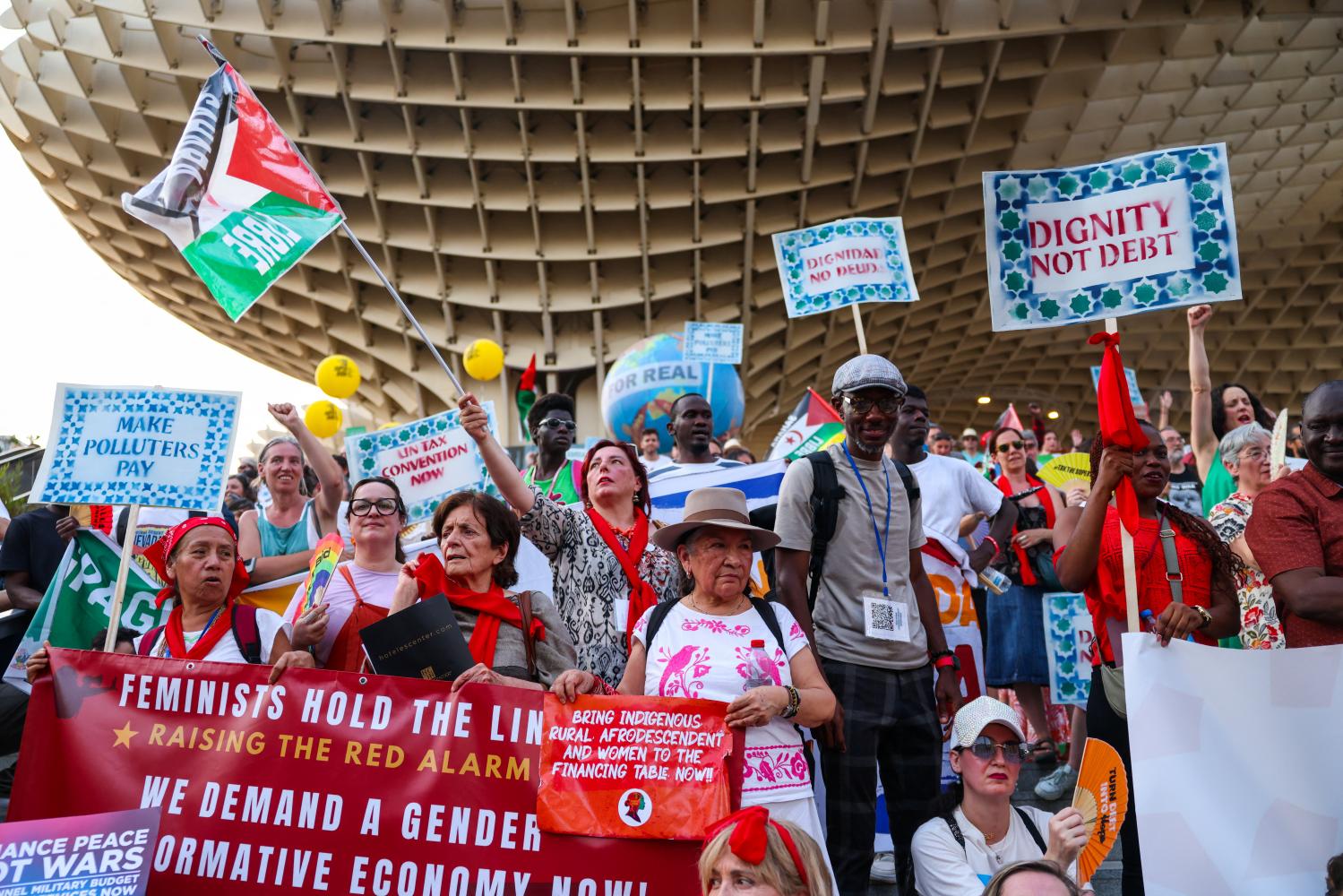
Resetting development finance
Oped, Carlos Cuerpo and Joseph E Stiglitz, Published on 03/07/2025
» At the Fourth International Conference on Financing for Development this week in Seville, delegates are calling for urgent action to fix a system that has stopped working. Prior to the third such gathering a decade ago, in Ethiopia, we had witnessed unprecedented advances towards reducing poverty, increasing school enrolment, and providing clean water worldwide. Today, however, progress is not only slowing but potentially stagnating -- or, worse, reversing.

The post-Covid fiscal tightrope
Oped, Hoe Ee Khor, Rolf Strauch & Carlos Giraldo, Published on 26/02/2025
» As economies worldwide start to emerge from the inflation-fueled cost-of-living crisis that followed the Covid-19 pandemic, fiscal policymakers are confronting a sobering reality: they are not out of the woods yet.

Making roads healthier for travel
News, Jesus Carlos Soto and Silpa Wairatpanij, Published on 19/08/2024
» The world's cities are growing, and their roadways are becoming overwhelmed. Motor vehicles are the world's leading cause of death for people between the ages of 2 and 29, killing 1.2 million people and injuring up to 50 million annually, according to the World Health Organization's update on Dec 13, 2023.

Teen talent weaves his web
Life, Carlos AguilarNYT, Published on 15/06/2023
» Early in the thrill-packed sequel Spider-Man: Across The Spider-Verse, the story takes a brief yet memorable detour into a dimension that resembles Lego building blocks and figures.

Symbols of strength
Life, Stefan Hell, Published on 28/11/2022
» In central locations of three major Asian cities -- Singapore, Jakarta and Ho Chi Minh City -- stand bronze elephant statues. If they could talk, these statues could tell of imperialism, civil war, invasion, anti-colonial struggle, independence, nationhood, and more recently of rapid urban and economic development. Perched high up on their plinths, the elephants have witnessed some of the key events in the modernisation and emancipation of Southeast Asia, with all its promises and bloodshed. All three statues were gifts made by Thai kings.

Asia's emissions-reduction plan for the world
Asia focus, Masatsugu Asakawa, Sri Mulyani Indrawati and Carlos Dominguez, Published on 07/02/2022
» World leaders came together in Glasgow last November to map out a path to mitigate the worst effects of climate change. But while the United Nations Climate Change Conference (COP26) was undoubtedly a historic moment, most countries are just beginning their work to meet new goals to reduce carbon-dioxide emissions.
Reinvigorating multilateralism
Oped, Carlos Alvarado Quesada, Jacinda Ardern Stefan Lofven, Cyril Ramaphosa, Macky Sall & Pedro Sanchez, Published on 30/09/2021
» Last year, the United Nations conducted a worldwide consultation involving more than one million people from 193 countries. The feedback pointed to some important facts. And this year's UN General Assembly must respond by bolstering rules-based multilateralism.

Stopping the spread
Life, Stefan Hell, Published on 15/06/2020
» International arrangements to collect and distribute information about diseases are crucial in times of a pandemic because pathogens ignore borders, political order and economic status. Today, states have largely closed their borders in an effort to contain the spread of the coronavirus. However, for open societies in a global economy, this can only be a temporary measure. A reliable international tracking and reporting system for epidemic diseases remains crucial because the present pandemic is inherently international. In Southeast Asia, we can build on nearly a century of experience in managing such a system.

A seat at the table
Life, Stefan Hell, Published on 08/01/2020
» On Jan 10, 1920, 42 states embarked on a revolutionary experiment. On that day, a radically new organisation came into being via the Treaty of Versailles: the League of Nations. This was the world's first go at creating an international organisation for maintaining peace. One of its founding members was the Kingdom of Siam.

Migrant workers remain largely unaccepted: study
News, Deepa Bharathi, Anna Engblom & Melissa Alvarado, Published on 18/12/2019
» On Dec 18, 2000, the international community adopted the International Convention on the Protection of the Rights of All Migrant Workers and Members of their Families. Thus, today we mark what is now known as International Migrants Day. In the 19 years since the convention, we have made it easier to move around our connected world. We have proven that migrant workers make huge financial contributions to the societies they are from and the societies they work in. Women migrant workers especially catalyse large changes at home through their remittances.