



Showing 1 - 10 of 327
China military purge exposes Xi's unease
News, John J Metzler, Published on 14/02/2026
» Strange and mysterious events are transpiring inside the walls of Beijing's Forbidden City. In the massive nearby government compound Zhongnanhai there's a clear unease as Communist Party Chief and military supremo Xi Jinping, the Chinese president, has shuffled the political cards in the powerful Central Military Commission (CMC), by purging his two top generals.
The case of the disappearing senior generals
News, Gwynne Dyer, Published on 10/02/2026
» Armies can be used against both against foreigners abroad and against citizens at home, but the two roles require quite different equipment and tactics. The same applies to their commanders: you need a different kind of general if you think that the primary task of their troops will be controlling dissent at home.
Who is next for the United States?
Oped, Gwynne Dyer, Published on 12/01/2026
» The Crazy Gang are high on the "brilliant success" of their Venezuela caper and looking for new targets. Like Alexander the Great, US President Donald Trump weeps because there are no more worlds to conquer. But wait! Actually, there are still lots of places to conquer.
The treacherous sycophancy of the populists
Oped, Michael Burleigh, Published on 15/12/2025
» Until a few days ago, it had never crossed my mind that people across Europe -- including Londoners like me -- were living in a strife‑afflicted hell hole, "suffocated" by regulations, stripped of political liberties, and bound for "civilisational erasure". So, it was with some surprise that I read this assessment in the new US National Security Strategy -- a document that echoes pseudo‑intellectual propaganda more than resembling any serious foreign‑policy analysis.
Artists resist repression in Thailand, US
Oped, Sally Tyler, Published on 08/12/2025
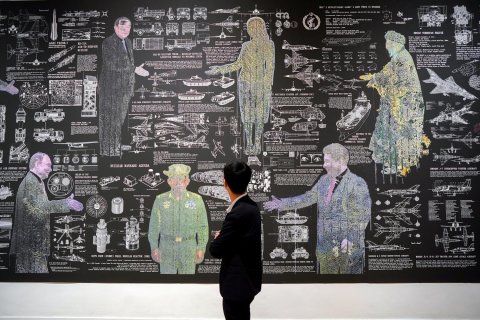
» In late August, two seemingly unrelated events occurred in Thailand and the US. The Bangkok Art and Culture Centre (BACC) altered a major exhibit it had recently opened and, a few weeks later, the comedian Jimmy Kimmel was temporarily taken off the air by the ABC television network. These events are linked as forms of artistic repression and perhaps more concerning, as examples of the growing use of intermediary censorship by authoritarian regimes.
Socialism's novel brand of nomenclature
Oped, John J Metzler, Published on 18/11/2025
» On Nov 9, 1989, the Berlin Wall collapsed. On a very ordinary night, thousands of East Germans started crossing the dividing barrier between the communist East and capitalist West Berlin after the East German regime had suddenly opened tightly controlled border crossings. In a matter of hours, history was made. Throngs of people soon swamped the Wall and then started smashing the hated communist barrier into concrete rubble.
What to learn from enforced errors of the past
Oped, Jacques Attali, Published on 28/10/2025
» Every generation believes it is living in an unprecedented era with unique challenges. But time and again, the same patterns and motivations have weakened and even destroyed civilisations, or strengthened them and enabled them to flourish. To learn from the past requires recognising its symmetries and resonances.

Valuable forum
Postbag, Published on 05/10/2025
» Re: "Peace in Deep south demands more than guns", (Opinion, Oct 4).
Southeast Asia amid the US-China rift
Oped, Thitinan Pongsudhirak, Published on 03/10/2025
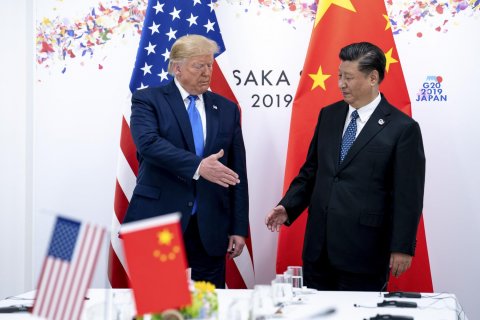
» The rivalry between the United States and China has become the defining contest of the 21st century. Barely two decades ago, Washington and Beijing were partners in prosperity. America's support for China's entry into the World Trade Organization in 2001 epitomised the high-water mark of engagement, reflecting the belief that economic integration would lead to greater political cooperation. Today, that partnership has morphed into suspicion and confrontation. Relations between the United States and China have deteriorated so swiftly that many observers now describe them as locked in a "new Cold War". The more pressing question, however, is not whether this analogy holds, but whether confrontation can be managed short of outright conflict.

Ukraine must work with Asean
Oped, Tamila Tasheva, Published on 03/10/2025
» For many years, Ukraine's foreign policy was focused mainly on Europe and North America. It was natural: Ukraine's path of European integration, security, and reforms demanded most of our capacity.