



Showing 1 - 10 of 56

The fire this time is for US climate science
Oped, Gwynne Dyer, Published on 18/03/2026
» In 1953 Ray Bradbury, an American writer, published a book entitled simply Fahrenheit 451. It was a novel about an American fireman in a not-too-distant future who realised that he was doing his job all wrong -- because his job was to burn books, which were banned in that future America. (451°F is the temperature at which paper catches fire.)

AI will transform business, not just our jobs
Oped, Diane Coyle, Published on 25/02/2026
» Many people fear that AI could cause a "job-pocalypse". This year's Davos gathering sounded the alarm over the technology's implications for employment, while recent announcements about job cuts in white-collar industries are widely viewed as straws in the wind.

Institutional redesign in order for economic change
News, Diane Coyle, Published on 30/12/2025
» The Nobel Prize in economics was awarded both this year and last year to scholars who, in different ways, emphasised the importance of institutions to economic growth.

Gates' 'truth' about climate change
Oped, Peter Singer, Published on 14/11/2025
» Ahead of this year's United Nations Climate Change Conference (COP30), now underway in Belém, Brazil, Bill Gates, who chairs and funds the foundation that bears his name, released an essay entitled "Three tough truths about climate". The first of these truths is: "Climate change is a serious problem, but it will not be the end of civilisation."

Measuring the economic impact of AI
Oped, Diane Coyle, Published on 24/10/2025
» Is AI transforming the economy in any real sense, or is the promise of rapid growth mere hype?

A paradigm shift for animal tests
Oped, Peter Singer & Sankalpa Ghose, Published on 17/10/2025
» Even in an era of intense political polarisation, there are still moments when a bipartisan consensus can emerge around important ethical issues. One such moment is happening now. Last April, the United States Food and Drug Administration released its "Roadmap to Reducing Animal Testing in Preclinical Safety Studies". The FDA said that it was taking "a groundbreaking step" that would advance public health and limit wasteful expenditure by replacing animal testing with "more effective, human-relevant methods".
President Trump is losing his geo-economic war
News, Harold James, Published on 16/10/2025
» In an age of shifting geopolitics, many countries' strategic planning includes imaginative exercises in weaponising their positions in the world. While Russia and China have been moderately successful at this game, America's efforts have already boomeranged back on it.

Terminal volunteers can save lives
News, Peter Singer & Benjamin L Sievers, Published on 13/09/2025
» At the University of California, San Diego (UCSD), a programme called Last Gift offers terminally ill patients the opportunity to help create more effective treatments. Their special circumstances transform the usual risk-benefit calculus of joining a clinical study of an untested drug. Researchers can ask them to consider consenting to being research participants in ways that they would not ask healthier people with long life expectancies, and terminally ill patients may choose to give that consent when others would be less likely to do so.
The incalculable costs of corrupt statistics
Oped, Diane Coyle, Published on 29/08/2025
» With GDP and employment figures dominating political debates, it is easy to forget that they are hardly timeless truths. In fact, how we measure progress has shifted dramatically over time. The Physiocrats -- eighteenth-century French economists who saw agriculture as the source of all wealth -- regarded farms' output as the most important economic indicator. The Soviet Union, for its part, focused exclusively on goods production and ignored services altogether.
Trump is trying to build a far-right international
Oped, Jan-Werner Mueller, Published on 30/07/2025
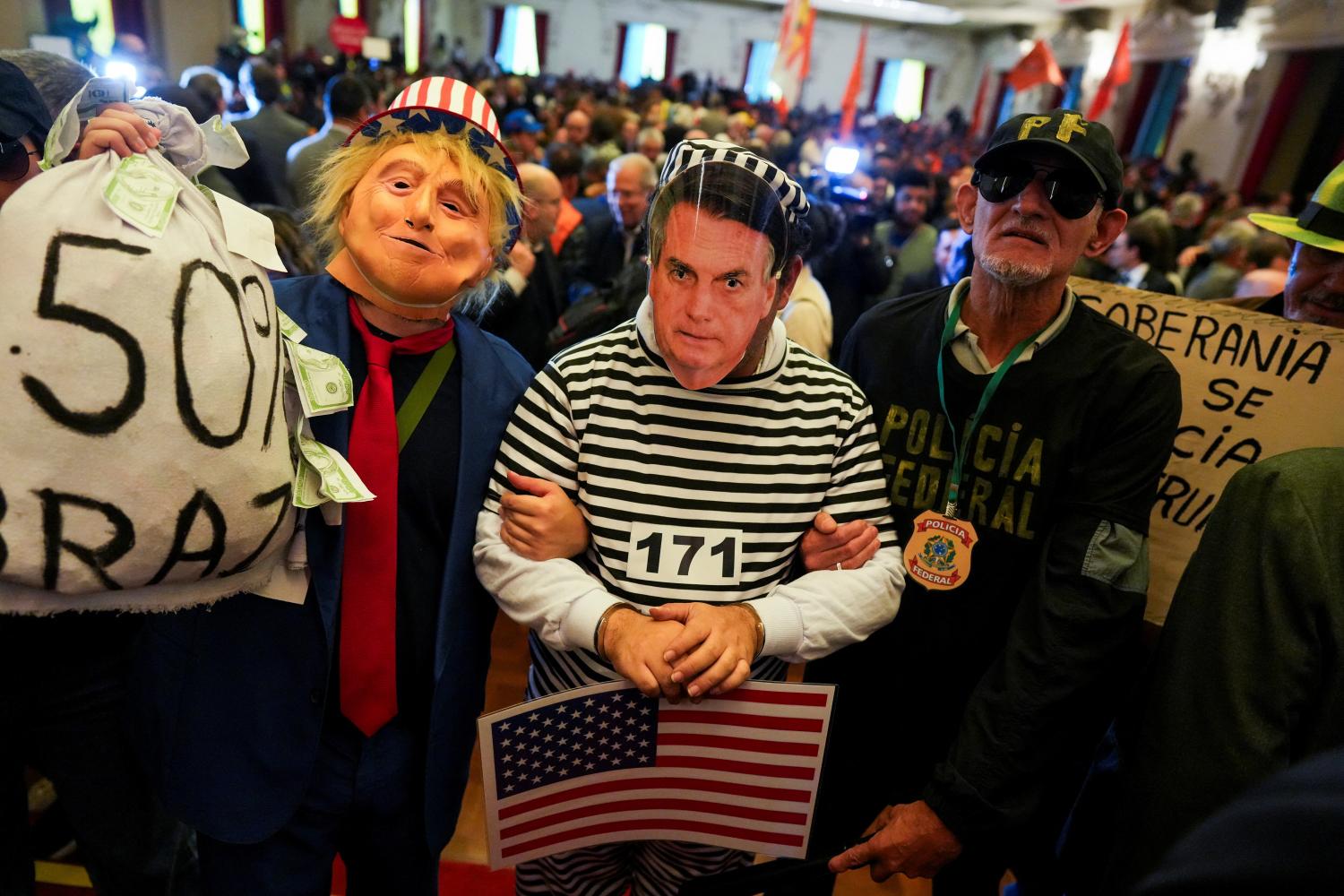
» Until recently, the spectre of an international far-right alliance of populist parties in democracies around the world has been just that: any appearance of cooperation was a form of self-promotion, rather than an expression of true solidarity. Few far-right figures have made any sacrifices for one another or seriously interfered in other countries' internal affairs to prop up allies. And efforts to unite the far right in the European Parliament have fallen dismally short.