



Showing 1 - 10 of 47
Policy options for an overvalued baht
Oped, Chartchai Parasuk, Published on 25/12/2025
» This is the last article of 2025. I have to thank readers for following my articles throughout the years. I believe I wrote my first article for the Bangkok Post in January 2020. So, it has been a five-year collaboration with the paper. Thank you, Bangkok Post.
Is a return to gold standard possible?
Oped, Chartchai Parasuk, Published on 11/12/2025
» We are now in the middle of the holiday season. Therefore, I will refrain from writing about heavy and depressing issues like the Thai economy and the outlook for 2026 and beyond. In this moment of joy, I will write about the possibility of returning to the gold standard, which some supporters say can be seen in central banks aggressively buying gold bullion to replace the dubious US dollar. The last article of the year will be about the Sovereign Wealth Fund (SWF).
Is Takaichi Sanae the 'Iron Lady' of Japan?
Oped, Koichi Hamada, Published on 10/11/2025
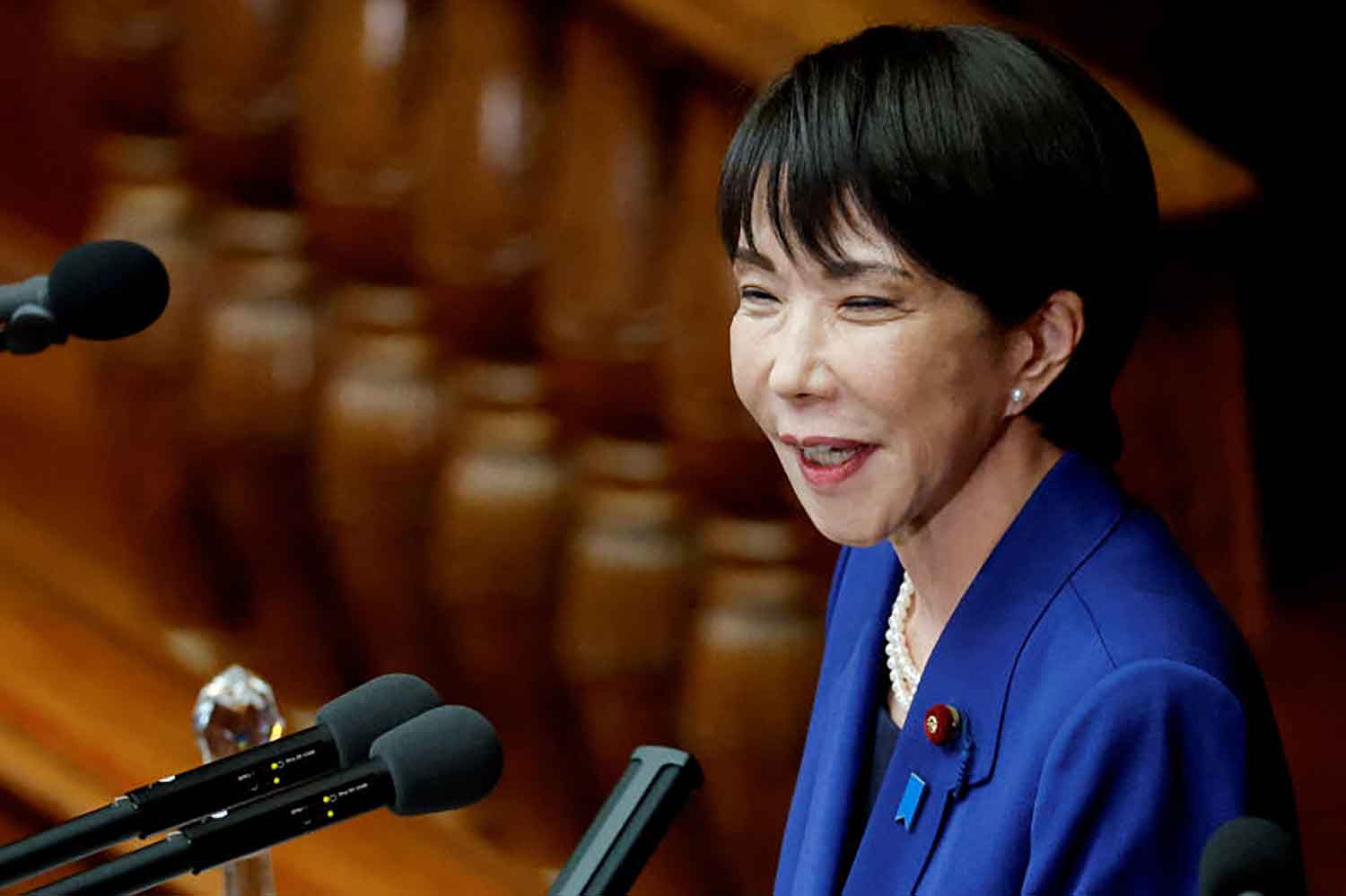
» For the first time in its history, Japan's parliament has selected a woman, Takaichi Sanae of the Liberal Democratic Party, to be prime minister. In this sense, Ms Takaichi has already followed in the footsteps of her political idol, Margaret Thatcher -- the UK's first female PM. But whether she is remembered as Japan's own "Iron Lady" will depend on her ability to manage three key challenges: inflation, low female labour-force participation and a fraught geopolitical environment.
Cutting Asia's reliance on dollars
Oped, Yasuto Watanabe & Hiro Ito, Published on 02/10/2025
» The US dollar remains the world's leading reserve currency, but recent developments -- particularly President Donald Trump's unilateral economic diplomacy, including weaponisation of the dollar -- have fuelled doubts about whether it will maintain that status. While some of America's geopolitical rivals may hope to displace the dollar, the real challenge facing Asian economies is to manage the vulnerabilities created by their heavy dependence on it.

Trump, Bitcoin and the dollar
Oped, Carla Norrlöf, Published on 13/03/2025
» In a March 6 executive order, US President Donald Trump established a "digital gold" Bitcoin reserve, to be capitalised with any BTC seized by federal law enforcement. With the supply of BTC capped at 21 million coins, the administration wants the United States to secure a first-mover advantage as a major holder of an emerging store of value. But since it is unlikely that seized BTC alone can achieve the desired scale, the US also may purchase it on the open market.

New approach to debt required
Oped, Kate Hampton & Hannah Wanjie Ryder, Published on 11/02/2025
» The world is in the midst of a financing crisis. As world leaders work to mobilise trillions of dollars to meet climate and development goals, expensive public debt is limiting governments' ability to make long-term investments. A long-term framework for low-interest financing of global public goods is urgently needed.

Farms and solar energy can co-exist
Oped, Rapeepat Ingkasit, Published on 08/01/2025
» At first glance, the idea of combining agriculture with solar energy seems far-fetched. How can crops and solar panels compete for the same sunlight? My view changed after I visited the Sosa Mega Solar Sharing site in Chiba Prefecture, Japan, last month. As part of a media tour organised by Mekong Watch, a Japanese non-profit conservation group, I had the opportunity to see first-hand how "agrivoltaics" -- an innovative integration of agriculture and solar energy -- are reshaping rural landscapes and revitalising communities.

Stablecoins can defend the dollar
Oped, Paul Ryan, Published on 14/11/2024
» Imagine a world where China has supplanted the United States atop the world economy, and the renminbi, not the greenback, is the global reserve currency. This scenario would be disastrous for US citizens, businesses, and allies. Given America's record high debt and unsustainable spending, reduced demand for dollar assets would cripple the US economy. The government would be forced to cut public services and military expenditures, altering almost every facet of American life -- and not for the better.

Monetary policy really needs to tighten in Japan
Oped, Koichi Hamada, Published on 12/11/2024
» Last month, returning to Japan for the first time since the Covid-19 pandemic, I was struck by how significantly prices had increased. In February 2020, a simple lunch in downtown Tokyo cost about JP¥1,000, then the equivalent of about $10 (324 baht); today, it costs more like JP¥2,000. To some extent, this mirrors the experience in the US, where, even as inflation moderates, prices remain well above their pre-pandemic levels. The difference is that Japan has also experienced a sharp currency depreciation, which benefits foreign visitors: that JP¥2,000 bill translated to just $13.

BoT ought to revise exchange rate policy
Oped, Chartchai Parasuk, Published on 26/09/2024
» This is not the usual time slot for my article. My articles are usually published every other Thursday. The next one was for Oct 3. However, I feel that the "too strong" Thai baht requires immediate attention.