



Showing 1 - 10 of 89

Long-stay limbo
Postbag, Published on 28/02/2026
» Re: "Omnibus law sought to unlock investment", (Business, Feb 25).

Future of AI will be written in nuts and bolts
News, Anuj Ranjan, Published on 02/02/2026
» For private equity investors, the real question surrounding artificial intelligence isn't whether it will transform industries. It's how those transformations will translate into real returns.

Philanthropy must dive deeper
News, Shaun Seow, Published on 23/01/2026
» Long-term global stability depends heavily on what happens in the ocean. Nowhere is this more evident than in Asia, home to much of the Coral Triangle and vast mangrove and seagrass ecosystems that sustain fisheries, protect coastal communities, and store massive amounts of carbon. Together, these ecosystems underpin food security, employment, and climate resilience across the continent and beyond.

Shaping Thailand's tourism future
Oped, Kulit Kiartsritara, Published on 22/01/2026
» The era of volume is dead. The next decade of Thai tourism will and must be shaped not by the number of arrivals, but by the economic value generated by those arrivals.
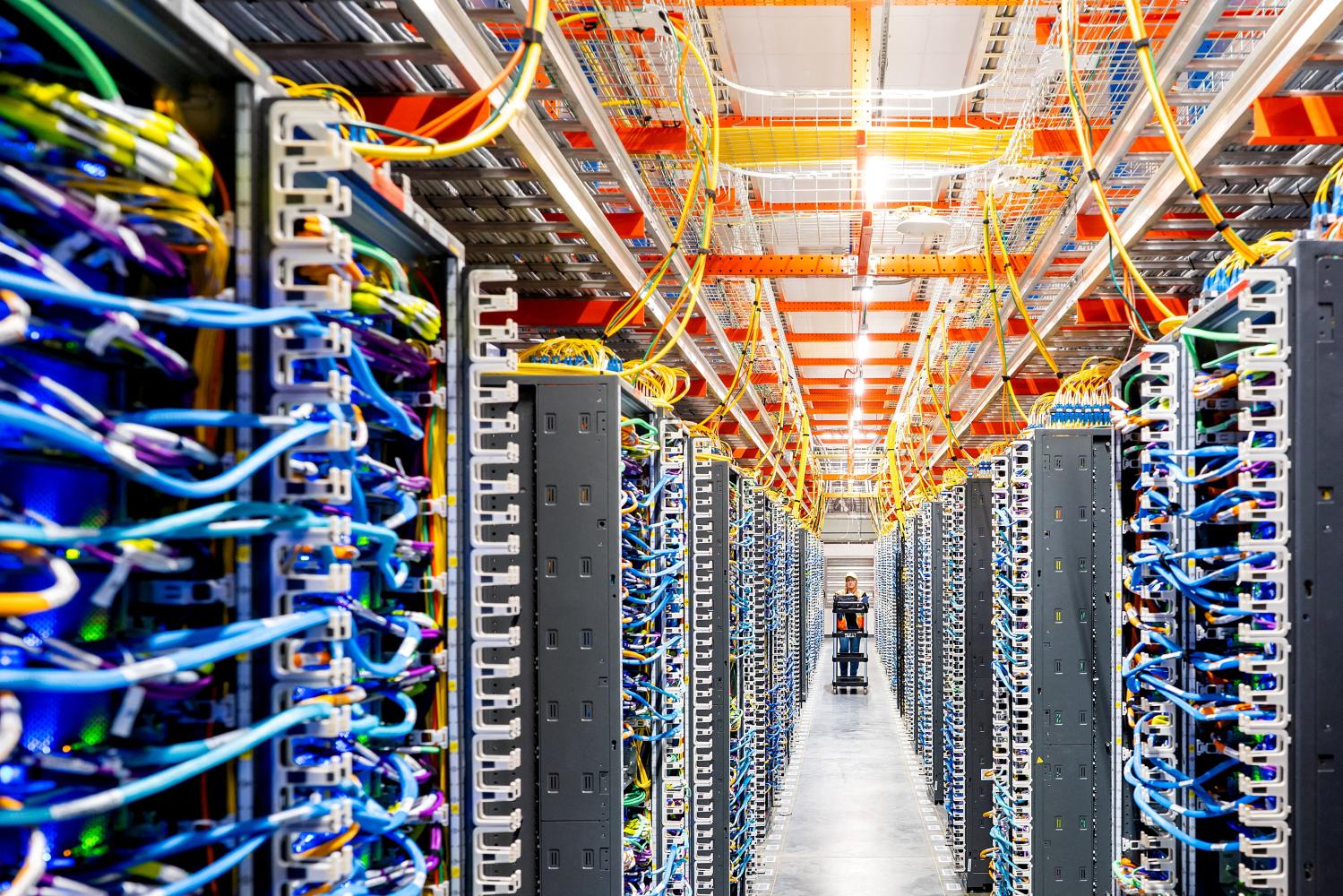
When infrastructure meets AI
Oped, Bertrand Badré & Saurabh Mishra, Published on 16/01/2026
» Infrastructure investment is booming. Around the world, governments are pouring trillions of dollars into roads, power grids, data centres, water systems, and housing, with many responding to intensifying climate shocks and the growing need for adaptation. Yet the construction industry -- the single largest force physically reshaping the planet -- is among the last major sectors to unlock all the benefits that digital technology offers. As a result, it accounts for about 21% of greenhouse-gas emissions, produces half of global landfill waste, and overspends by US$1.6 trillion a year.

Early education transforms lives
Oped, Justin van Fleet & Pia Rebello Britto, Published on 09/12/2025
» The leaders' declaration adopted at the end of the recent G20 summit in South Africa reaffirmed the group's commitment to tackling some of the world's most pressing challenges, from inequality and long-running conflicts to AI and climate change. It also marked a historic milestone: for the first time, the G20 identified education as one of its top global priorities.

Rethinking finance beyond aid
Oped, Justin Yifu Lin & Yan Wang, Published on 06/11/2025
» Traditional donors have sharply scaled back their aid commitments to developing countries over the past year. Some, like the United States, have virtually eliminated their aid programmes. According to the Organisation for Economic Co-operation and Development (OECD), official development assistance (ODA) from member countries declined by 7.1% in 2024, its first annual drop in six years.

Time for mission-oriented approach to school meals
News, Mariana Mazzucato, Published on 13/10/2025
» The global food system is failing on multiple fronts. With more than 2.6 billion people unable to afford a healthy diet, over 500 million are expected to be chronically undernourished by 2030. Worse, at a time when meeting future demand requires a 50% increase in food production, food-system productivity is actually declining, owing partly to rising climate risks. Agrifood industries are not only driving biodiversity loss, land degradation, and a global water crisis, but also generating almost one-third of global greenhouse-gas emissions.
How gender equality boosts the economy
Oped, Pinelopi Koujianou Goldberg, Published on 26/09/2025
» With protectionism and industrial policy returning to advanced economies, and with geopolitical tensions on the rise, this is an inauspicious moment for trade-led growth strategies. Since future growth will increasingly depend on sound domestic policies, low- and middle-income countries should focus on ensuring that existing resources are fully and efficiently deployed. And no resource is more valuable than human capital.

Stepping up the poverty fight
News, Akinwumi A Adesina & Ilan Goldfajn, Published on 15/09/2025
» Faced with a slowing global economy and rising debts, many developing-country governments may be tempted to scale back anti-poverty programmes. That would be a grave mistake. Combating poverty is not just a moral imperative; it is also crucial for economic stability, conflict prevention, and long-term development.