



Showing 1 - 10 of 12

International law is still worth defending
News, Andreas Motzfeldt Kravik, Published on 04/04/2026
» As the United States and Israel rain bombs down on Iran, with the stated intent of subduing one of the world's most brutal regimes, international law is collateral damage.

Shape of new climate politics emerges
News, Sam Geall, Published on 07/06/2025
» Only a few months ago, a headline like "United States sets tariffs of up to 3,521% on solar panels from Southeast Asia" could have been dismissed as satire. Today, it's nothing special, one of many published amid an uninterrupted fusillade accompanying Donald Trump's first 100 days in power. Yet it's also part of something bigger, as axes of economic power shift, technological changes surge, and popular sentiments reconfigure and metastasise. Amid that fracturing world order, how should we consider the climate crisis?

Henry Kissinger brought Germany redemption
News, Andreas Kluth, Published on 01/12/2023
» His timbre was just one reason I always looked forward to hearing Henry Kissinger, who died yesterday after living a full century, expound on international relations. It was gravelly and deep, and grew only more so over the years. But it wasn't just the voice. It was his unique accent, eccentric to some but strangely familiar to me.

HM King, Queen offer condolences
News, Post Reporters, Published on 11/09/2022
» Their Majesties the King and Queen on Saturday offered their condolences to His Majesty King Charles III over the passing of Her Majesty Queen Elizabeth II.

6 reasons to recalibrate Thai-US ties
News, Kavi Chongkittavorn, Published on 28/06/2022
» After years of benign neglect, Thailand is seeing some earth-shaking developments from the US, with the Biden administration apparently suddenly realising that Thailand remains a key ally in the region that has not yet been fully utilised. At this juncture, the time is right. Both countries are planning to commemorate the 190th anniversary of their diplomatic relations next year. Across the world, the war in Ukraine has already generating long-term regional repercussions, helping to highlight the state of the Thai-US alliance.

Superpower rivalry to put region to test
News, Thitinan Pongsudhirak, Published on 30/08/2019
» More than 18 months in, the trade war between the United States and China is not having its intended effects. Despite a flurry of US-led tariff hikes on Chinese products followed by China's retaliatory tax increases on American-made goods since January last year, the government of President Donald Trump is not perceived to be winning the trade conflict. China has proved more resilient and resourceful than many had anticipated. What this means is that the trade war is going to last much longer than many had expected. It is also likely to spread to other areas beyond trade and degenerate into a full-fledged non-military war.
Who has the lead in the AI race?
News, Peter Apps, Published on 17/01/2019
» In October, 31 Chinese teenagers reported to the Beijing Institute of Technology, one of the country's premier military research establishments. Selected from more than 5,000 applicants, Chinese authorities hope they will design a new generation of artificial intelligent weapons systems that could range from microscopic robots to computer worms, submarines, drones and tanks.

China is blowing an opportunity with Meng's arrest
News, Hal Brands, Published on 21/12/2018
» China is blowing the geopolitical opportunity of a lifetime. There has probably never been a better moment to undo America's greatest strategic advantage by dividing the US from its global network of democratic allies, many of which are horrified by President Trump's rhetoric and policies and deeply worried about Washington's staying power. Yet, Beijing is doing its best to remind that democratic world that it has far more to fear from a hegemonic China than from an erratic America.
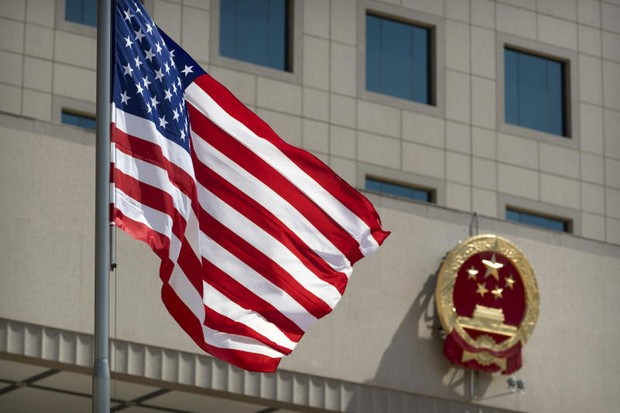
Democracy is the biggest US asset
News, Hal Brands, Published on 22/11/2018
» In his speech at the Asia-Pacific Economic Cooperation summit over the weekend, Vice President Mike Pence put the clash of political values between the US and China at the heart of the clash of geopolitical interests between the two countries. Mr Pence declared that America seeks a "free Indo-Pacific" where countries and individuals can "exercise their God-given liberties"; he touted Washington's progress in deepening its relationships with the region's democracies, from old allies such as Australia, newer partners such as India and small nations such as the summit host, Papua New Guinea. Mr Pence contrasted this approach with Chinese coercion and announced that "authoritarianism and aggression have no place in the Indo-Pacific".

Asia at risk of being its own worst enemy
News, Thitinan Pongsudhirak, Published on 31/08/2018
» The broad unravelling of the post-war liberal international system is no longer a matter of dispute. Its manifestations over the past decade from the disintegration of the Middle East as we knew it and the de-integration of the European Union with "Brexit" and anti-migration sentiment to the United States' unilateral turn against openness and liberal values so fundamental to its rise all testify to a murky and portentous international environment. Similarly, the global trading system no longer works like it used to as multilateral trade liberalisation has given way to plurilateral and bilateral free-trade agreements.