



Showing 1 - 10 of 57
Rethinking global health finance
Oped, Walter O Ochieng & Tom Achoki, Published on 06/02/2026
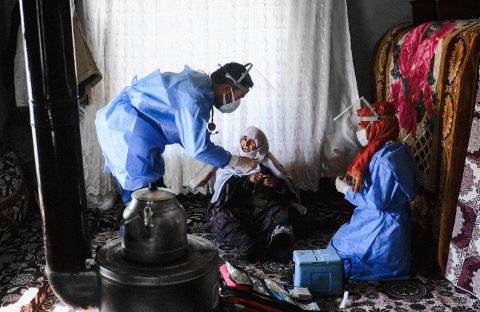
» For the past half-century, the economics of global health were straightforward. Under the so-called "grant-based" approach, rich countries donate to poor countries, which use the funds to meet their populations' health needs. Success was measured by services provided or lives saved, rather than by balance sheets. While this model was far from perfect, the latest approach replacing it -- focused on using tools like guarantees and blended finance to crowd in private capital -- threatens to produce even worse outcomes.

In an Irish memorial, I see echoes of Palestine
Oped, Andy Young, Published on 03/10/2025
» The figures by the River Liffey in Dublin are more clothes than flesh. The Famine Memorial, created by Rowan Gillespie, holds in bronze a moment of suffering, the settling in of the Great Hunger, which would cut Ireland's population by more than a quarter, the gone either dead or emigrated.
Thailand's contributions to UN at 80
Oped, Kavi Chongkittavorn, Published on 23/09/2025
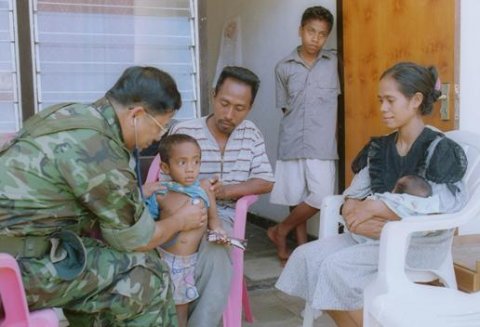
» The United Nations turns 80 years old this year. Thailand is a strong supporter of the UN's agenda and its multilateral efforts. It has never run against the UN decisions.

Mines strain fragile peace
Oped, Editorial, Published on 29/08/2025
» A landmine explosion that caused a Thai soldier to lose his lower right leg while patrolling in a high-risk zone near Ta Kwai temple on Wednesday threatens to derail peace efforts between Thailand and Cambodia.
The climate challenge as a development opportunity
Oped, Navroz K Dubash, Published on 06/06/2025
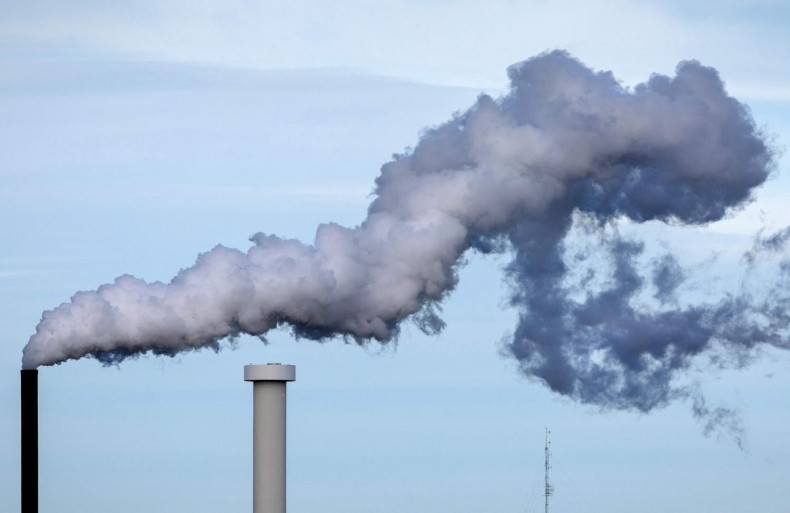
» When climate change is framed as a global problem requiring collective regulation of greenhouse-gas emissions, developing-country governments see little reason to prioritise the issue over others. After all, the rich, industrialised countries who contributed disproportionately to the problem are themselves backing away from decarbonisation and climate-finance commitments, while low-income countries bear the brunt of the costs of climate change. Decision-makers in developing countries understandably conclude it may be more rational to hunker down and focus on climate resilience rather than emissions reductions.
Why faith is indispensable to global development
Oped, Alaa Murabit, Published on 04/06/2025
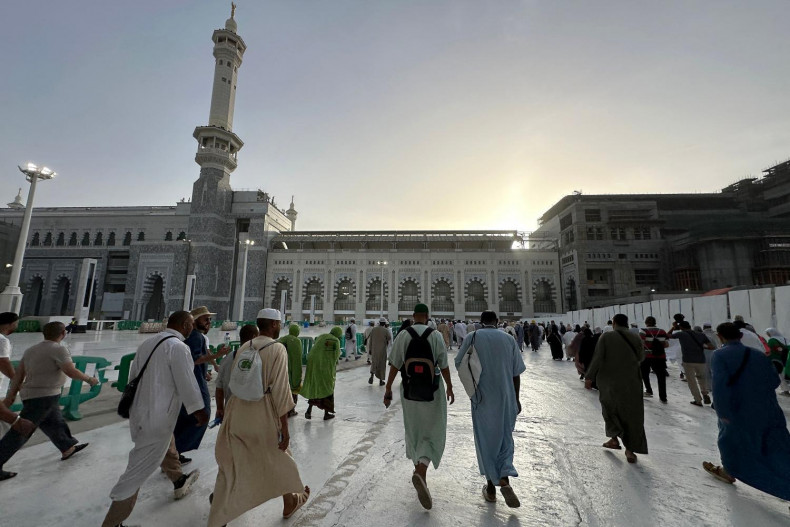
» For nearly two decades, I have worked at the intersection of development, health, and security. In roundtables with heads of state, emergency briefings, and donor forums, I have noticed a glaring pattern: faith-based actors are often excluded from global strategies. When present at all, they are sidelined, treated as symbolic figures rather than as genuine partners. This isn't just a blind spot. It's a strategic failure.

Working on our shared values
Oped, David Daly, Published on 09/05/2025
» The European Union was born from the ashes of the Second World War to break the cycle of wars between historical enemies. On May 9, 1950, French foreign minister Robert Schuman presented a historical declaration proposing to jointly manage, through a single supranational authority, the industries needed to wage war -- coal, iron, steel. The Schuman Declaration was adopted by six countries -- Belgium, France, Germany, Italy, Luxembourg and the Netherlands; May 9 is since considered the founding day of the EU.
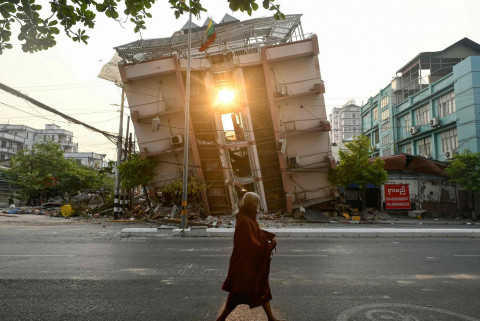
Quake crisis is too big to ignore
Oped, Zaw Oo, Published on 08/04/2025
» On March 28, Myanmar was struck by the most devastating earthquake in its history. The disaster reduced much of Mandalay, the country's second-largest city, to rubble. Nay Pyi Taw, the administrative capital, and several towns across central Myanmar also suffered massive destruction.
Asian countries will struggle to fill aid gap left by US
Oped, Mariejo Ramo, Published on 20/03/2025
» China is best placed to replace the United States as a key foreign donor in Asia but may be reluctant to fully fill the void, while South Korea and Japan may struggle to give enough, according to experts.

The key to universal energy access
Oped, Ingrid-Gabriela Hoven and Francesco La Camera, Published on 18/03/2025
» Our planet and its inhabitants are in trouble. The Intergovernmental Panel on Climate Change (IPCC) estimates that to meet the targets of the 2015 Paris agreement and keep global warming below 2° Celsius (relative to preindustrial levels), renewable energy must supply 70-85% of the world's electricity by 2050. In other words, renewable capacity must triple by 2030 to avert a climate catastrophe.