



Showing 1 - 9 of 9
China's bluster over Japan's Taiwan remarks
News, John J Metzler, Published on 05/12/2025
» Beijing has gone rhetorically ballistic over comments by Japan's new Prime Minister Sanae Takaichi, that a Chinese attack on Taiwan could constitute "a situation threatening Japan's survival" that thus could trigger a military response. Her statement poses uncharacteristically tough talk from Tokyo at a time when tensions are running high in the Far East.
Rare earths are definitely China's trump card
Oped, Angela Huyue Zhang, Published on 15/08/2025
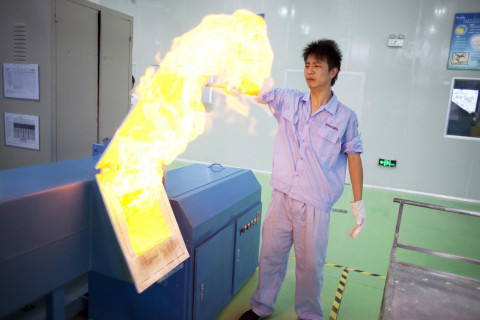
» China's weaponisation of rare earths has emerged as a major flash point in US-China trade negotiations. These critical materials, especially the high-performance magnets they make possible, are vital components in electric vehicles (EVs), wind turbines, industrial robotics, and advanced defence systems. In response to China's strict rare-earths export controls, the United States has quietly lowered tariffs, relaxed export controls on AI chips, and even softened visa restrictions for Chinese students.
What did the Hiroshima G7 summit accomplish?
News, Takatoshi Ito, Published on 25/05/2023
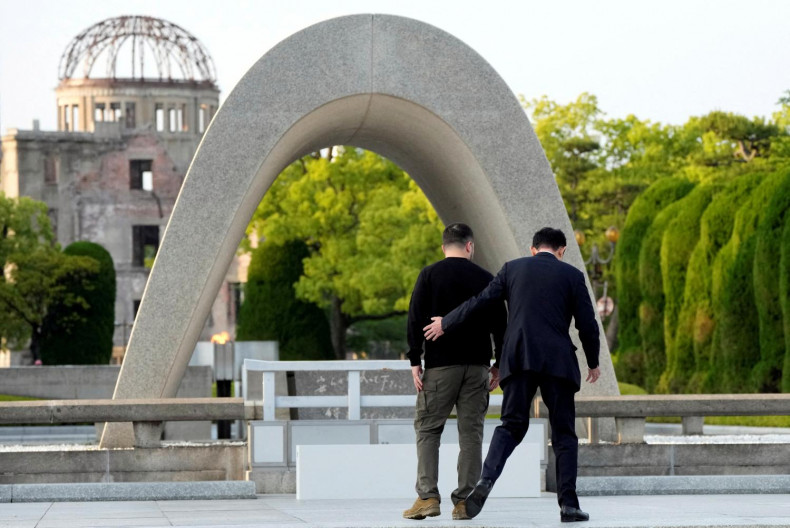
» Geopolitics dominated the just-concluded G7 summit in Hiroshima, where the most prominent participant was not a G7 leader, but Ukrainian President Volodymyr Zelensky.
The West needs an energy alliance
Oped, Morten Svendstorp, Published on 03/11/2022
» The old line that "history does not repeat itself, but often rhymes", is an apt description of the evolving relationship between the West and its rivals. During the Cold War, the Soviet Union was a global superpower, owing to its military prowess. Today, Russia's armed forces appear to be in a dismal state, but the country has become an energy superpower that can use its vast natural-gas reserves as a weapon. Similarly, today's standoff between the West and Russia over Ukraine echoes the Cold War confrontation between authoritarianism and democracy.
Deterring China requires boost in defence capacity
News, Takatoshi Ito, Published on 01/09/2022
» Following US Speaker of the House Nancy Pelosi's visit to Taiwan, China fired missiles into six areas surrounding Taiwan and sent fighter jets across the midline of the Taiwan Strait. Some of those missiles landed in Japan's exclusive economic zone (EEZ), threatening fishing boats from the island of Yonaguni, just 110 kilometres from Taiwan.
Biden needs to do better in Asia
Asia focus, Nareerat Wiriyapong, Published on 30/05/2022
» When Joe Biden arrived in Asia last week for the first visit to the region of his presidency, he aimed to pick up where his predecessor left off. Landing in South Korea on May 20 as events in North Korea and the Ukraine crisis loomed large, Mr Biden then travelled to Tokyo for a meeting of an alliance of the US, Australia, Japan and India that aims to counter China's growing influence.
East Asia: Where are America's red lines?
Oped, Takatoshi Ito, Published on 05/05/2022
» Global geopolitical attention remains focused on the war in Ukraine. But a significant shift, potentially even more serious in the long run than Russia's invasion of its neighbor, seems to be occurring in East Asia as a result of President Vladimir Putin's war.
Credit Abe with Japan's middle power evolution
Oped, Mark S Cogan, Published on 31/08/2020
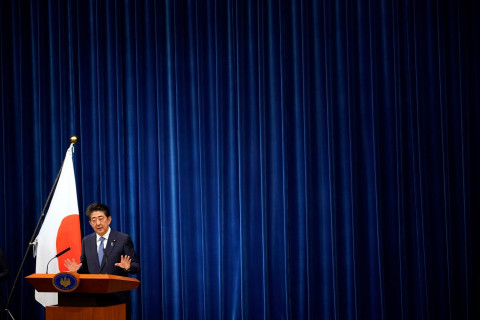
» After a record stint at the helm, Shinzo Abe is resigning as prime minister because of health complications. His departure comes in the middle of an epic security dilemma with China and could signal the end of a long pursuit of constitutional changes that would normalise Japan. His tenure in office can be assessed by assertiveness, pragmatic diplomacy, and the creation of partnerships that have propelled Japan from a reluctant sycophant of American foreign policy priorities to a more "proactive" and reliable regional partner.
Where Northeast, Southeast Asia meet
News, Thitinan Pongsudhirak, Published on 13/12/2019
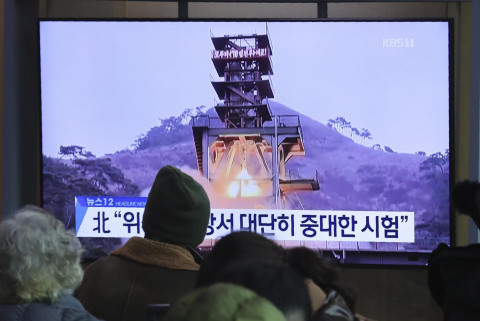
» That the post-Second World War liberal international order is unravelling is no longer in dispute. While there are ongoing issues and challenges about how and to what extent the incumbent rules-based international order that has been so beneficial to so many nations and peoples in their course of economic development can still be maintained, there is broad agreement that the international system as we know it has run its course.