



Showing 1 - 10 of 10
Wall Street risks shorting freedom in HK
Oped, Mark L Clifford, Published on 31/10/2025
» In early November, Wall Street's big guns will head to Hong Kong for a global financial summit, dining at the Palace Museum (featuring Chinese imperial works on loan from Beijing) before meeting at the nearby Rosewood Hotel -- one of the city's swankiest. There, the top brass from Goldman Sachs, Morgan Stanley, JPMorgan and another 100 financial firms will enjoy delicious food and breathtaking views as Hong Kong's leaders pitch them on the profits to be made in the former British colony.
Beyond the hype: Gauging AI's true economic impact
Oped, Daron Acemoglu, Published on 30/05/2024
» According to tech leaders and many pundits and academics, artificial intelligence (AI) is poised to transform the world as we know it through unprecedented productivity gains. While some believe that machines soon will do everything humans can do, ushering in a new age of boundless prosperity, other predictions are at least more grounded. For example, Goldman Sachs predicts that generative AI will boost global GDP by 7% over the next decade, and the McKinsey Global Institute anticipates that the annual GDP growth rate could increase by 3-4 percentage points between now and 2040. For its part, The Economist expects that AI will create a blue-collar bonanza.
Why sharing the tech wealth is really important
Oped, Diane Coyle, Published on 08/03/2024
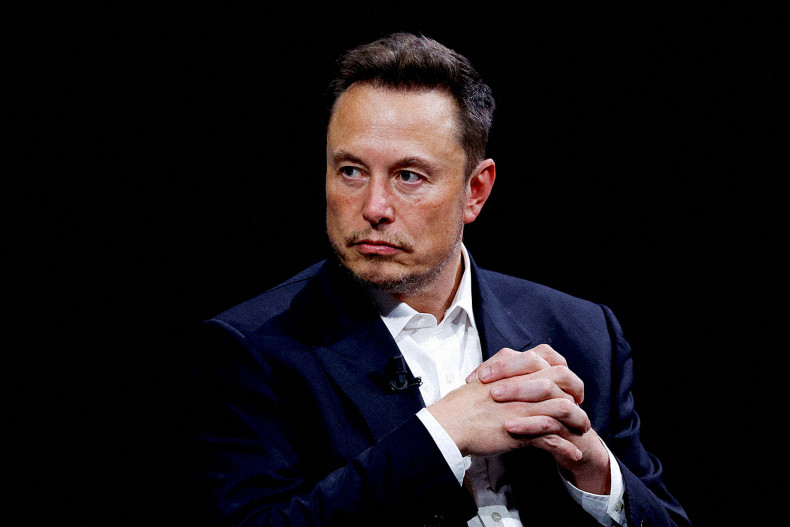
» One of the defining economic challenges of our time is how to distribute the value generated by groundbreaking technologies, such as generative artificial intelligence and recent innovations in biomedicine and manufacturing. To improve living standards, the benefits of transformative technologies must be widely shared. So far, however, these benefits have been monopolised by a small cadre of tech billionaires.
Station confusion
Oped, Postbag, Published on 17/06/2023
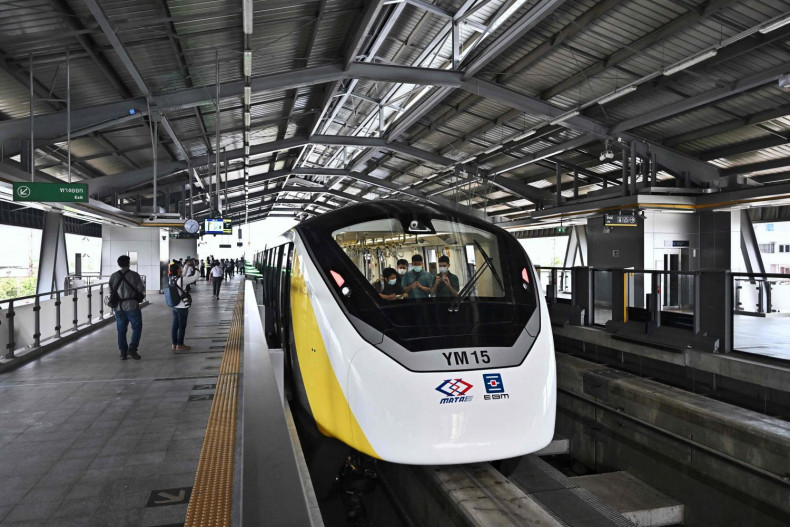
» Re: "Yet another missing rail link", (Editorial, June 4) and "Partial Pink Line launch urged as traffic worsens", (BP, June 3).

Just for defence
Oped, Postbag, Published on 10/06/2023
» Re: "Defence body eyes reform", (BP, June 2).

Netflix's latest hit is a missed autism opportunity
Oped, Clara Ferreira Marques, Published on 09/09/2022
» After the torment of indebted souls in Squid Game, South Korea has fallen for a feel-good courtroom drama with an unusual protagonist -- a young lawyer with autism. Extraordinary Attorney Woo has been the most popular non-English series on Netflix for weeks this summer, and the season finale, which aired last month, smashed viewing records for broadcaster ENA.

Confronting a new era of supply chain volatility
Oped, Sri Rajan, Raymond Tsang and Gerry Mattios, Published on 08/04/2021
» As Covid-19 threw fragile global supply chains into disarray, many companies were stunned by their own vulnerability. The risk of depending on a supply base that is concentrated in one geographic region has been increasing over the past 30 years, but the pandemic quickly demonstrated how much chaos and pain one unexpected event could inflict.
Stench of anti-Chinese racism is deeply ingrained
Oped, Hsuan L Hsu, Published on 20/03/2021
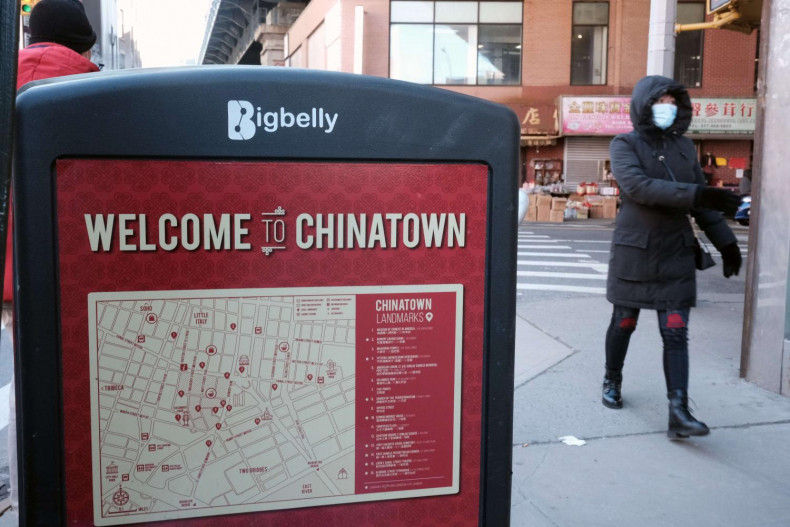
» Since the arrival of Covid-19, people assumed to be Chinese have been stared at, yelled at, coughed on, spat on, sprayed with air freshener, beaten, splashed with acid, pushed, stabbed, and murdered -- sometimes for simply occupying public space. I have thought twice about spending time in public on days when allergies to cats, pollen or wildfire smoke might make me susceptible to the hazards of "coughing while Asian".
Regenerating life amid the Covid-19 pandemic
Oped, Virginia L Bartlett, Published on 05/03/2021
» On the walls of Cedars-Sinai Medical Center, where I work, there is a print by artist Raymond Pettibon. It shows a swath of blue paint above the words, "Yes, but alas, the blue sky has been repainted. By restoration, there is no telling how much you have lost."
Response to coup requires look at China, military
Oped, Jonathan T Chow & Leif-Eric Easley, Published on 04/02/2021
» In the early hours of Feb 1, the day Myanmar's newly elected parliamentarians were to take their seats, the armed forces arrested senior members of the National League for Democracy (NLD), including State Counsellor and NLD leader Aung San Suu Kyi and Myanmar President Win Myint. The military declared a state of emergency, announcing it will govern the country for one year, after which it promises fresh elections. Understanding this political crisis requires unpacking the role of the military in Myanmar's beleaguered democratisation, the calculus of Commander-in-Chief Min Aung Hlaing, and a geopolitical context dominated by China.