



Showing 1 - 10 of 25
No-confidence and poll date in flux
Oped, Thitinan Pongsudhirak, Published on 14/11/2025
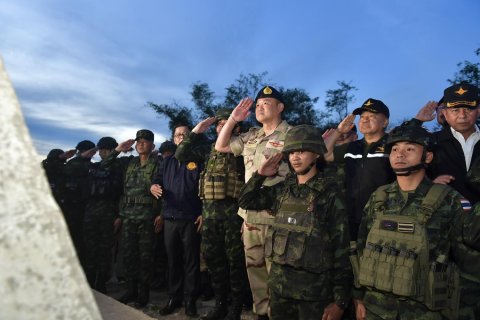
» Amid the drumbeats of military conflict with Cambodia, Thailand's political environment is evidently unruly and unsettled. The minority government of Anutin Charnvirakul, the third prime minister from the third largest-winning party since the latest national election in May 2023, is hard-pressed to stay in office beyond the four-month "Memorandum of Agreement" between his Bhumjaithai Party (BJT) and the People's Party (PP), the largest camp in the national assembly.

The scramble for the world's critical minerals
Oped, Rabah Arezki & Rick van der Ploeg, Published on 07/08/2025
» The world's superpowers have developed a seemingly insatiable appetite for the critical minerals that are essential to the ongoing energy and digital transitions, including rare-earth metals (for semiconductors), cobalt (for batteries), and uranium (for nuclear reactors). The International Energy Agency forecasts that demand for these minerals will more than quadruple by 2040 for use in clean-energy technologies alone. But, in their race to control these vital resources, China, Europe, and the United States risk causing serious harm to the countries that possess them.
Americans can't win from trade war by Trump
Oped, Nancy Qian, Published on 12/04/2025
» The world is reeling from US President Donald Trump's "Liberation Day", when he announced the highest US tariffs in more than a century.

Royal Irrigation Department must change ways
Oped, Editorial, Published on 23/02/2024
» The Royal Irrigation Department (RID) keeps trying to start new megaprojects despite the fact these schemes are often opposed by local residents.

Getting historic renovations right
Oped, Atch Sreshthaputra, Published on 09/11/2023
» There has been some good news about the conservation of heritage architecture in Thailand in recent years -- but bad news as well. First, the good part: our society is waking up to the value of heritage. Despite little public funding and weak legal protection, some old buildings and sites are being conserved. Many people, companies and institutions throughout the nation now recognise that preserving our historic architectural resources improves our economy, communities and quality of life.

Human success in the AI age
Oped, Jamie Metzl, Published on 21/09/2023
» Everywhere we look nowadays, we find warnings that artificial-intelligence algorithms are coming for our jobs. While Goldman Sachs estimates that two-thirds of all current jobs in the United States and Europe could be "exposed to some degree of AI automation" in the coming years, a report from Pew Research Center puts the figure at closer to one-fifth -- with a special emphasis on jobs requiring a college education.
Stopping mangrove deforestation
Oped, Zhimin Wu, Published on 26/07/2023
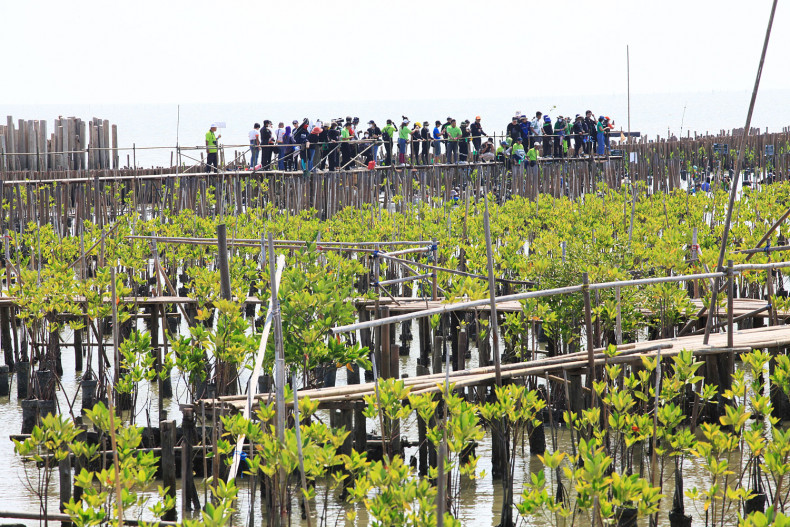
» Over the past 40 years, over 20% of mangroves globally were lost due to both human activities and natural retraction.

No exit from our democratic future
Oped, Thitinan Pongsudhirak, Published on 05/05/2023
» As Thailand's much-anticipated poll on May 14 heads into its homestretch, several clear trends and patterns are emerging to suggest that democratisation is making an inexorable comeback in this country, with positive implications for Southeast Asia and beyond. The immediate road ahead in Thai politics will likely still be bumpy, potentially marked by more judicial interventions and electoral manipulation, or even another military takeover, to thwart the people's choices at the poll. But eventually, pro-democracy forces backed by the Thai people's demand for change will come back time and again until there is a rebalanced, representative and reworked constitutional order in place.
Army mustn't dictate policy
Oped, Editorial, Published on 28/03/2023
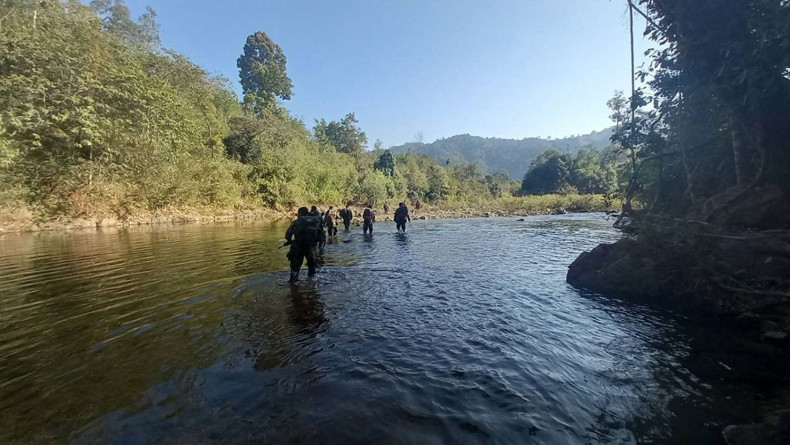
» The situation at the Thai-Myanmar border is becoming increasingly worrying following last week's intensified clashes between Myanmar's military government and armed ethnic rebel groups.

Investing in nature pays dividends
Oped, Mari Pangestu, Published on 14/12/2022
» The mega-challenges engulfing the world today -- from Covid-19 to climate change -- have highlighted the interdependencies between people, planet, and the economy. As we chart a course to reignite global growth and drive green, resilient, and inclusive development, we must not ignore these interlinkages. Nature -- meaning biodiversity and the services that healthy ecosystems provide -- is central to this endeavour, especially in developing countries, where poor people in rural areas tend to rely heavily on nature's services and are the most vulnerable to its depletion.