




Showing 1 - 10 of 140

How world order looks after 2025
Oped, Yuen Yuen Ang, Published on 05/01/2026
» For mathematicians, 2025 may stand out as a "perfect square": 45 multiplied by 45, a rare symmetry. But its significance goes far beyond numerical elegance -- it marks the year the postwar global order expired and a new one began.
Phasing out coal makes economic sense
Oped, Rapeepat Ingkasit, Published on 24/12/2025
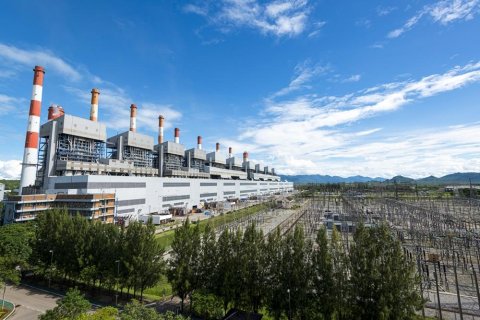
» Thailand's recent update to its Nationally Determined Contribution (NDC 3.0) was met with polite applause from diplomatic circles and global communities. By finally aligning the national net-zero target with the mid-century goals of our neighbours, the kingdom appears to be getting back on track.

Asean's regroup requires deep reforms
Oped, Thitinan Pongsudhirak, Published on 17/10/2025
» If Asean's 58 years thus far have been about resilience and playing a central organising role in promoting regional security and stability, its next decade will determine whether the Southeast Asian bloc can adapt and remain relevant. After the crises in Myanmar and along the Thai-Cambodian border, Asean's credibility has never been more in doubt. To regain its effectiveness as Southeast Asia's one and only agency, Asean needs to move away from the ritualistic diplomacy of mundane meetings to far-reaching reforms that chart new ways of making things work.
Can ethical supply chains survive tariffs?
Oped, Joleen Ong, Published on 10/10/2025
» Recent geopolitical developments have underscored the fragility of global supply chains, reminding businesses in constantly evolving sectors like consumer goods and fashion that the strength of supplier relationships is one of the few persistent sources of resilience. Maintaining such relationships through responsible purchasing is not only ethical but strategically necessary.
Floods 'a recurring nightmare'
Oped, George G van der Meulen & Chamniern Vorratnchaiphan, Published on 16/09/2025
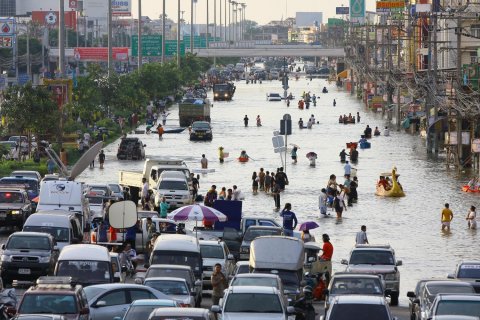
» Thailand has faced floods for more than a century. Some years are worse than others, but the pattern is consistent. The catastrophic 2011 floods remain the most painful reminder: according to the World Bank, they caused US$46.5 billion (1.5 trillion baht) in economic losses, displaced 13 million people, and claimed approximately 800 lives. Much of the country's industrial heartland was submerged for months, severely impacting global supply chains.
Limits of Xi, Putin's 'no-limits' alliance
Oped, Ruby Osman & Dan Sleat, Published on 05/09/2025
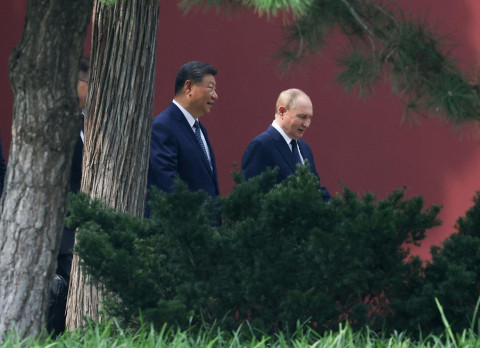
» Much has changed since Chinese President Xi Jinping and Russian President Vladimir Putin last stood together atop Tiananmen Square in 2015. When they did so again this week, it was supposedly as equal partners. But, of course, the reality is far more complex.

Mines strain fragile peace
Oped, Editorial, Published on 29/08/2025
» A landmine explosion that caused a Thai soldier to lose his lower right leg while patrolling in a high-risk zone near Ta Kwai temple on Wednesday threatens to derail peace efforts between Thailand and Cambodia.

Talking peace with a tyrant: Who'd do it?
Oped, Veera Prateepchaikul, Published on 25/08/2025
» Peace is a beautiful word. It is an ideal condition under which people of different countries, religious faiths, races, cultures and political views can co-exist happily, without having to fight with each other, without having to shed blood as being witnessed across the world from Ukraine in eastern Europe to Gaza and Yemen in the Middle East, and even along the Thai-Cambodian border before a ceasefire agreement was signed late last month.

The scramble for the world's critical minerals
Oped, Rabah Arezki & Rick van der Ploeg, Published on 07/08/2025
» The world's superpowers have developed a seemingly insatiable appetite for the critical minerals that are essential to the ongoing energy and digital transitions, including rare-earth metals (for semiconductors), cobalt (for batteries), and uranium (for nuclear reactors). The International Energy Agency forecasts that demand for these minerals will more than quadruple by 2040 for use in clean-energy technologies alone. But, in their race to control these vital resources, China, Europe, and the United States risk causing serious harm to the countries that possess them.
Building infrastructure for the AI age
Oped, Diane Coyle, Published on 22/07/2025
» The London Underground, the world's oldest subway system, opened in 1863. Around the same time, London's modern sewage system was designed by civil engineer Joseph Bazalgette in response to the Great Stink of 1858, which brought parliament to a standstill. Planning far ahead, Bazalgette built the system to last 150 years. Only now, with the Thames Tideway project, is it being significantly expanded.