



Showing 1 - 10 of 792

Emerging markets stand strong
Oped, Kristalina Georgieva and Mohammed Al-Jadaan, Published on 12/02/2026
» It used to be that when advanced economies sneezed, emerging markets caught a cold. That is no longer true. Following recent global shocks, such as the post-pandemic inflation surge and a new wave of tariffs, emerging markets have held up well. Inflation has continued to slow, currencies have generally retained their value, and debt issuance costs have remained at manageable levels. There has been no sign of the kind of financial turbulence that came with past economic shocks.
Japanese PM Takaichi comes out on top
Oped, Taniguchi Tomohiko, Published on 11/02/2026
» Japanese Prime Minister Sanae Takaichi has just scored an unprecedented victory in the country's general election. The ruling Liberal Democratic Party (LDP), which she leads, won 316 seats in the 465-member House of Representatives (the Diet's lower house), up sharply from 198. The combined strength of two parties that had merged hastily -- despite their fundamentally opposing platforms -- in an effort to bring Ms Takaichi down fell from 167 seats to just 49. The LDP, which celebrated its 70th anniversary last year, has never looked more robust.

Thin buyer guide
Oped, Postbag, Published on 11/02/2026
» Re: "Choosing the right air purifier for Thailand's rising air pollution", (Life, Feb 8).

Rethinking global health finance
Oped, Walter O Ochieng & Tom Achoki, Published on 06/02/2026
» For the past half-century, the economics of global health were straightforward. Under the so-called "grant-based" approach, rich countries donate to poor countries, which use the funds to meet their populations' health needs. Success was measured by services provided or lives saved, rather than by balance sheets. While this model was far from perfect, the latest approach replacing it -- focused on using tools like guarantees and blended finance to crowd in private capital -- threatens to produce even worse outcomes.
Our tariff-era dollar, your problem
Oped, Qiyuan Xu, Published on 04/02/2026
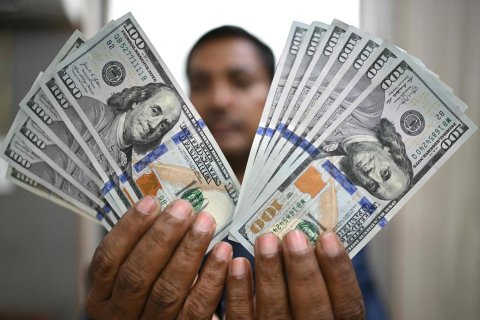
» In 2025, the dollar index, which measures the greenback's strength against a basket of major currencies, fell by roughly 9.4%. Over the same period, the United States' average effective tariff rate rose by around 14.4 percentage points, from 2.4% to 16.8%, according to the Yale Budget Lab. Taken together, these shifts imply that, in the import trade domain, the US experienced an effective exchange-rate depreciation of around 24%.

Future will be decided in classrooms
Oped, Ken Legins and Somchai Jitsuchon, Published on 26/01/2026
» On Feb 8, people across Thailand will head to the national election.

How to feed the world's ten billion people
Oped, Yurdi Yasmi, Published on 22/01/2026
» With the world struggling to feed eight billion people today, how will we feed ten billion by 2050?

Poll perils persist
Oped, Editorial, Published on 15/01/2026
» As the election campaign intensifies ahead of the Feb 8 poll, a number of education outlets as well as media channels are churning out opinion survey results suggesting the popularity ratings of individual candidates.

Dark horse, deep state in upcoming polls
Oped, Nattaya Chetchotiros, Published on 15/01/2026
» The national election may be 20 days away, yet political analysts are already reading the tea leaves. Surprisingly, their predictions point in the same direction -- the next coalition could be a surprising mix of the Bhumjaithai Party (BJT), Pheu Thai and -- hold your breath -- the Democrat Party.
Moderate global growth masks regional strains
Oped, John J. Metzler, Published on 14/01/2026
» Global economic growth still continues, but at a moderate pace. That's the verdict from the UN's World Economic Situation and Prospects 2026, which predicts that global economic output will grow by 2.7% this year, or slightly below the 2.8% estimated for 2025, but less than the pre-pandemic average of 3.2%.