



Showing 1 - 10 of 12
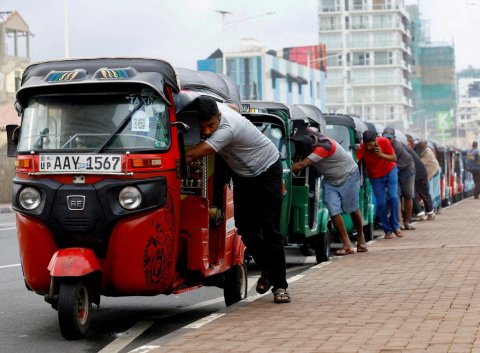
Can world weather another crisis?
Oped, Jayati Ghosh, Published on 07/11/2025
» As stock markets hit record highs, rising financial fragility is setting off alarm bells across the United States and Europe. The International Monetary Fund has recently echoed these concerns, stoking fears of a looming crisis.

Blended finance for climate action
Oped, Imran Arif, Published on 13/08/2025
» It takes policy support, commitment and also money to tackle climate change. For the latter, Thailand needs around 5-7 trillion baht in climate finance to achieve its carbon neutrality and net-zero emissions by 2050 and 2065, respectively. However, that's a target the country is still a long way away from.
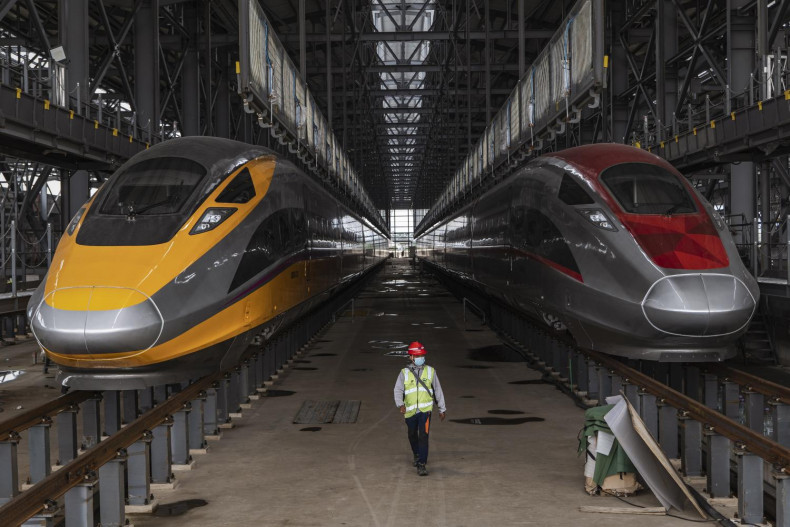
New approach to debt required
Oped, Kate Hampton & Hannah Wanjie Ryder, Published on 11/02/2025
» The world is in the midst of a financing crisis. As world leaders work to mobilise trillions of dollars to meet climate and development goals, expensive public debt is limiting governments' ability to make long-term investments. A long-term framework for low-interest financing of global public goods is urgently needed.
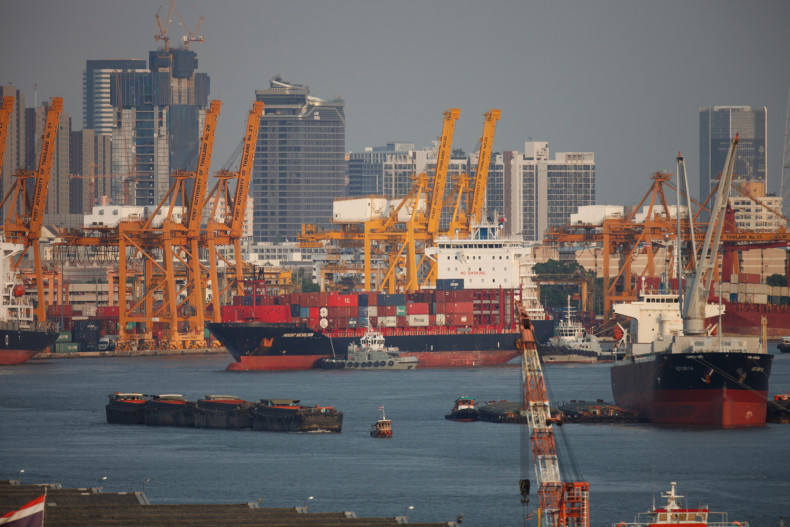
Developing nations face solvency crisis
Oped, Anne O. Krueger, Published on 08/01/2025
» High debt levels are again setting off alarm bells worldwide. In developed countries, attention is focused on the rapid increase in public debt, while developing economies are struggling to service their external obligations amid slowing growth and stagnating exports.

How China and Japan's values 'differ'
Oped, Philip J Cunningham, Published on 05/12/2024
» Malaysia's former prime minister Mahathir Mohamad famously saluted "Asian values" citing "diffidence" as one of the characteristics that ostensibly made Asians different, though he did so in an arrogant, attention-grabbing kind of way. More successful was his "Look East Policy", (which, from the geographic confines of Malaysia is actually the Philippines) and there was no mistaking that it was Japan that Mr Mahathir had in mind, with China hovering somewhere out of focus in the background.

Moving towards a fifth world order
Oped, Gordon Brown & Mohamed A El-Erian, Published on 26/10/2024
» The Bretton Woods institutions -- the International Monetary Fund and the World Bank -- are now 80 years old. But they are as under-resourced and poorly supported by national governments as at any time in their history. Their predicament is perhaps the clearest sign that economic and financial multilateralism is fragmenting along with the global economy. Worse, this fragmentation comes at a time of rising international tensions, financial fragility, sputtering growth, rising poverty, and mounting reconstruction bills in Gaza, Lebanon, Ukraine, and elsewhere.

Buddhism is always oddly political
Oped, Guanxiong Qi, Published on 16/03/2024
» This year, His Majesty King Maha Vajiralongkorn Phra Vajiraklaochaoyuhua is turning 72. Following the sexagenary cycle, the Thai government organised a month-long royal procession of the Buddha's relics from Feb 24 to this coming Monday including tours of four major Thai cities -- Bangkok, Chiang Mai, Ubon Ratchathani and Krabi.
Which one is the real Europe?
Oped, Antara Haldar, Published on 04/08/2023
» This year marks the 30th anniversary of the European Union. When the Maastricht Treaty took effect in 1993, Europeans embarked on a historically unique experiment in supranational governance and shared sovereignty. The EU's single market allows for the free movement of goods, services and capital among 27 member states; and, critically, its Schengen Area means open borders between member states (and free movement rights even in non-Schengen member states), granting more than 400 million people an unprecedented form of citizenship that transcends national territories. While free trade is an old idea, the free movement of people on this scale is entirely novel.
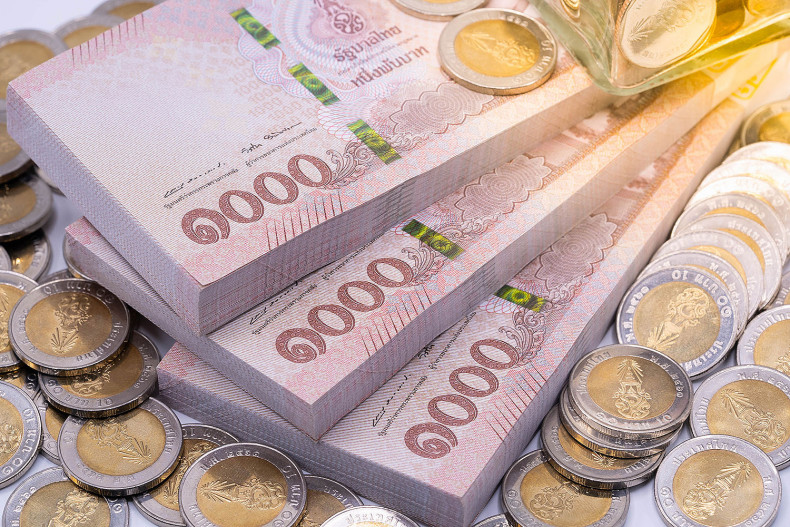
China and the sovereign-debt time bomb
Oped, Anne O Krueger, Published on 24/01/2023
» International capital flows have long been a major source of economic growth. Savings in higher-income countries have financed high-yielding investments in low-income countries, generating benefits for all. After World War II, capital flows under the Marshall Plan drove the rapid reconstruction of Europe, and after those countries recovered, they extended their own foreign aid and other official financial flows to the developing world. Private financing also increased substantially; by the 1990s, it accounted for over half of total capital flows to developing countries.

Of debt and bondage with Beijing
Oped, Brahma Chellaney, Published on 26/11/2022
» Recently released details of Kenya's 2014 loan agreement with China to finance a controversial railway project have once again highlighted the predatory nature of Chinese lending in developing countries. The contract not only imposed virtually all risk on the borrower (including requiring binding arbitration in China to settle any dispute), but also raised those risks to unmanageable levels (such as by setting an unusually high interest rate). With terms like that, it is no wonder some countries around the world have become ensnared in sovereignty-eroding Chinese debt traps.