



Showing 1 - 10 of 99
Our tariff-era dollar, your problem
Oped, Qiyuan Xu, Published on 04/02/2026
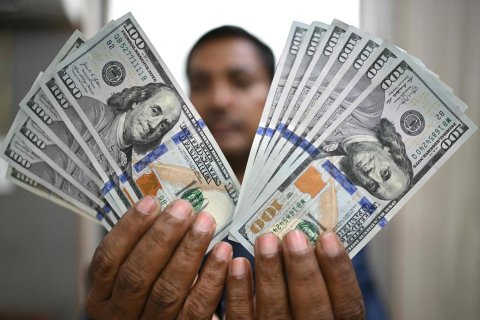
» In 2025, the dollar index, which measures the greenback's strength against a basket of major currencies, fell by roughly 9.4%. Over the same period, the United States' average effective tariff rate rose by around 14.4 percentage points, from 2.4% to 16.8%, according to the Yale Budget Lab. Taken together, these shifts imply that, in the import trade domain, the US experienced an effective exchange-rate depreciation of around 24%.

When past pics resurface
Oped, Editorial, Published on 05/12/2025
» A series of photos taken years ago has gone viral online, showing controversial foreign businessman Benjamin Mauerberger, aka Ben Smith, with high-ranking officials and politicians, including Anutin Charnvirakul, now prime minister.

Thailand hit by a confluence of crises
Oped, Thitinan Pongsudhirak, Published on 05/12/2025
» Thailand is currently facing multiple crises of unprecedented proportions in the highest corridors of power that will pose adversity for the economy and political stability next year and beyond.

'Scam-gate' deserves full accounting
Oped, Thitinan Pongsudhirak, Published on 24/10/2025
» The explosive revelations and allegations of regional cybercrimes and scam networks have hit Thailand head-on and placed the government of Prime Minister Anutin Charnvirakul in an awkward and defensive position. As more facts surrounding what looks like a labyrinthine cross-border multibillion-dollar transnational criminal ring come to light, more questions have surfaced with no clear answers. The Anutin government needs to come clean and avoid a "scam-gate" of cover-ups and lies at the expense of countless scammed victims across many countries.

Building capacity where it counts
Oped, Mariana Mazzucato & Rainer Kattel, Published on 06/10/2025
» After years of underinvestment, governments around the world are struggling to keep pace with growing demands. The consequences are now widely evident, as underfunded and unprepared public agencies falter whenever crises strike. The problem is not "slimming" government down, but rather rendering it more capable, strategic, outcome-oriented and a good partner in solving the greatest problems of our time: providing adequate housing for all, strengthening climate resilience and ensuring that technology makes all our lives better, not just a few "bros" richer.
Making Cambodia pay for border row
Oped, Chartchai Parasuk, Published on 02/10/2025
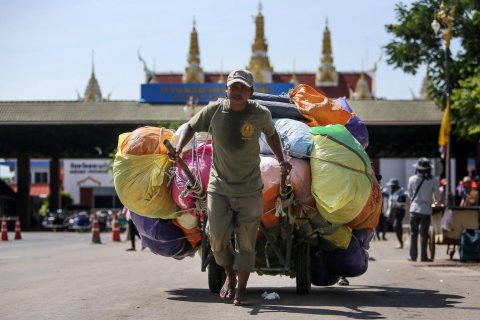
» What I am covering today is a sensitive issue that all economic research houses, both government and private, avoid talking about. That is the economic impact of the border dispute between Thailand and Cambodia.

Authoritarians' brave new cities
Oped, Robert Muggah & Carlo Ratti, Published on 23/09/2025
» Few policy ideas are as radical -- or as misleadingly packaged -- as "freedom cities". Championed by Silicon Valley's techno-libertarian elite and recently embraced by right-wing politicians like Donald Trump, the idea is to create digitally powered, master-planned enclaves of deregulated innovation.

Breaking barriers for Thai innovations
Oped, Saowaruj Rattanakhamfu and Pichakorn Khowasinth, Published on 27/08/2025
» Thailand is abundant with talent in medical technology. Why aren't our homegrown innovations reaching patients? The answer is simple: a broken system.

Demographic time bomb threatens Chinese society
Oped, Nancy Qian, Published on 22/08/2025
» News stories about China nowadays largely focus on geopolitical developments, particularly the Sino-American rivalry. But China's 1.4 billion people, while aware of these issues, are more preoccupied with a problem that hits much closer to home: their shrinking families.

Thai-Cambodian feud is Asean's worst
Oped, Thitinan Pongsudhirak, Published on 15/08/2025
» The border dispute and consequent military conflict between Cambodia and Thailand in recent weeks have become Asean's worst crisis in its 58 years of existence. Ironically, it was an intra-regional war between Indonesia and Malaysia that gave rise to Asean in 1967, but now an intra-Asean military clash is undermining the Southeast Asian organisation's core reason for being and its main claim to credibility and prominence. Unless Asean, under Malaysia as its rotational chair this year, moves fast to contain the bilateral dispute and reinforce a delicate ceasefire agreement, Southeast Asia will be looked upon increasingly as a region and less as an organisation of member states.