



Showing 1 - 10 of 214
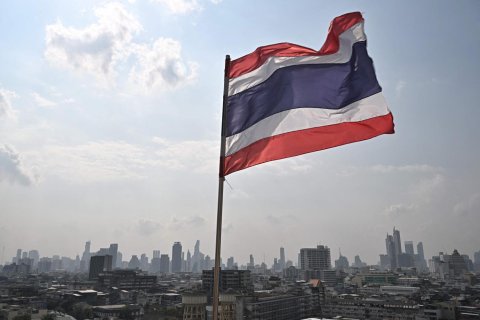
Reinvent Thailand to revive growth
Oped, Boonwara Sumano, Published on 11/02/2026
» In the 1990s, Thailand ranked second in Asean for state performance, behind only Singapore. Today, we trail several neighbours. This decline has unfolded gradually over three decades -- through repeated economic crises, institutional stagnation, and reforms that never quite went far enough. What is different today is that the cost of inaction has become far more dangerous.

Thin buyer guide
Oped, Postbag, Published on 11/02/2026
» Re: "Choosing the right air purifier for Thailand's rising air pollution", (Life, Feb 8).
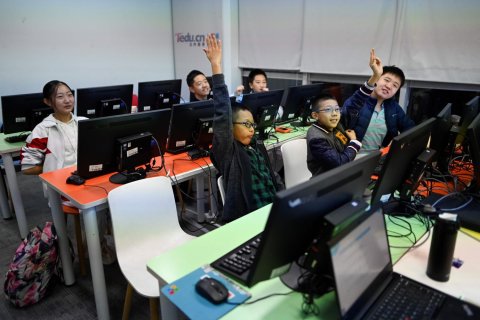
AI and the future of education
Oped, Pinelopi Koujianou Goldberg, Published on 27/01/2026
» The rapid progress of large language models over the past two years has led some to argue that AI will soon make college education, especially in the liberal arts, obsolete. According to this view, young people would be better off skipping college and learning directly on the job.
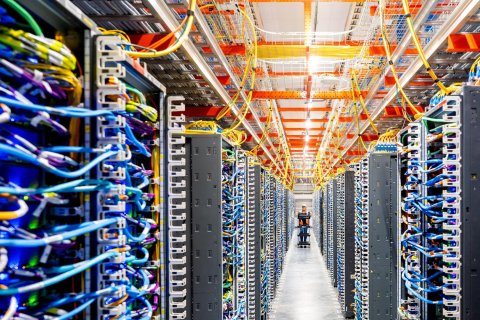
When infrastructure meets AI
Oped, Bertrand Badré & Saurabh Mishra, Published on 16/01/2026
» Infrastructure investment is booming. Around the world, governments are pouring trillions of dollars into roads, power grids, data centres, water systems, and housing, with many responding to intensifying climate shocks and the growing need for adaptation. Yet the construction industry -- the single largest force physically reshaping the planet -- is among the last major sectors to unlock all the benefits that digital technology offers. As a result, it accounts for about 21% of greenhouse-gas emissions, produces half of global landfill waste, and overspends by US$1.6 trillion a year.
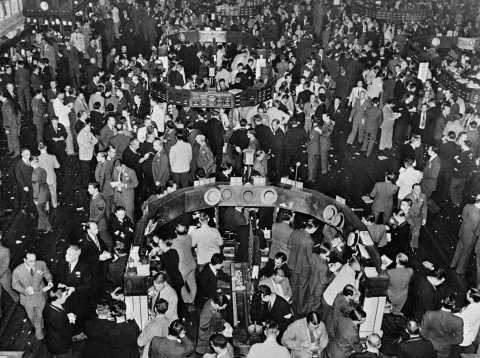
It's the economic history, stupid
Oped, Iker Saitua, Published on 14/01/2026
» Every year, I walk into a first-year lecture hall in Bilbao at the University of the Basque Country (EHU) and watch shoulders slump. The title of the course I'm teaching -- "Economic History" -- draws a similarly dejected reaction from my students: "Meh." "Boooring." "What's this even for?" Some call it "the history class", as if it belonged to another century.
How world order looks after 2025
Oped, Yuen Yuen Ang, Published on 05/01/2026
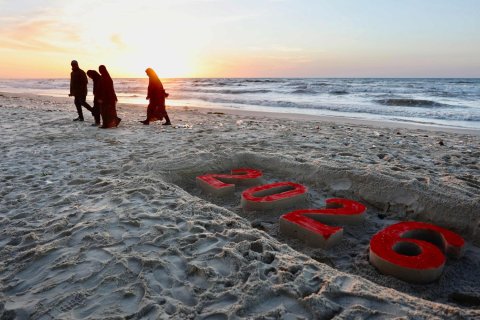
» For mathematicians, 2025 may stand out as a "perfect square": 45 multiplied by 45, a rare symmetry. But its significance goes far beyond numerical elegance -- it marks the year the postwar global order expired and a new one began.
Flood resilience a national imperative
Oped, Srinivasa Popuri and Kotchakorn Voraakhom, Published on 18/12/2025
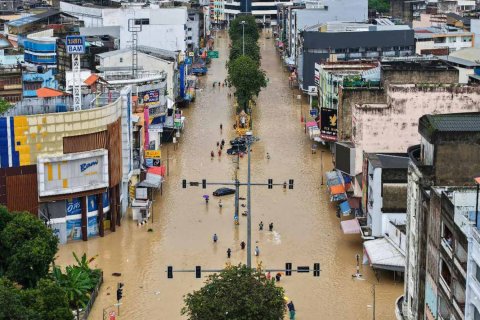
» The twin cyclones Senyar and Ditwah that struck South and Southeast Asia in November caused unprecedented flooding across the region, with Thailand among the most severely affected.

Tambon Administrative Organisation elections confront an 'era of change'
Oped, Post Reporters, Published on 28/11/2025
» The Tambon Administrative Organisation (TAO) elections on Jan 11 will be a pivotal moment, as local governments must be prepared to confront a new wave of challenges, Deputy Prime Minister Borwornsak Uwanno said.

Parroting lies
Oped, Postbag, Published on 28/11/2025
» Re: "Rising heat needs urgent response", (Opinion, Nov 24). After repeating the obligatory but egregiously false lie that this year was the hottest on record, the UN climate alarmists claim, "By 2060, under a high-emissions scenario, the Islamic Republic of Iran, Mongolia, Myanmar, Turkey and Uzbekistan could lose more than 70% of their glacier mass. These phenomena also add to sea-level rise, raising existential risks for some countries in the Pacific."
Adam Smith and the moral economy we have lost
Oped, Antara Haldar, Published on 12/11/2025
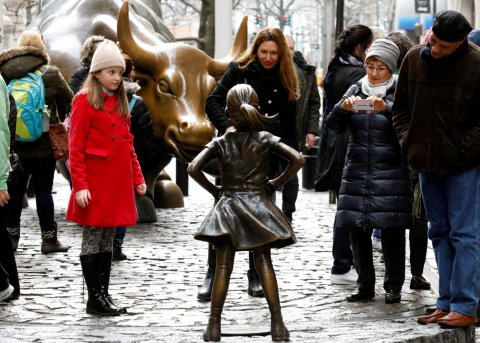
» With the 250th anniversary of The Wealth of Nations approaching next year, the world is gearing up to honour Adam Smith. But which Smith should be recognised? The hard-nosed "founding father" of modern economics, or the philosopher who wrote The Theory of Moral Sentiments? Scholars have wrestled with this question, a riddle known as "Das Adam Smith Problem", for centuries, because it concerns not just dualities within Smith's thought, but also our own uneasy relationship with morality and markets.