




Showing 1 - 10 of 36

Juggling act
Oped, Postbag, Published on 31/12/2025
» Re: "Thailand's delicate stance with Israel", (Opinion, Dec 9).

It's time to choose peace
Oped, Editorial, Published on 25/12/2025
» More than two weeks after armed clashes were reignited on Dec 7, Thailand and Cambodia have tentatively agreed to return to square one by reviving a key bilateral mechanism -- the General Border Committee (GBC) -- with the aim of seeking a peaceful resolution, or at least a ceasefire.

Talk, don't fight
Oped, Postbag, Published on 12/12/2025
» Re: "Cambodia talks ruled out", (BP, Dec 11). I was saddened to see that there is no room for diplomacy in the dispute with Cambodia. To quote Churchill: "To jaw-jaw is always better than to war-war."
Can Trump achieve eternal peace in Gaza?
Oped, Joschka Fischer, Published on 30/10/2025
» Past wars in the Middle East have not only brought immense human suffering but also created new paths toward peace. The same holds for the war in and around Gaza. Israel and the United States have significantly, and perhaps decisively, weakened the so-called Axis of Resistance -- led, financed, and armed by Iran -- and Iran's nuclear programme. The leaders of Hezbollah (in Lebanon) and Hamas (in Gaza) have been eliminated, and the Assad regime in Syria has been overthrown. The Middle East is now a different place, and Iran and its Axis of Resistance are among the biggest losers.
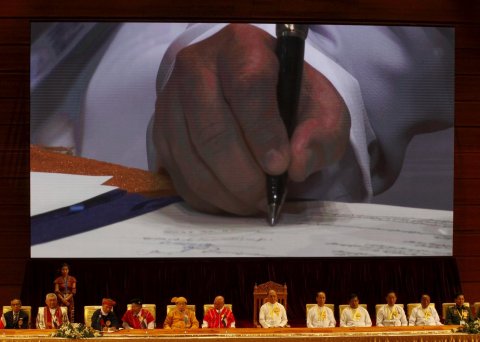
Myanmar's fragile pursuit of peace
Oped, Pisanu Suvanajata, Published on 23/10/2025
» A decade ago, Myanmar reached what many viewed as a historic milestone on Oct 15, 2015. The signing of the Nationwide Ceasefire Agreement (NCA) between the government and several ethnic armed organisations (EAOs) brought renewed hope. After more than seven decades of internal conflict, the country seemed to be stepping towards a peaceful and inclusive future.
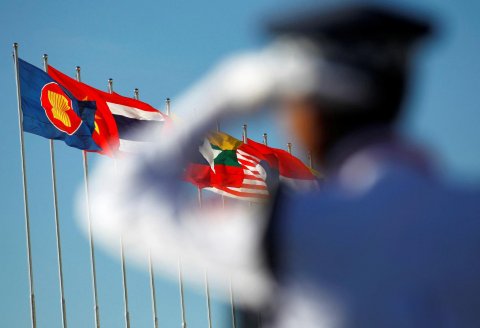
Flawed Asean needs to regain footing
Oped, Thitinan Pongsudhirak, Published on 10/10/2025
» Nearly six decades after its founding, the Association of Southeast Asian Nations (Asean) finds itself back where it began -- divided, uncertain, and vulnerable to the influence of major powers. Once hailed as a model for regional cooperation in the developing world, Asean now faces a crisis of purpose. Unless it can rediscover the unity and collective way forward that defined its early decades, Southeast Asia's flagship institution risks slipping into irrelevance.

Thai-Cambodian feud is Asean's worst
Oped, Thitinan Pongsudhirak, Published on 15/08/2025
» The border dispute and consequent military conflict between Cambodia and Thailand in recent weeks have become Asean's worst crisis in its 58 years of existence. Ironically, it was an intra-regional war between Indonesia and Malaysia that gave rise to Asean in 1967, but now an intra-Asean military clash is undermining the Southeast Asian organisation's core reason for being and its main claim to credibility and prominence. Unless Asean, under Malaysia as its rotational chair this year, moves fast to contain the bilateral dispute and reinforce a delicate ceasefire agreement, Southeast Asia will be looked upon increasingly as a region and less as an organisation of member states.

Conflict undermines cooperation
Oped, David Jay Green, Published on 05/08/2025
» The long-standing border dispute between Cambodia and Thailand has again escalated to actual conflict. Dozens of people have been killed, more have been injured, and more than 170,000 people have had to flee their homes. Cross-border trade and tourism are on hold. As I write this piece, a fragile ceasefire is still in place, but we need more than this; we need an end to hostilities between the two countries.
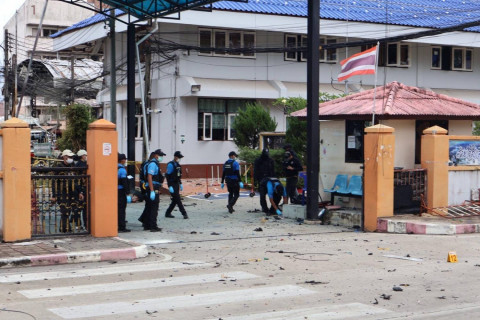
Time for Thai govt, BRN to talk
Oped, Matt Wheeler, Published on 12/03/2025
» Dialogue between the Thai government and Malay separatists marked its 12-year anniversary on Feb 28, but violence in the southernmost provinces remains an open wound on the Thai body politic. A dreadful routine of bombings, shootings and clashes in these provinces has killed some 7,680 people since 2004, yet the simmering violence goes largely unnoticed outside the region.

Assad's fate haunts Myanmar junta
Oped, Kavi Chongkittavorn, Published on 17/12/2024
» The recent overthrow of Syrian President Bashar al-Assad provides insights into the potential undoing of Myanmar's military regime in Nay Pyi Taw. Senior General Min Aung Hlaing must take note and study why even a strong 55-year-old family empire with heavyweight outside backing still crumbled like a house of cards.