



Showing 1 - 10 of 62

When infrastructure meets AI
Oped, Bertrand Badré & Saurabh Mishra, Published on 16/01/2026
» Infrastructure investment is booming. Around the world, governments are pouring trillions of dollars into roads, power grids, data centres, water systems, and housing, with many responding to intensifying climate shocks and the growing need for adaptation. Yet the construction industry -- the single largest force physically reshaping the planet -- is among the last major sectors to unlock all the benefits that digital technology offers. As a result, it accounts for about 21% of greenhouse-gas emissions, produces half of global landfill waste, and overspends by US$1.6 trillion a year.

New tech disrupts global order
Oped, Mark Blyth & Daniel Driscoll, Published on 18/11/2025
» News media tend to focus on the world's major powers because they command more resources by dint of their relatively larger economies, militaries and energy endowments. But there are costs to such dominance. For example, a single American Gerald R Ford-class aircraft carrier costs $13 billion (421.6 billion baht), while the F-35 fighter jet costs about $100 million. So, if you can build your military equipment for less than your opponent, you can gain a strategic advantage.
Building an energy resilient bloc
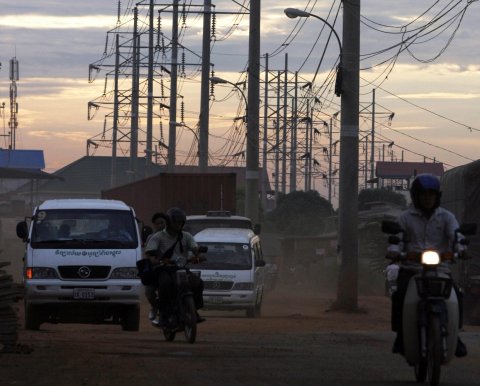
Oped, Fajar Ikhsandy, Ignatius Primadi Limin, Mahila Shabira, Weilie Winaldy Sugianlie, Published on 11/11/2025
» According to our latest projection, electricity demand in Asean will reach around 173 million tonnes of oil equivalent (Mtoe), or about 2,000 terawatt-hour (TWh), in 2050 -- roughly 1.6 times higher than the 2023 level.

Sync up our green goals
Oped, Editorial, Published on 07/11/2025
» Environment Minister Suchart Chomklin made a bold pledge this week to achieve net-zero greenhouse gas emissions by 2050 -- 15 years earlier than the earlier deadline.
China and green progress in Asia
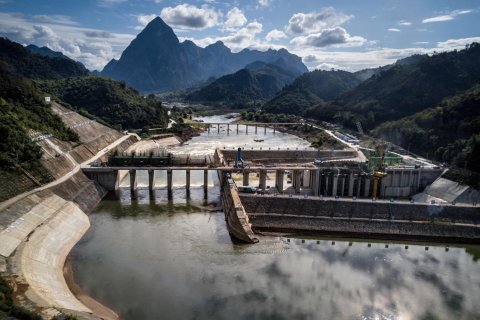
Oped, Chen Ziqi, Published on 31/10/2025
» For the past two decades, the Asia-Pacific Economic Cooperation (Apec) forum, has been reshaping the Asia-Pacific's approach to growth.
Postal services still lead the way
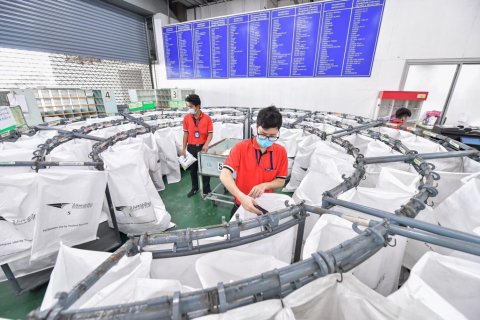
Oped, Vinaya Prakash Singh, Published on 09/10/2025
» World Post Day, observed every year on Oct 9, was proclaimed by the 1969 Universal Postal Congress in Tokyo to mark the anniversary of the founding of the Universal Postal Union (UPU) in 1874 in Berne. Across 192 UPU member countries, the day is celebrated through the launch of new products, the opening of postal facilities, employee recognition, and community engagement.
Plot twist in Asia's energy story
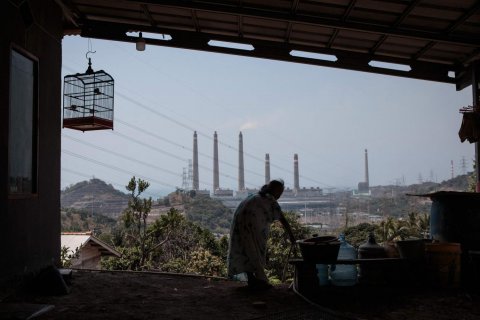
Oped, Lidy Nacpil, Published on 18/09/2025
» Asia's energy story is one of persistent energy poverty, while communities grapple with the health, climate, and economic impacts of fossil fuels. The rise of renewables may prove to be a transformative plot twist in the making. Asia's shift to renewable energy is already underway, and progressing faster than many realise. From rooftop solar panels in suburban Pakistan, to vast offshore wind farms along China's coast, to utility-scale projects electrifying farms in Bangladesh, renewable energy is showing potential to redefine energy security across Asia.
Asean must strengthen cohesion
Oped, Anwar Ibrahim, Published on 17/09/2025
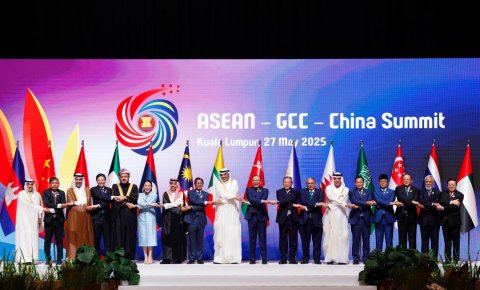
» Since its founding in 1967, the Association of Southeast Asian Nations (Asean) has cultivated a reputation for trust and dialogue that has made the region synonymous with peace, stability, and dynamism. The achievements of our ten member states -- soon to be eleven with Timor-Leste's expected admission later in 2025 -- are rooted in a culture of consensus, open communication, and solidarity. This tradition of cooperation has enabled Asean to manage tensions, prevent conflict, and nurture prosperity across one of the world's most diverse regions.
Clean energy offers opportunities
Oped, António Guterres, Published on 24/07/2025
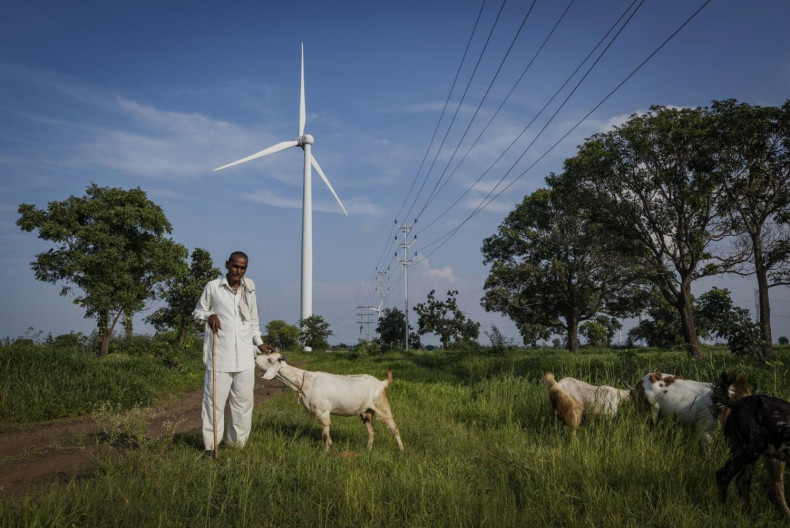
» Energy has shaped humanity's path -- from mastering fire, to harnessing steam, to splitting the atom. Today, we're at the dawn of a new era. The sun is rising on a clean energy age.
Thai LNG hub ambitions need caution
Oped, Imran Arif, Published on 25/06/2025
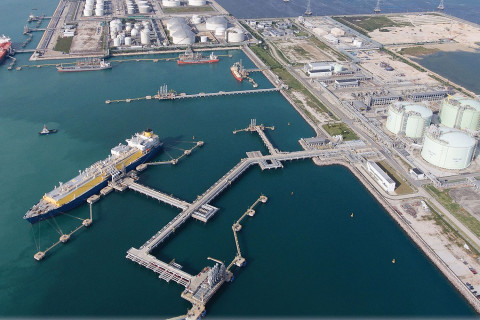
» Despite local and global headwinds, Thailand's energy demand, driven by economic activities, continues to grow. Such seemingly insatiable energy demand has been met primarily via natural gas, which, according to Thailand's Electricity Generation Authority (EGAT), is used to generate 60.85% of Thailand's electricity.