




Showing 1 - 10 of 1,776

Navigating between global superpowers
News, Vitit Muntarbhorn, Published on 14/02/2026
» Both China and the US issued new national security policies over the past year. At first glance, they seem to diverge markedly, portending a deep rupture in the world order. Yet, they may also bear some similarities in terms of self-interest and self-advancement. Collateral to that, other countries seeking to forge a middle path may wish to navigate a perspicacious route towards global equilibrium.
When journalism still exists -- but no longer matters
News, Carla Norrlöf, Published on 14/02/2026
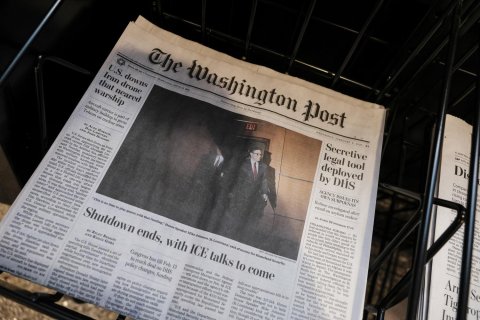
» 'Democracy Dies in Darkness" became the motto of the Washington Post in 2017, four years after Jeff Bezos, the Amazon founder and one of the world's richest men, purchased the newspaper. Today, however, Mr Bezos, who has throttled the Post's opinion page and now slashed the newspaper's staff, seems determined to demonstrate that a free press, an essential component of democracy, can be killed off in broad daylight.
Implications of conservative triumph
Oped, Thitinan Pongsudhirak, Published on 13/02/2026
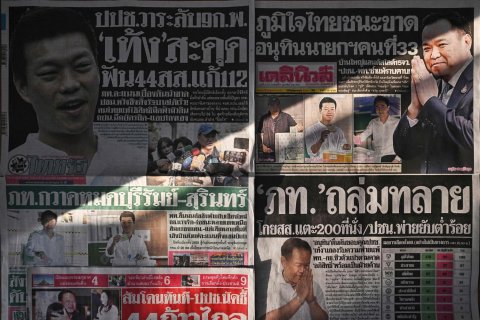
» The incumbent and conservative Bhumjaithai (BJT) Party has surprisingly swept Thailand's Feb 8 election with a commanding win. With the previously poll-leading and progressive People's Party (PP) coming in a distant second, Thailand appears headed for a conservative coalition government revolving around BJT and like-minded junior partners. Known for its conservative stance and being pro-status quo, it would not be surprising if the BJT-led coalition government, led by Prime Minister-elect Anutin Charnvirakul, were not challenged by the Constitutional Court, the Election Commission, and other supervisory agencies, which have derailed and dissolved reform-minded winning parties in the past.
Roaring global growth is emerging
News, Mike Dolan, Published on 11/02/2026
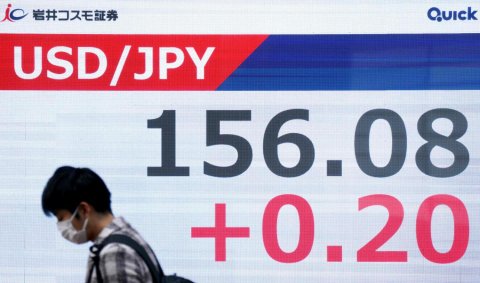
» The chaotic newsflow, geopolitical shape-shifting and wild market swings of 2026 have clouded one basic signal: the global economy is racing forward.
Reinvent Thailand to revive growth
Oped, Boonwara Sumano, Published on 11/02/2026
» In the 1990s, Thailand ranked second in Asean for state performance, behind only Singapore. Today, we trail several neighbours. This decline has unfolded gradually over three decades -- through repeated economic crises, institutional stagnation, and reforms that never quite went far enough. What is different today is that the cost of inaction has become far more dangerous.
From conflict to shared prosperity
News, David Jay Green, Published on 10/02/2026
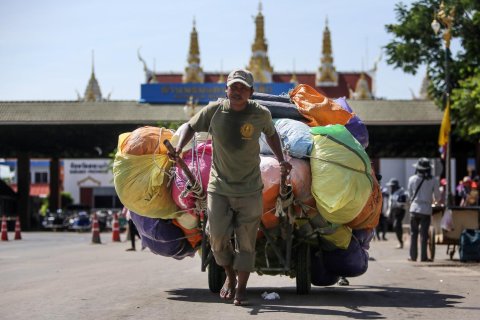
» The news from the front line, the border between Cambodia and Thailand, has a depressing familiarity. Another ceasefire is agreed upon, but it is accompanied by hostile statements from officials of both governments, and, in the past, such statements have led to aggressive action by one or both military forces. This opens the door to armed combat. People are killed or injured, property and infrastructure damaged, and people's livelihoods disrupted. We need to break this cycle; we need real peace.
Thailand reconsiders its foreign policy
News, Kavi Chongkittavorn, Published on 10/02/2026
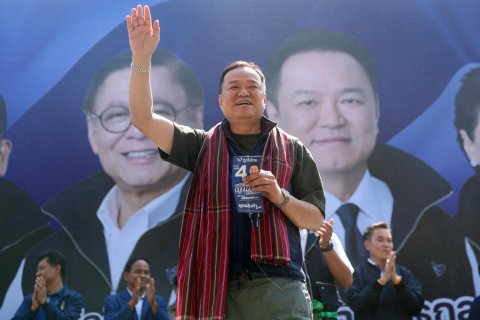
» Thai foreign policy was elevated to a high priority on the policy platforms of many political parties during Sunday's general election. The stakes have risen enormously due to growing public interest following the conflict with Cambodia.

Today's date with national destiny
Oped, Editorial, Published on 08/02/2026
» Thailand has a double date with destiny today. As the polls open across all 77 provinces, it is imperative for citizens to exercise their right to vote in both the general election and the constitutional referendum.
Will poll be breakout or more of same?
Oped, Thitinan Pongsudhirak, Published on 06/02/2026
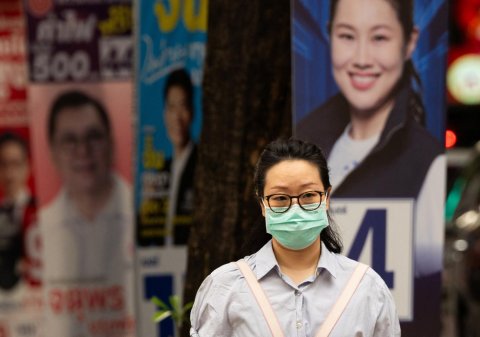
» As Thais go to the polls this Sunday, the most consequential question is whether Thailand will finally break out of its debilitating cycle of political instability and economic underperformance that has marked the past two decades. The signs and signals suggest otherwise -- at least not yet.
Middle powers can do their bit
News, Moreno Bertoldi & Marco Buti, Published on 02/02/2026
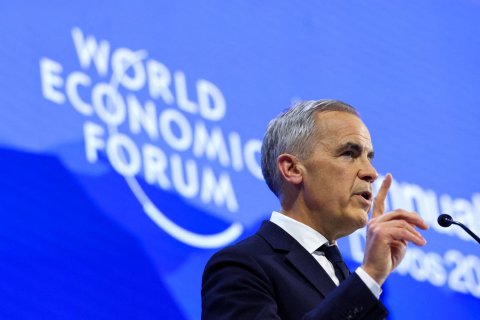
» Amid escalating geopolitical tensions, the world is increasingly caught between the United States -- an extractive superpower -- and China, a "dependency superpower" whose global influence rests on making other countries reliant on its exports. In the absence of meaningful resistance, both are likely to remain on this course, leaving middle powers to comply with their demands or face retaliation.