



Showing 1 - 10 of 46

Efficiency over pomp
Oped, Editorial, Published on 04/02/2026
» The video of Bangkok governor Chadchart Sittipunt opening the new Phran Nok-Phutthamonthon Sai 4 Road lasts only a few seconds, yet it has gone viral for that exact reason. In an era of elaborate ceremonies, the footage is a testament to bureaucratic restraint -- proving that when leaders prioritise pragmatism over pageantry, the public wins.

When infrastructure meets AI
Oped, Bertrand Badré & Saurabh Mishra, Published on 16/01/2026
» Infrastructure investment is booming. Around the world, governments are pouring trillions of dollars into roads, power grids, data centres, water systems, and housing, with many responding to intensifying climate shocks and the growing need for adaptation. Yet the construction industry -- the single largest force physically reshaping the planet -- is among the last major sectors to unlock all the benefits that digital technology offers. As a result, it accounts for about 21% of greenhouse-gas emissions, produces half of global landfill waste, and overspends by US$1.6 trillion a year.
'Land bridge' will harm nature
Oped, Kitichate Sridith, Published on 31/12/2025
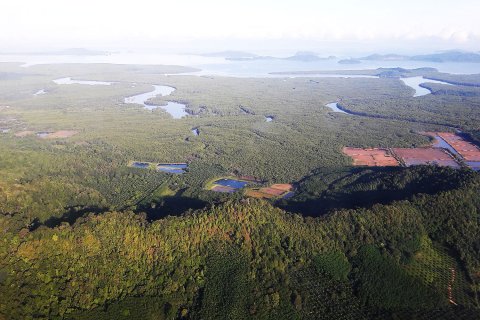
» The end of 2025 brought Thais the good news that one of the world's most endangered felines -- the flat-headed cat -- has not gone extinct in our nation, as had long been feared. But our natural heritage is under relentless pressure. We need to treat our habitats, flora and fauna as assets that demand science-led protection.

Learn from Singapore
Oped, Postbag, Published on 07/11/2025
» Re: "Push grows to keep B20 rail ride alive: TCC responds to PM's fare warning", (BP, Oct 11).

Thai and Omani bridge builders
Oped, Pisanu Suvanajata, Published on 08/10/2025
» On the 45th anniversary of diplomatic relations between the Kingdom of Thailand and the Sultanate of Oman, last week, the Royal Thai Embassy in Muscat and the Diplomatic Academy of the Ministry of Foreign Affairs of Oman convened a workshop that transcended mere commemoration. It became a working session on how two middle-power nations, distant in geography but close in outlook, can turn shared principles -- dialogue, moderation, and trust -- into practical pathways for peace and stability.
Asean must strengthen cohesion
Oped, Anwar Ibrahim, Published on 17/09/2025
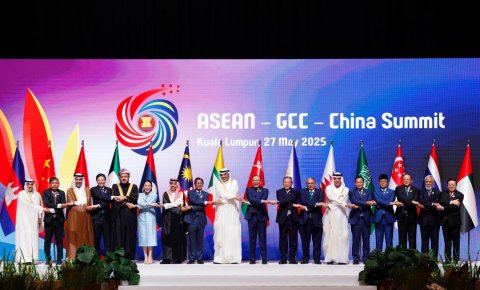
» Since its founding in 1967, the Association of Southeast Asian Nations (Asean) has cultivated a reputation for trust and dialogue that has made the region synonymous with peace, stability, and dynamism. The achievements of our ten member states -- soon to be eleven with Timor-Leste's expected admission later in 2025 -- are rooted in a culture of consensus, open communication, and solidarity. This tradition of cooperation has enabled Asean to manage tensions, prevent conflict, and nurture prosperity across one of the world's most diverse regions.
Thai SMEs are in need of a lifeline
Oped, Dai Kadomae, Published on 07/08/2025
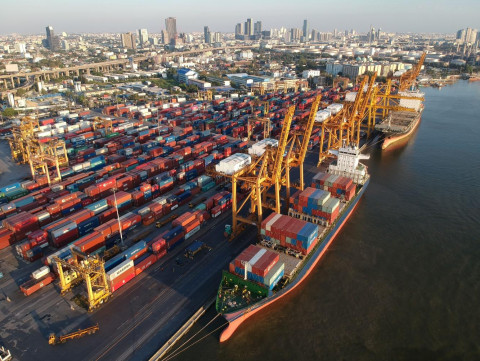
» Thailand's small and medium-sized enterprises (SMEs) are quietly suffering through a credit crunch with far-reaching implications. Despite accounting for over 90% of registered businesses, SMEs are finding it harder than ever to access capital. The economic recovery has been uneven, and traditional lenders -- still cautious after the pandemic -- are reducing risk exposure. But the core issue is not merely liquidity; it is the absence of a national system for reviving viable but stressed firms.
South Korea is facing a triple challenge
Oped, Lee Jong-wha, Published on 30/05/2025
» Few countries have transformed themselves as dramatically as South Korea has over the last half-century. A poor, authoritarian country with annual per capita income of less than US$400 (13,000 baht) has become a vibrant and prosperous democracy, with direct presidential elections, peaceful transfers of power, and a per capita income of more than $33,000.
Quake crisis is too big to ignore
Oped, Zaw Oo, Published on 08/04/2025
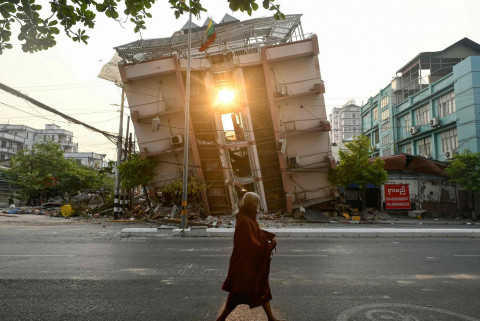
» On March 28, Myanmar was struck by the most devastating earthquake in its history. The disaster reduced much of Mandalay, the country's second-largest city, to rubble. Nay Pyi Taw, the administrative capital, and several towns across central Myanmar also suffered massive destruction.
Unpacking hidden seismic risks
Oped, Temily Baker & Sanjay Srivastava, Published on 04/04/2025
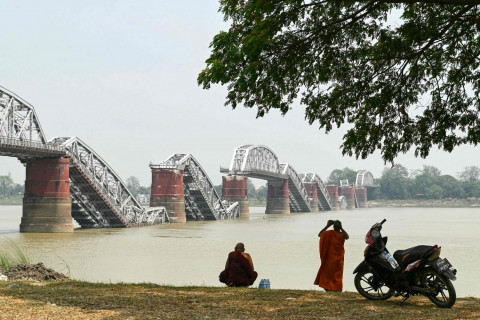
» A 7.7-magnitude earthquake struck near Mandalay in Myanmar on 28 March, exposing more than 37.2 million people to violent shaking and resulting in more than 3,000 deaths, some 3,900 injuries and over 300 missing. Its shockwaves reverberated far beyond Myanmar's borders, extending over 1,000km to Bangkok.