



Showing 1 - 10 of 1,731
Emerging markets stand strong
Oped, Kristalina Georgieva and Mohammed Al-Jadaan, Published on 12/02/2026
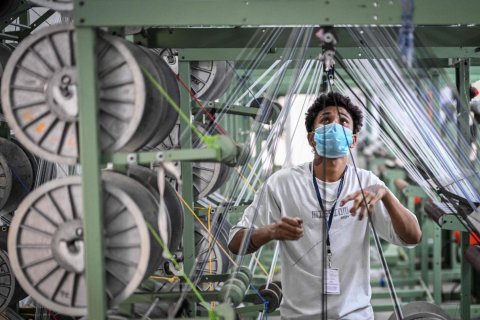
» It used to be that when advanced economies sneezed, emerging markets caught a cold. That is no longer true. Following recent global shocks, such as the post-pandemic inflation surge and a new wave of tariffs, emerging markets have held up well. Inflation has continued to slow, currencies have generally retained their value, and debt issuance costs have remained at manageable levels. There has been no sign of the kind of financial turbulence that came with past economic shocks.

Ground game
Oped, Postbag, Published on 12/02/2026
» Re: "BJT win bodes well for conservatives", (BP, Feb 11). Given the tallies of the nationwide party list vote, I don't understand the justification for the following assertions: "BJT's landslide victory reflects a surge of nationalist sentiment" (5.9M votes); the PP suffered from "lingering voter scepticism" and "eroded public confidence" (9.8M votes).
Roaring global growth is emerging
News, Mike Dolan, Published on 11/02/2026
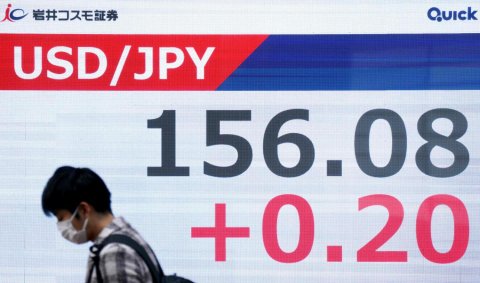
» The chaotic newsflow, geopolitical shape-shifting and wild market swings of 2026 have clouded one basic signal: the global economy is racing forward.

Rethinking global health finance
Oped, Walter O Ochieng & Tom Achoki, Published on 06/02/2026
» For the past half-century, the economics of global health were straightforward. Under the so-called "grant-based" approach, rich countries donate to poor countries, which use the funds to meet their populations' health needs. Success was measured by services provided or lives saved, rather than by balance sheets. While this model was far from perfect, the latest approach replacing it -- focused on using tools like guarantees and blended finance to crowd in private capital -- threatens to produce even worse outcomes.

In an uncertain world, gold is a comfort
Oped, Chartchai Parasuk, Published on 05/02/2026
» With Thai citizens heading to the polls this Sunday to decide which party will form the next government, I have decided to postpone my article on the economic crisis for another two weeks.

EC must act, not observe
News, Editorial, Published on 02/02/2026
» With less than a week to go before the national election, reports of vote-buying are growing louder -- and more brazen.

New debate format
Oped, Postbag, Published on 23/01/2026
» Re: "Academics sound alarm ahead of poll", (BP, Jan 14). A one-on-one debate format between political parties would greatly help us decide who we want to solve basic structural problems in our economy, society and justice system -- and the media should play a key role in arranging such a debate and setting the theme.

Thailand must manage debt to progress
Oped, Chartchai Parasuk, Published on 22/01/2026
» This article may be read as a continuation of my previous piece, Year of the Debt. That article focused mainly on household debt, which has already risen beyond the ability of Thai consumers to repay.
2026 outlook calls for recalibration
News, Mohamed A El-Erian, Published on 17/01/2026
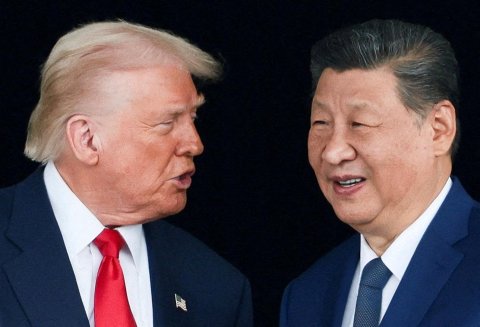
» For global markets, 2025 was defined as much by what did not happen as by what did. The year offered a masterclass in the power of a single narrative, with massive, concentrated bets on AI masking various other unanswered questions. Yet as we move further into 2026, the AI narrative is unlikely to prove strong enough to continue overshadowing other lingering uncertainties, many of which reflect deeper structural shifts. For investors, central banks, and governments alike, the situation demands adaptation.
When infrastructure meets AI
Oped, Bertrand Badré & Saurabh Mishra, Published on 16/01/2026
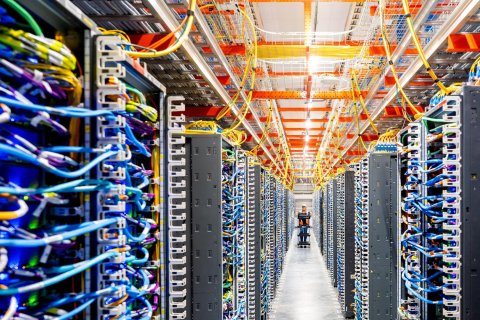
» Infrastructure investment is booming. Around the world, governments are pouring trillions of dollars into roads, power grids, data centres, water systems, and housing, with many responding to intensifying climate shocks and the growing need for adaptation. Yet the construction industry -- the single largest force physically reshaping the planet -- is among the last major sectors to unlock all the benefits that digital technology offers. As a result, it accounts for about 21% of greenhouse-gas emissions, produces half of global landfill waste, and overspends by US$1.6 trillion a year.