



Showing 1 - 10 of 360

How world's super-rich are rewriting the rules
Oped, Joseph E Stiglitz & Jayati Ghosh, Published on 13/02/2026
» Ongoing efforts to derail multilateral tax cooperation lie at the heart of a global programme to replace democratic governance with coercive rule by the extremely wealthy -- or what we call 21st-century Caesarism. Any strategy to counter this programme, therefore, must recognise that taxing extreme wealth is essential to saving democracy.
Our tariff-era dollar, your problem
Oped, Qiyuan Xu, Published on 04/02/2026
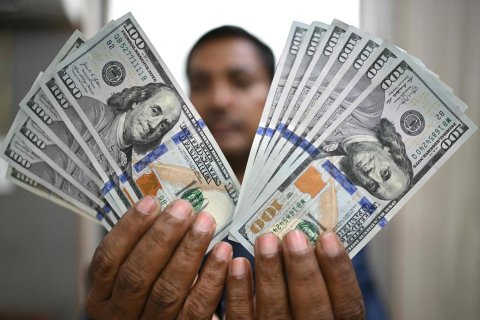
» In 2025, the dollar index, which measures the greenback's strength against a basket of major currencies, fell by roughly 9.4%. Over the same period, the United States' average effective tariff rate rose by around 14.4 percentage points, from 2.4% to 16.8%, according to the Yale Budget Lab. Taken together, these shifts imply that, in the import trade domain, the US experienced an effective exchange-rate depreciation of around 24%.
When infrastructure meets AI
Oped, Bertrand Badré & Saurabh Mishra, Published on 16/01/2026
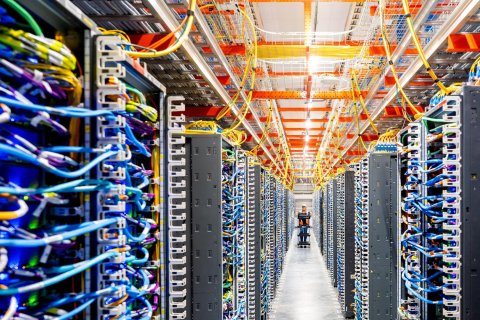
» Infrastructure investment is booming. Around the world, governments are pouring trillions of dollars into roads, power grids, data centres, water systems, and housing, with many responding to intensifying climate shocks and the growing need for adaptation. Yet the construction industry -- the single largest force physically reshaping the planet -- is among the last major sectors to unlock all the benefits that digital technology offers. As a result, it accounts for about 21% of greenhouse-gas emissions, produces half of global landfill waste, and overspends by US$1.6 trillion a year.
Moderate global growth masks regional strains
Oped, John J. Metzler, Published on 14/01/2026
» Global economic growth still continues, but at a moderate pace. That's the verdict from the UN's World Economic Situation and Prospects 2026, which predicts that global economic output will grow by 2.7% this year, or slightly below the 2.8% estimated for 2025, but less than the pre-pandemic average of 3.2%.
America's new age of empire dawns
Oped, Joseph E Stiglitz, Published on 13/01/2026
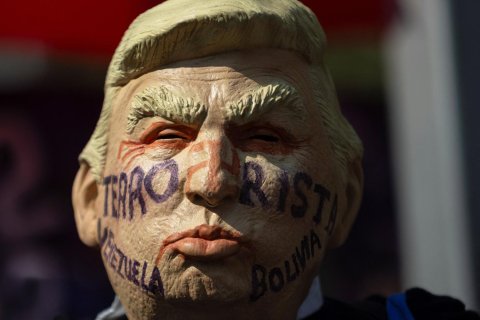
» US President Donald Trump has drawn a wave of criticism for his actions in Venezuela, violations of international law, disdain for longstanding norms, and threats against other countries -- not least allies like Denmark and Canada. Around the world, there is a palpable sense of uncertainty and foreboding. But it should already be obvious that things will not end well, neither for the United States nor the rest of the world.

What if you take away the slingshot?
Oped, Sally Tyler, Published on 05/01/2026
» The latest ceasefire in the border conflict between Thailand and Cambodia is welcome news and hopefully signals an end to the displacement of thousands and tragic loss of life on both sides. The release of 18 Cambodian prisoners is an indication that the parties are delving more deeply into the process to resolve the conflict.

A bright spot in global landscape
Oped, John J. Metzler, Published on 02/01/2026
» It's time to consult the crystal snow globe and try to peer ahead to what may be on the horizon for the new year. Without question 2025 has been tumultuous but the year ahead holds cautious promise to finally solve some political crises mixed with some epic events on tap.
'Land bridge' will harm nature
Oped, Kitichate Sridith, Published on 31/12/2025
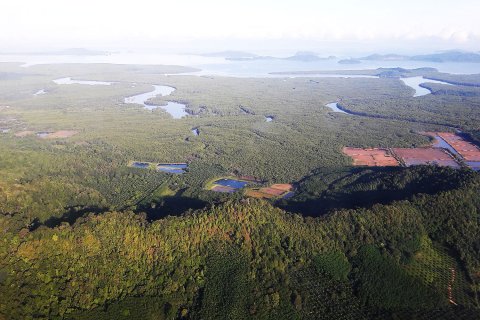
» The end of 2025 brought Thais the good news that one of the world's most endangered felines -- the flat-headed cat -- has not gone extinct in our nation, as had long been feared. But our natural heritage is under relentless pressure. We need to treat our habitats, flora and fauna as assets that demand science-led protection.
The treacherous sycophancy of the populists
Oped, Michael Burleigh, Published on 15/12/2025
» Until a few days ago, it had never crossed my mind that people across Europe -- including Londoners like me -- were living in a strife‑afflicted hell hole, "suffocated" by regulations, stripped of political liberties, and bound for "civilisational erasure". So, it was with some surprise that I read this assessment in the new US National Security Strategy -- a document that echoes pseudo‑intellectual propaganda more than resembling any serious foreign‑policy analysis.
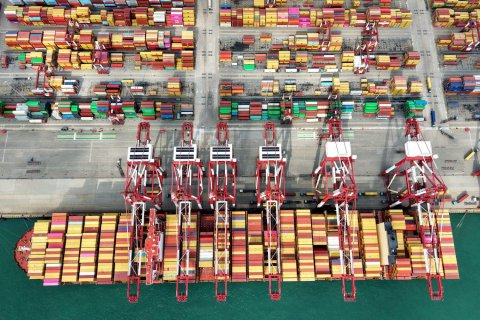
Trade conflicts destroy the planet
Oped, Qiyuan Xu, Published on 12/12/2025
» Tariff wars are often justified as necessary to protect or reshore manufacturing jobs and to improve national security. But, according to new research, these conflicts produce another outcome that is largely overlooked: pollution. When global supply chains are forced into inefficient detours, carbon dioxide emissions rise.