



Showing 1 - 9 of 9
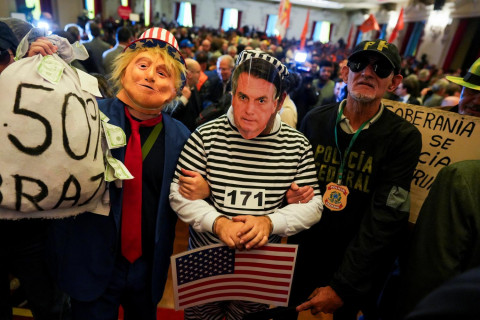
Trump is trying to build a far-right international
Oped, Jan-Werner Mueller, Published on 30/07/2025
» Until recently, the spectre of an international far-right alliance of populist parties in democracies around the world has been just that: any appearance of cooperation was a form of self-promotion, rather than an expression of true solidarity. Few far-right figures have made any sacrifices for one another or seriously interfered in other countries' internal affairs to prop up allies. And efforts to unite the far right in the European Parliament have fallen dismally short.
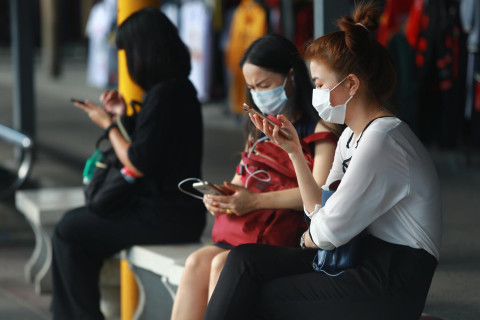
Mobile operators need competition
News, Peter Cramton & Erik Bohlin, Published on 31/03/2025
» Thailand's mobile communications market has two service providers with an equal share of customers. In economic terms, it is a symmetric duopoly. This is the worst market structure because the two can easily discipline each other to limit competition: "I'll match any lower price you set; I'll limit 5G and 6G investment if you do." This reciprocity limits competition in price and quality, which helps the carriers' shareholders but harms consumers, especially in the long run, through slower innovation in a critical infrastructure industry.
Democracies uniting to counter global populism
News, Jan-Werner Mueller, Published on 22/08/2024
» Think back to late June and early July. The French far right was favoured to win a snap parliamentary election. Trumpist judges in the United States were conveniently resolving the legal woes of the former president, who seemed to be gliding to victory after President Joe Biden's disastrous debate performance. And while Britain was getting a Labour government, a new anti-immigration party led by the chief Brexiteer, Nigel Farage, had made unprecedented gains. Faced with it all, pundits warned that a wave of populist, "anti-incumbency" rage was sweeping across the world's democracies.

Are all of us ready for AI creative destruction?
Oped, Daron Acemoglu, Published on 24/04/2024
» The ancient Chinese concept of yin and yang attests to humans' tendency to see patterns of interlocked opposites in the world around us, a predilection that has lent itself to various theories of natural cycles in social and economic phenomena. Just as the great medieval Arab philosopher Ibn Khaldun saw the path of an empire's eventual collapse imprinted in its ascent, the twentieth-century economist Nikolai Kondratiev postulated that the modern global economy moves in "long wave" super-cycles.
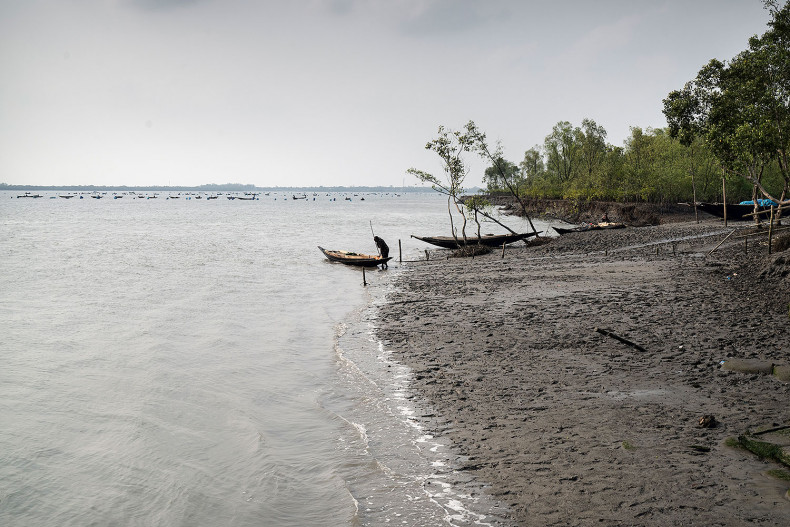
Transform development finance
News, Mia Mottley & Werner Hoyer, Published on 27/06/2023
» In a world beset by rising temperatures, extreme weather patterns, and escalating natural disasters, the urgency of decisive action on climate change and the threat of future pandemics has never been more apparent. Both threats will affect us all. But the countries between the Tropics of Cancer and Capricorn -- including the Caribbean and Pacific states, and parts of Latin America, Africa, and Asia where another 40% of the global population lives -- are currently experiencing loss and damage four times greater than elsewhere.
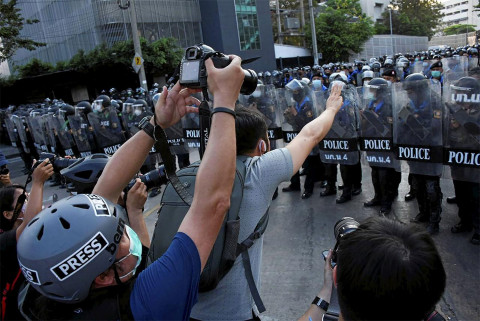
Can journalists play the role of neutral activist?
Oped, Jan-Werner Mueller, Published on 12/04/2023
» Should journalists say and write what they think? Recent controversies have given new urgency to old questions about journalists' professional ethics and political role in democracy.
Not ready for dystopia
Oped, Postbag, Published on 14/01/2023
» Re: "Five automation predictions for 2023" (Business, Jan 11) and "Five tech predictions for 2023 and beyond" (Business, Jan 10).
Climate crisis also a health threat
News, Seth Berkley & Werner Hoyer, Published on 07/12/2022
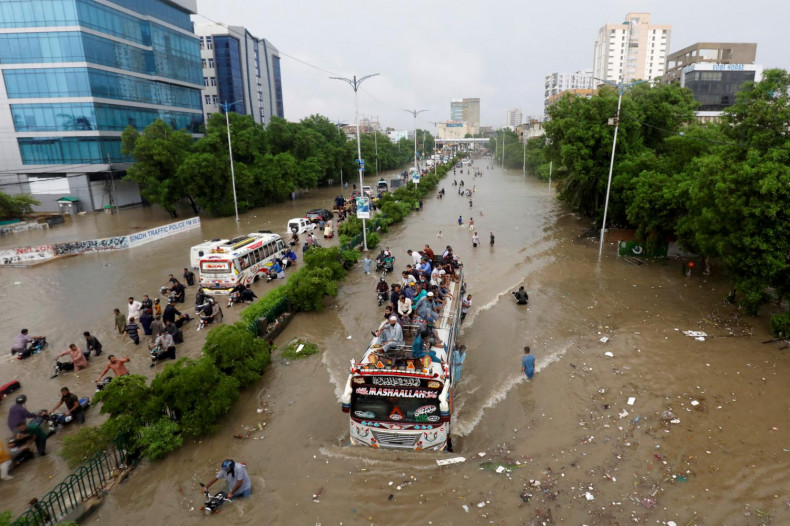
» The latest Lancet Countdown report, which monitors the health consequences of climate change, highlights the need to prepare for future calamities. Even as Covid-19 continues to spread, a recent study suggests that the likelihood of another pandemic increases by 2% each year. In the coming decades, the interplay between the climate crisis and public health could create a perfect storm of global devastation and disruption.
Time to invest in global health
News, Werner Hoyer and Tedros Adhanom Ghebreyesus, Published on 28/11/2022
» No one could have predicted the extent to which Covid-19 would erode decades of progress in public health. And the world is still reeling from the shock. But we have the opportunity -- and the duty -- to learn the right lessons to mitigate the ongoing pandemic, while minimising the risk of similar events in the future.