



Showing 1 - 10 of 168

Institutional redesign in order for economic change
News, Diane Coyle, Published on 30/12/2025
» The Nobel Prize in economics was awarded both this year and last year to scholars who, in different ways, emphasised the importance of institutions to economic growth.
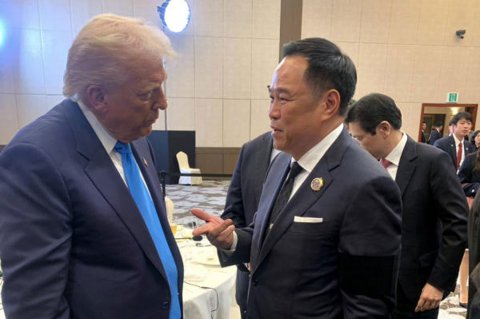
Anutin upbeat on US talks
News, Post Reporters, Published on 31/10/2025
» Prime Minister Anutin Charnvirakul has expressed confidence that trade negotiations between Thailand and the United States are progressing positively, citing his personal discussion with US President Donald Trump as a key turning point.

Body of Briton who fell from yacht in Phuket found
News, Achadthaya Chuenniran, Published on 12/06/2025
» PHUKET – The body of a British man who went overboard from a Malaysian yacht sailing off this southern tourist island was discovered on Thursday after a four-day search.

Two models for future autonomous agentic AIs
News, Daron Acemoglu, Published on 10/04/2025
» AI "agents" are coming, whether we are ready or not. While there is much uncertainty about when AI models will be able to interact autonomously with digital platforms, other AI tools, and even humans, there can be little doubt that this development will be transformative -- for better or worse. Yet, despite all the commentary (and hype) around agentic AI, many big questions remain unaddressed, the biggest being which type of AI agent the tech industry is seeking to develop.

Was DeepSeek-R1 release a Sputnik moment for AI?
News, Daron Acemoglu, Published on 07/02/2025
» After the release of DeepSeek-R1 on Jan 20 triggered a massive drop in chipmaker Nvidia's share price and sharp declines in various other tech companies' valuations, some declared this a "Sputnik moment" in the Sino-American race for supremacy in artificial intelligence. While America's AI industry arguably needed shaking up, the episode raises some difficult questions.
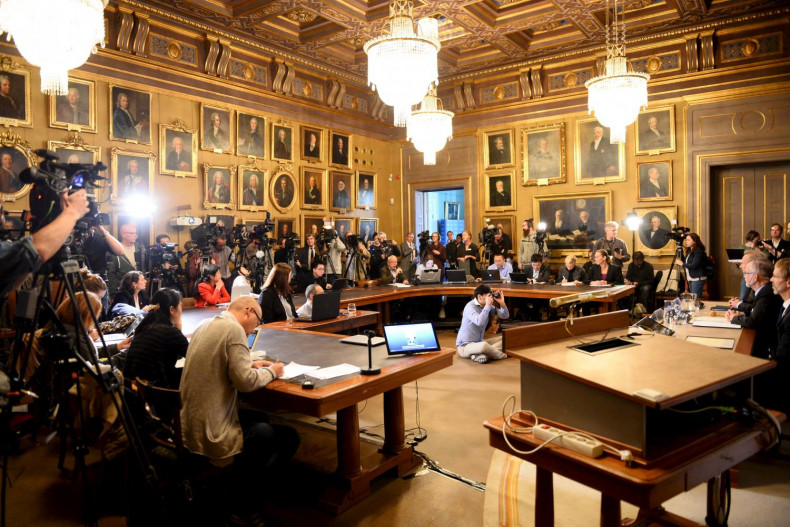
Rethinking national prosperity through institutions
News, Antara Haldar, Published on 13/11/2024
» Each autumn, a telephone call from Stockholm launches one or a few scholars to international fame with the bestowal of the Nobel Memorial Prize in Economic Sciences -- a process that Irving Wallace dramatised in his 1962 potboiler The Prize.
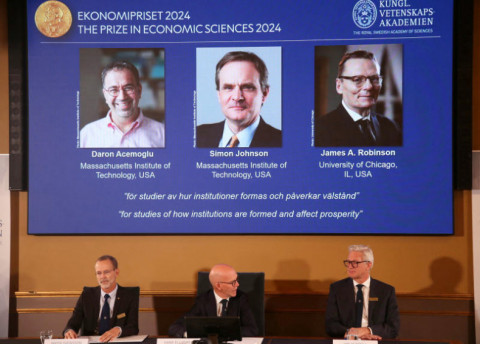
Why do some countries prosper while others falter?
News, Jeffrey Frankel, Published on 06/11/2024
» Why have some countries grown rich and others not? The three winners of this year's Nobel Prize in Economic Sciences -- Daron Acemoglu, Simon Johnson, and James A Robinson -- offer a simple answer: institutions. Countries with "inclusive" institutions -- which underpin an open society, accountable government, economic freedom, and the rule of law -- do better than those with "extractive" institutions that reward those in power.

The US election and the crisis of whiteness
News, Edoardo Campanella, Published on 28/10/2024
» The "crisis of democracy" across Western countries is generally attributed to rising inequality, the hollowing out of the middle class, and the politics of mass migration. But another major factor is demography, especially in the United States, where the threat to democracy tracks developments affecting white voters. Moreover, since demographic trends cannot be easily reversed, America's growing dysfunction is likely to be a persistent factor in global politics for a long time.
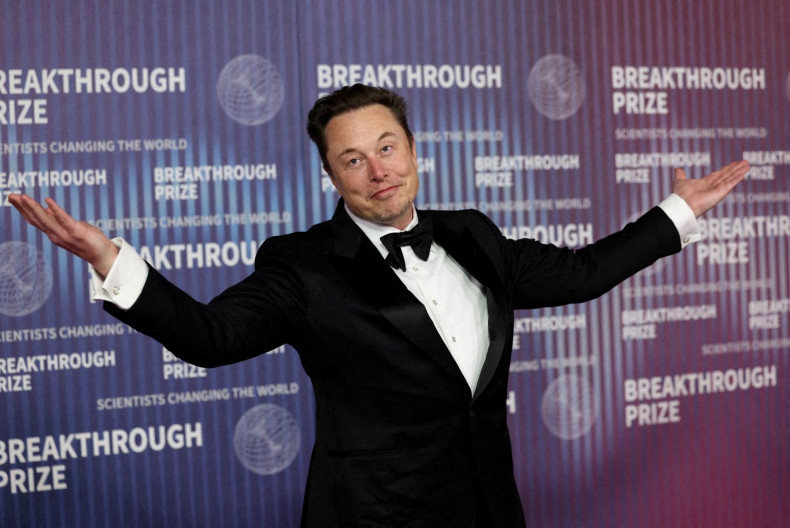
How the world can escape the new Gilded Age
News, Daron Acemoglu, Published on 25/10/2024
» Tech billionaires such as Bill Gates, Mark Zuckerberg and Elon Musk are not just among the richest people in human history. They also are exceptionally powerful -- socially, culturally and politically. While this is partly a reflection of the social status that our society attaches to wealth in general, that is not the whole story.

US can't rely on inflation shamanism
News, James K Galbraith, Published on 23/09/2024
» Google "shamanism" and you will find that it is "a tradition of part-time religious specialists who establish and maintain personalistic relations with specific spirit beings through the use of controlled and culturally scripted altered states of consciousness." Every element of that definition applies to monetary policymaking today, as illustrated by the reaction to the US Federal Reserve's Sept 18 decision to cut the short-term interest rate by 50 basis points.