



Showing 1 - 10 of 189

Fair charter vote
Oped, Postbag, Published on 13/01/2026
» Re: "Somchai criticises EC's 'biased' info", (BP, Jan 12).

Nuanced Thai smiles
Oped, Postbag, Published on 09/01/2026
» Re: " 'Mai pen rai' paradox: from kindness to toxic silence", (Life, Jan 7). This is an excellent article, but alas goes down a rabbit hole, akin to mitigating daily road fatalities and addressing other issues often lamented in this column that we're acquainted with.

Navigating the new realities of global travel
Oped, Anna Kofoed, Published on 12/12/2025
» In our increasingly turbulent world, travelling for many no longer unfolds as a straightforward endeavour.

Fading city spirit
Oped, Postbag, Published on 11/11/2025
» Re: "Bangkok's clean streets, empty souls", (Opinion, Nov 10).
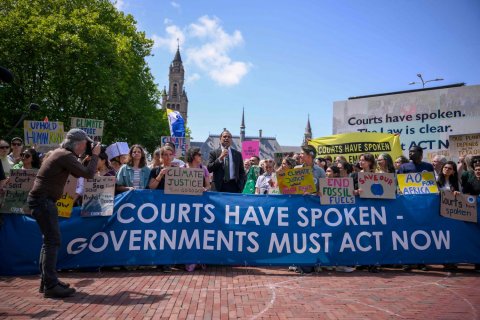
Courts are shaping climate action
Oped, Francesca Mascha Klein & Laura Schäfer, Published on 03/11/2025
» Amid rising geopolitical tensions, pressure to comply with climate obligations increasingly comes from courts. Earlier this year, both the International Court of Justice (ICJ) and the Inter-American Court of Human Rights (IACtHR) issued landmark advisory opinions affirming that countries must address climate change, and that failure to do so may carry serious legal consequences.

Dubious tax plan
Oped, Postbag, Published on 06/10/2025
» Re: "Minister pledges to finally implement B300 tourism tax", (Business, Oct 4).
Cutting Asia's reliance on dollars
Oped, Yasuto Watanabe & Hiro Ito, Published on 02/10/2025
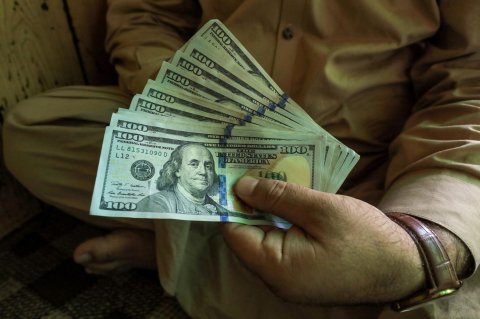
» The US dollar remains the world's leading reserve currency, but recent developments -- particularly President Donald Trump's unilateral economic diplomacy, including weaponisation of the dollar -- have fuelled doubts about whether it will maintain that status. While some of America's geopolitical rivals may hope to displace the dollar, the real challenge facing Asian economies is to manage the vulnerabilities created by their heavy dependence on it.
Market still 'wrong' on climate
Oped, Fiona Watson, Published on 01/10/2025
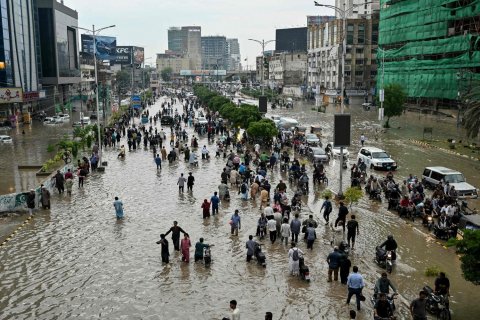
» As business, government and nonprofit leaders debate the future of climate action ahead of the United Nations Climate Change Conference (COP30) in Brazil, the global economy remains vulnerable to acute and chronic climate-driven shocks whose impact could be more severe than that of the 2008 global financial crisis. At a time when many governments and businesses continue to underestimate and underprice physical climate risk, we must remember that neither financial markets nor regulators are always right. What if their current complacency about climate risks is catastrophically wrong?
Renminbi debt in a dollar-denominated world
Oped, Paola Subacchi, Published on 25/09/2025
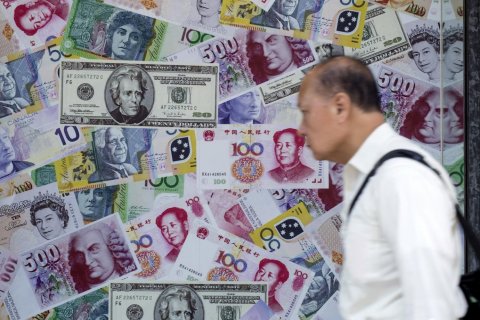
» When governments borrow on international markets, they do so overwhelmingly in US dollars. Roughly two-thirds of international debt issuance is denominated in foreign currencies, of which nearly half is in dollars and about 40% is in euros. The rest is spread across other currencies, including the Chinese renminbi.
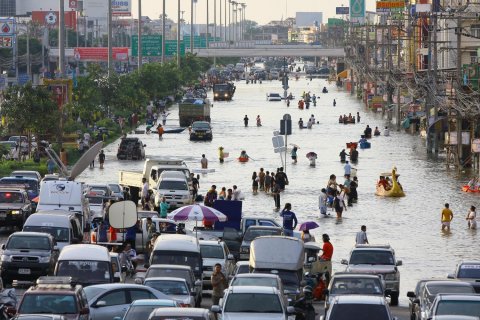
Floods 'a recurring nightmare'
Oped, George G van der Meulen & Chamniern Vorratnchaiphan, Published on 16/09/2025
» Thailand has faced floods for more than a century. Some years are worse than others, but the pattern is consistent. The catastrophic 2011 floods remain the most painful reminder: according to the World Bank, they caused US$46.5 billion (1.5 trillion baht) in economic losses, displaced 13 million people, and claimed approximately 800 lives. Much of the country's industrial heartland was submerged for months, severely impacting global supply chains.