




Showing 1 - 10 of 37

It's the economic history, stupid
Oped, Iker Saitua, Published on 14/01/2026
» Every year, I walk into a first-year lecture hall in Bilbao at the University of the Basque Country (EHU) and watch shoulders slump. The title of the course I'm teaching -- "Economic History" -- draws a similarly dejected reaction from my students: "Meh." "Boooring." "What's this even for?" Some call it "the history class", as if it belonged to another century.

Institutional redesign in order for economic change
News, Diane Coyle, Published on 30/12/2025
» The Nobel Prize in economics was awarded both this year and last year to scholars who, in different ways, emphasised the importance of institutions to economic growth.

Trickery in the land of tavern trivia
Published on 23/11/2025
» The world of pub quizzes was shaken in Britain recently when a team at The Barking Dog pub in Manchester was kicked out for cheating. Although disputes may occasionally occur in such quizzes it doesn't usually come down to such strong disciplinary action. However the team involved was believed to be clearly in breach of trivia etiquette.

The effects of unfinished momentum
News, Peerasit Kamnuansilpa, Published on 08/11/2025
» Why do some nations surge confidently into the future while others advance only in half-steps, not declining but not accelerating either? In their influential book Why Nations Fail (first published in 2012), Daron Acemoglu -- now a Nobel Prize economist -- and James Robinson, both economists and political scientists at the University of Chicago, offer a helpful lens for understanding Thailand's development path without casting blame or provoking division.

What's to blame for inequality?
Oped, Keun Lee, Published on 01/09/2025
» Over a decade ago, Nobel laureates Daron Acemoglu and James A Robinson, together with their co-author Thierry Verdier, contrasted America's "cutthroat" brand of capitalism with Western Europe's "cuddly" version. The qualities that make cutthroat capitalism more conducive to innovation, they argued, also lead to higher levels of inequality, while cuddly reward structures tend to lead to lower growth and higher welfare. Today, inequality is soaring, notably in the United States. Do policies aimed at boosting innovation risk making a bad situation worse?

Remembering a journo like no other
Oped, Thitinan Pongsudhirak, Published on 04/04/2025
» Gwen Robinson was a quintessential journalist who probed for the best scoop and pried for the juiciest gossip, an old-style old hand the likes of which we are unlikely to see again. In the new contentious era of geopolitical conflict and geoeconomic tension underpinned by American economic nationalism, Robinson's journalist craft over more than four decades explaining and linking Asia and the West will be sorely missed.

Was DeepSeek-R1 release a Sputnik moment for AI?
News, Daron Acemoglu, Published on 07/02/2025
» After the release of DeepSeek-R1 on Jan 20 triggered a massive drop in chipmaker Nvidia's share price and sharp declines in various other tech companies' valuations, some declared this a "Sputnik moment" in the Sino-American race for supremacy in artificial intelligence. While America's AI industry arguably needed shaking up, the episode raises some difficult questions.
Rethinking national prosperity through institutions
News, Antara Haldar, Published on 13/11/2024
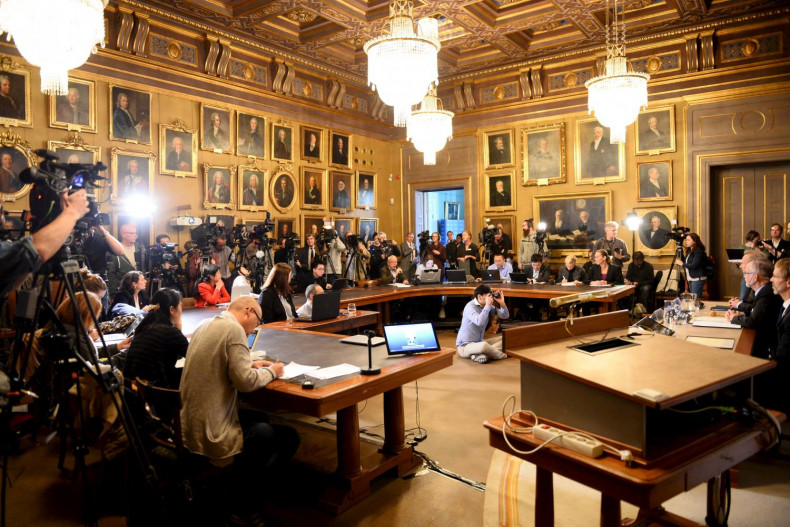
» Each autumn, a telephone call from Stockholm launches one or a few scholars to international fame with the bestowal of the Nobel Memorial Prize in Economic Sciences -- a process that Irving Wallace dramatised in his 1962 potboiler The Prize.
Why do some countries prosper while others falter?
News, Jeffrey Frankel, Published on 06/11/2024
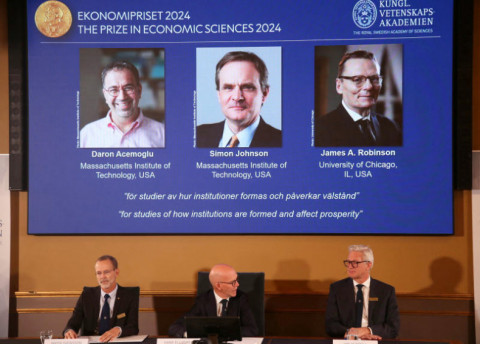
» Why have some countries grown rich and others not? The three winners of this year's Nobel Prize in Economic Sciences -- Daron Acemoglu, Simon Johnson, and James A Robinson -- offer a simple answer: institutions. Countries with "inclusive" institutions -- which underpin an open society, accountable government, economic freedom, and the rule of law -- do better than those with "extractive" institutions that reward those in power.

Beastly diversions
Oped, Postbag, Published on 19/10/2024
» Re: "Thailand's most unlikely A-list celebrity", (PostScript, Sept 22) & "Hippo rescue", (PostBag, Oct 17).