




Showing 1 - 10 of 13

TV plays shameful jingoism card
Oped, Editorial, Published on 19/10/2025
» A television programme which allowed critics to castigate human rights advocates including Senator Angkhana Neelapaichit for their views on the Thai-Cambodian conflict has shed new light on the dire need to regulate some unprofessional media.
Border tactics need review
News, Editorial, Published on 14/10/2025
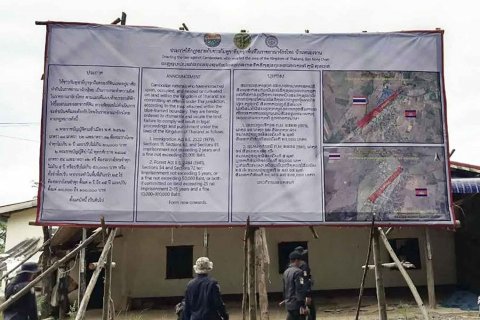
» The war of words between controversial activist Guntouch "Gun Jompalang" Pongpaiboonwet and Senator Angkhana Neelapaijit reflects the flaws in the army's handling of the simmering border conflict with Cambodia.

Reimagining human rights and China?
News, Vitit Muntarbhorn, Published on 23/09/2024
» Should human rights be reimagined, especially in the context of China? From one angle, the answer is obvious. Plenty of norms are already agreed upon globally without the need for reimagination, and China is part of that universality. Yet given the situation on the ground level and the evolving nature of human rights, there might be room for some innovative reimagination, and this deserves balanced reflection.
PM has much to prove
Postbag, Published on 01/09/2024
» Re: "The omen of Paetongtarn's leadership", (Opinion, Aug 27).

Myanmar eyes return to Asean fold
Oped, Kavi Chongkittavorn, Published on 13/02/2024
» To understand the current game plan of Myanmar's military regime, it is perhaps a good time to remind ourselves of the letter written by former Cambodian Prime Minister Hun Sen to Senior General Min Aung Hlaing on Aug 19, 2022. The rather blunt personal letter urged the junta leader to implement the Five-Point Consensus (5PC), saying that if he fails to do so, his Asean colleagues might ban Myanmar from all meetings and recognise the National Unity Government (NUG). In short, Asean would give the seat to the NUG. The letter angered the general, and Hun Sen's practical advice was ignored, including his call for amnesty for four activists who had been sentenced to death. For the past three years, Myanmar's seat at Asean's high-level meetings has been left vacant. Then, on Feb 29, the seat was occupied temporarily.
Russia, China in arms trade with Myanmar
Oped, John J Metzler, Published on 27/05/2023
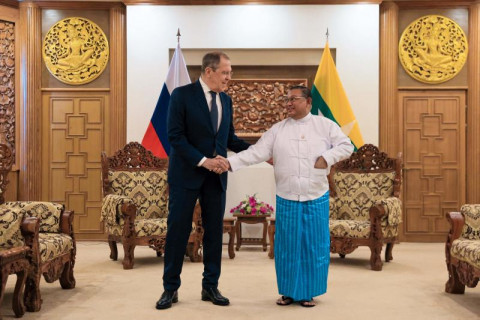
» It's hardly a surprise but an affirmation of the obvious. Myanmar's military regime is being backed, supported and protected by both Russia and China. What's new is that the specifics of this assistance have come to light in a landmark United Nations report uncovering the extent of arms and munitions transfers to Myanmar, beset by longtime military rule, amid spurts of democratic governance, but overall isolation and indifference.

Some good news for freedom of speech
Oped, Vitit Muntarbhorn, Published on 13/05/2023
» The World Press Freedom Day, concurrently May 3, was celebrated recently with a panel discussion at the Foreign Correspondents' Club of Thailand, which provided a fresh opportunity to catch up with news, especially on Thailand. It was also an occasion to reflect on international developments concerning the shrinking space for the free flow of information ("info-inhibition") in various settings.
Righting the wrongs of development
News, Vitit Muntarbhorn, Published on 27/03/2023
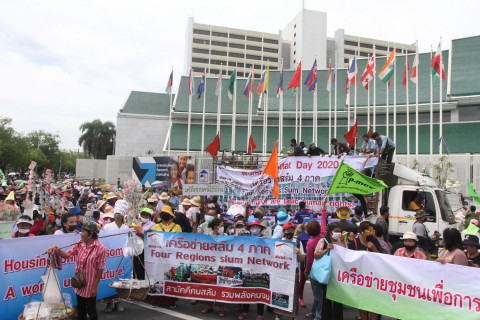
» A key issue with which the world community has had to grapple since the end of the Second World War is that of "development", especially from the angle of national and international measures to ensure responsiveness to the rights and needs of the peoples of the land, without discrimination and violence, and to overcome historical and other injustices.
UN slams Xinjiang rights abuses
Oped, John J Metzler, Published on 08/11/2022
» A high-level UN panel on Oct 26 slammed Beijing's ongoing and egregious human rights abuses in the western Xinjiang regions of the People's Republic. China's human rights violations have been committed through the use of "severe and undue restrictions" that are "characterised by a discriminatory component, as the underlying acts often directly or indirectly affect Uyghur and other predominantly Muslim communities".
Migration and climate change in Asia
Oped, Vitit Muntarbhorn, Published on 17/03/2022
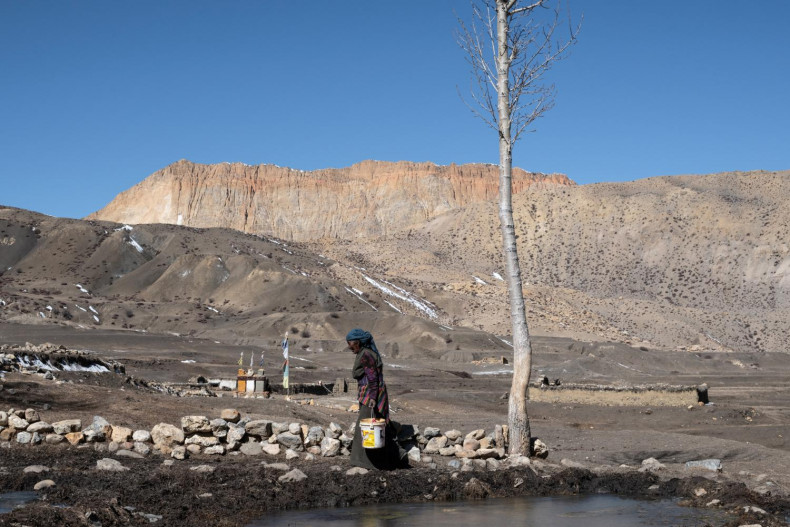
» The close connection between migration, human rights and climate change is increasingly self-evident, as "natural disasters" related to that linkage loom in many parts of the world. The Office of the UN High Commissioner for Human Rights (OHCHR) estimates that about 22.5 million people migrate each year within and across borders because of climate change and weather-linked disasters. These are all compounded by the spread of Covid-19 in terms of lockdowns and other restrictive measures.