




Showing 1 - 10 of 15
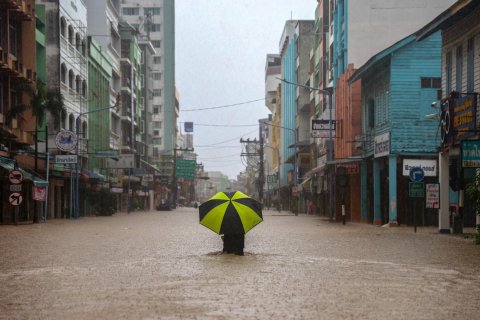
How climate fund can give justice for all
News, Sarinee Achavanuntakul, Published on 28/11/2025
» In one of the most momentous climate policy moves, Thailand's Nationally Determined Contribution (NDC 3.0) was formally submitted to the Executive Secretary of the United Nations Framework Convention on Climate Change (UNFCCC) on Nov 4.
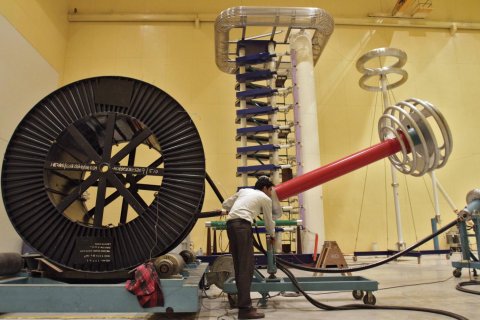
Tackling Asean grid's $800bn challenge
News, Rapeepat Ingkasit, Published on 22/11/2025
» Every energy planner must balance the "trilemma" of security, equity, and environmental sustainability.
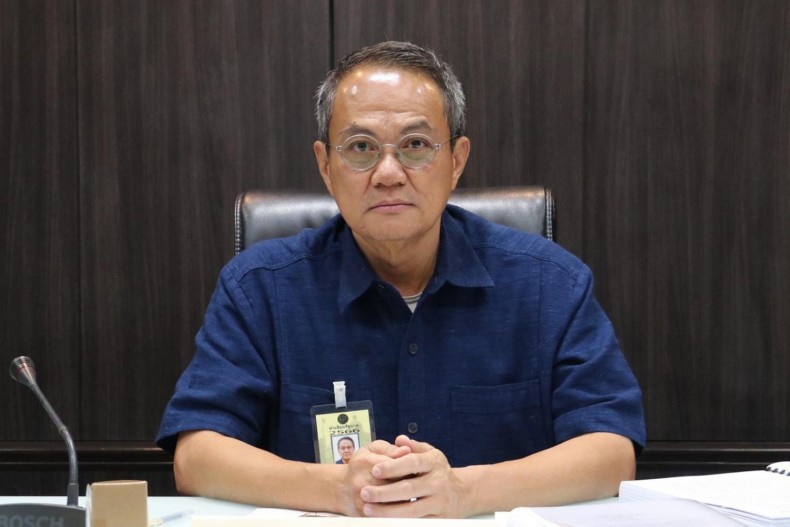
National Defence College snub prompts legal threat
News, Aekarach Sattaburuth, Published on 27/08/2025
» Thanaporn Sriyakul, director of the Institute of Political Analysis, on Tuesday threatened to take legal action against the cabinet for dropping him from enrolment in the National Defence College (NDC).

Govt on track to reach carbon goals by 2050
News, Post Reporters, Published on 29/12/2024
» Thailand has made substantial progress in reducing carbon emissions and has set a target to achieve carbon neutrality by 2050, says the Department of Climate Change and Environment (DCCE).
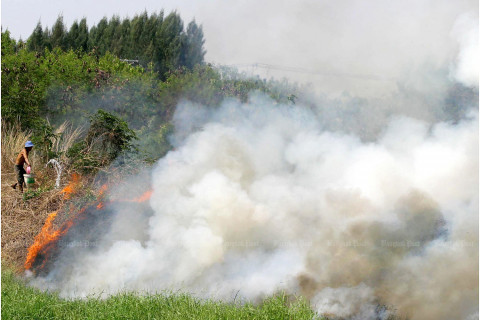
Climate chief maps plan to tap new fund
News, Apinya Wipatayotin, Published on 06/12/2024
» Thailand needs more efforts to access financial aid to fight climate change, according to the chief of the Department of Climate Change and Environment.

Next steps for Thailand Taxonomy
News, Sarinee Achavanuntakul, Published on 09/09/2024
» As demands for climate finance increase with the tangible impacts of climate change, people increasingly look to the government and various regulators to establish and upgrade a more effective combination of rules, regulations and market-based mechanisms to spur investments at a scale that is commensurate to our needs.

When climate commitments fall short
News, Rapeepat Ingkasit, Published on 24/07/2024
» By early next year, Thailand and other countries are expected to update national climate commitments under the Paris Agreement, known as nationally determined contributions (NDCs). The Paris Agreement mandates that nations submit new NDCs every five years, with each round more ambitious than the last. These NDCs are essential for countries to collectively tackle the global climate crisis.

Green push needs united approach
News, Regan Pairojmahakij and Georgii Nikolaenko, Published on 20/05/2024
» Bridging the divide between agriculture and forestry is imperative for climate action. The global and national race is on to steeply reduce emissions over the next six years. According to the watershed Global Stocktake report, released ahead of COP28 in Dubai, we face the daunting task of reducing emissions by 43% by 2030 to retain the possibility of limiting warming to 1.5 degrees by the end of the century, and 27% to stabilise at a 2-degree temperature increase. Since the Paris Agreement was signed in 2015, we have managed only to be on track for a 2% reduction in emissions against 2019 baselines. Each subsequent year, we collectively feel the impacts of a hotter, more volatile climate as new records are set for temperature and natural disasters.
Is climate action a trump card?
News, Li Shuo and Lauri Myllyvirta, Published on 13/05/2024
» If former US president Donald Trump returns to the White House next year, China needs to step up to assume the mantle of global climate leadership -- an outcome that many have considered impossible. After all, China has been the world's biggest emitter of greenhouse gases for nearly two decades, currently accounting for 35% of global carbon dioxide emissions. But geopolitical dynamics can shift quickly in the face of conflict, economic strife and crucial elections, meaning that China could soon be seen in a new light.

Military's elite study course welcomes Paetongtarn
News, Wassana Nanuam, Published on 29/02/2024
» The National Defence College (NDC) has confirmed that Paetongtarn Shinawatra, leader of the ruling Pheu Thai Party, won a place among the first batch of young executives to study a new defence curriculum, believed to open doors to important connections, which it is offering.