



Showing 1 - 10 of 182
Emerging markets stand strong
Oped, Kristalina Georgieva and Mohammed Al-Jadaan, Published on 12/02/2026
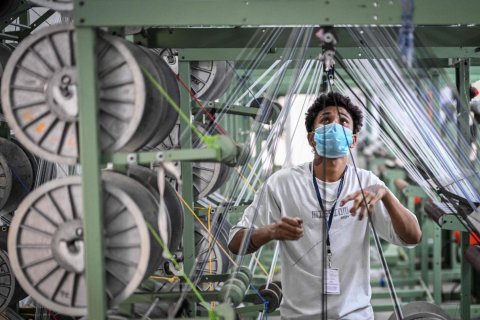
» It used to be that when advanced economies sneezed, emerging markets caught a cold. That is no longer true. Following recent global shocks, such as the post-pandemic inflation surge and a new wave of tariffs, emerging markets have held up well. Inflation has continued to slow, currencies have generally retained their value, and debt issuance costs have remained at manageable levels. There has been no sign of the kind of financial turbulence that came with past economic shocks.

Future will be decided in classrooms
Oped, Ken Legins and Somchai Jitsuchon, Published on 26/01/2026
» On Feb 8, people across Thailand will head to the national election.
Flood resilience a national imperative
Oped, Srinivasa Popuri and Kotchakorn Voraakhom, Published on 18/12/2025
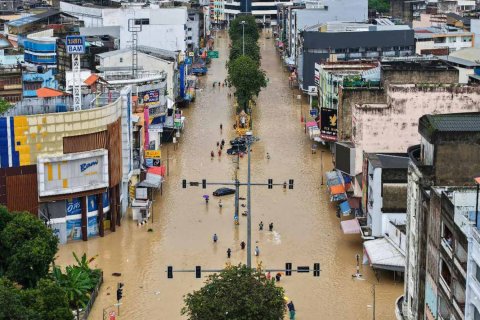
» The twin cyclones Senyar and Ditwah that struck South and Southeast Asia in November caused unprecedented flooding across the region, with Thailand among the most severely affected.

New tech disrupts global order
Oped, Mark Blyth & Daniel Driscoll, Published on 18/11/2025
» News media tend to focus on the world's major powers because they command more resources by dint of their relatively larger economies, militaries and energy endowments. But there are costs to such dominance. For example, a single American Gerald R Ford-class aircraft carrier costs $13 billion (421.6 billion baht), while the F-35 fighter jet costs about $100 million. So, if you can build your military equipment for less than your opponent, you can gain a strategic advantage.

Tackling Thai-Cambodian border row
Oped, William Roth, Published on 12/11/2025
» The tragic landmine injuries on Monday to two Thai soldiers have cast doubt on whether the ceasefire agreement with Cambodia will hold. But, even if it does, one also has to wonder whether either country really wishes to have lasting peace along this border. After all, for over 70 years, both countries, for domestic political purposes, have periodically used the continuing uncertainty about the actual boundary line to whip up nationalist sentiment.

Banned bets
Oped, Postbag, Published on 24/10/2025
» Re: "Anutin bans poker, sports gambling nationwide", (BP, Oct 23). So, Prime Minister Anutin Charnvirakul has banned gambling again. The prohibition specifically aims at poker and other similar sports-themed card games. The Ministry of Tourism and Sport earlier classified poker only as a sport? Well, it's not, is it -- it's a card game that is invariably played for money, unlike many others, such as bridge, which are not.

Defections test government pact
Oped, Aekarach Sattaburuth and Mongkol Bangprapa, Published on 18/09/2025
» About 50 national and local politicians from the southern province of Chumphon on Wednesday defected from the United Thai Nation Party (UTN) to the Bhumjaithai Party (BJP), raising questions about whether the ruling party can still honour its agreement not to form a majority government.

Challenging Asean digital sovereignty
Oped, Kavi Chongkittavorn, Published on 16/09/2025
» Members of the Association of Southeast Asian Nations (Asean) are busy finalising a draft of a Digital Economic Framework Agreement (Defa) -- this digital framework is hoped to boost regional bloc intra-trade, attract foreign investment, and transform the grouping into a global digital hub. As the current chair, Malaysia is eager to see the world's first such agreement concluded under its leadership.

Breaking barriers for Thai innovations
Oped, Saowaruj Rattanakhamfu and Pichakorn Khowasinth, Published on 27/08/2025
» Thailand is abundant with talent in medical technology. Why aren't our homegrown innovations reaching patients? The answer is simple: a broken system.
Overcoming obstacles to reform
Oped, Nilima Gulrajani and John Hendra, Published on 11/08/2025
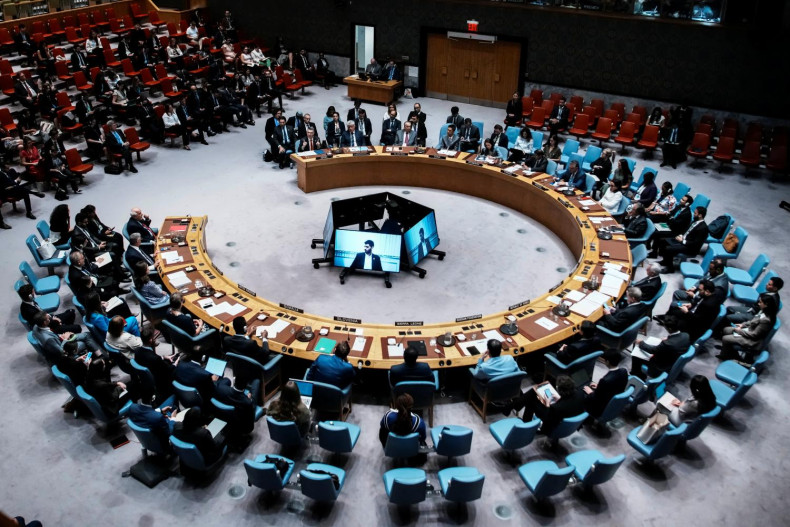
» At the 80th United Nations General Assembly this September, participants will have to confront the escalating development finance crisis that is engulfing the UN system. So far, responses to financial pressures have focused on cutting costs, such as by reducing overhead and improving efficiency. But a lasting solution will require deeper changes, which begins with a fundamental question: What kind of UN does the world need today, and are current funding models fit for purpose?