



Showing 1 - 10 of 12
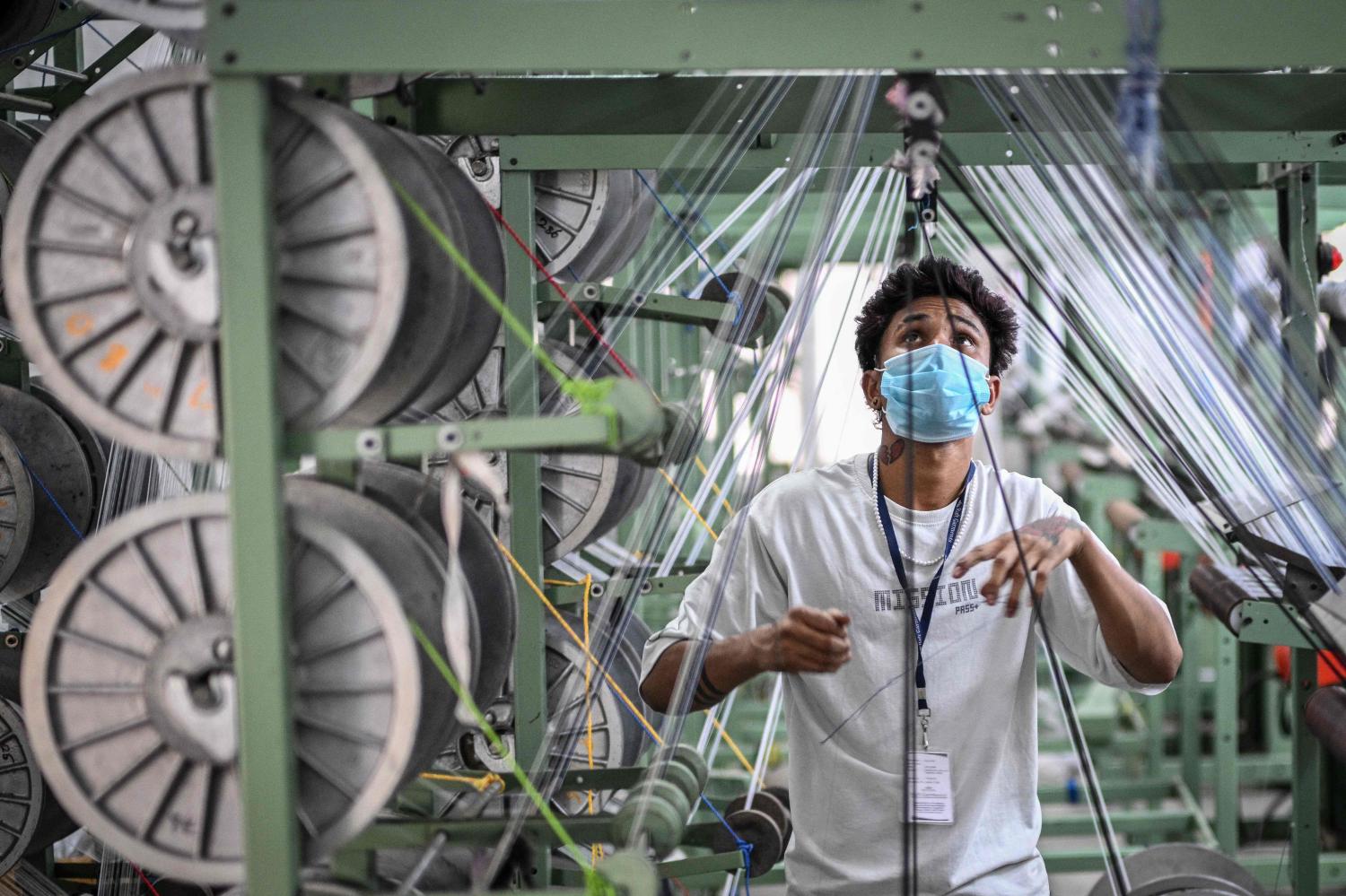
Emerging markets stand strong
Oped, Kristalina Georgieva and Mohammed Al-Jadaan, Published on 12/02/2026
» It used to be that when advanced economies sneezed, emerging markets caught a cold. That is no longer true. Following recent global shocks, such as the post-pandemic inflation surge and a new wave of tariffs, emerging markets have held up well. Inflation has continued to slow, currencies have generally retained their value, and debt issuance costs have remained at manageable levels. There has been no sign of the kind of financial turbulence that came with past economic shocks.

All eyes on central bank
News, Editorial, Published on 04/11/2024
» Today, all things going well, Bank of Thailand (BOT) governors will choose a new chairman. It's a role crucial to the stability and independence of the country's central bank.

The power of gender equality
News, Nadia Calviño, Kristalina Georgieva and Odile Renaud-Basso, Published on 11/03/2024
» It is hard to find a word that is more relevant to the world's greatest challenges and policy priorities than "inclusion", the theme of this year's International Women's Day. Inclusive, green economic growth that benefits all of society is an essential component of sustainable prosperity, social cohesion, competitiveness, and geopolitical stability. Supporting a "just transition" that includes all members of our societies is crucial to ensuring that climate action and the digital transformation lead to a more sustainable and secure world.

IMF must lead climate financing
Oped, Laurence Tubiana & Kevin P Gallagher, Published on 19/12/2023
» With their agreement at COP28 to "transition away from fossil fuels in energy systems", countries have made genuine progress on tackling climate change. But there is still much to do to mobilise the level of financing needed to turn the commitment into reality. International organisations -- especially the International Monetary Fund -- must step up. Though the IMF was relatively slow off the mark in the race to combat climate change, it has made great strides under Managing Director Kristalina Georgieva. But it must take its climate leadership much further.

Smarter climate finance needed
Oped, Sumant Sinha, Published on 15/02/2023
» Recent estimates suggest that the developing world will need US$1 trillion of external climate finance annually by 2025, and $2.4 trillion per year by 2030, to meet the goals enshrined in the Paris climate agreement. But these targets will not be met unless international financial institutions and governments create stronger incentives, paying special attention to three key areas.

Can Omicron spur a Great Depression?
Oped, Chartchai Parasuk, Published on 02/12/2021
» The emergence of a new Covid-19 variant -- Omicron -- has caused quite a stir globally just as many nations are on the recovery track from the Delta variant. Scientists worry that the latest strain first detected in South Africa has as many as 50 mutations, 32 of them on the spike protein which theoretically makes it much more transmissible than the Delta variant.

A coup attempt at the IMF to oust Georgieva
Oped, Joseph E Stiglitz, Published on 09/10/2021
» Moves are afoot to replace or at least greatly weaken Kristalina Georgieva, the International Monetary Fund's managing director since 2019. This is the same Ms Georgieva whose excellent response to the pandemic quickly provided funds to keep countries afloat and to address the health crisis, and who successfully advocated for a $650 billion issuance of IMF "money" (special drawing rights, or SDRs), so essential for low- and middle-income countries' recovery. Moreover, she has positioned the fund to take a global leadership role in responding to the existential crisis of climate change.

Janet Yellen's new financial multilateralism
Oped, Paola Subacchi, Published on 13/03/2021
» The International Monetary Fund and World Bank have sprung into action in ways that would have been inconceivable even a year ago. Under former President Donald Trump, the US -- the main shareholder, with veto rights, in both institutions -- did little to shape their policies. Now, the US is taking the lead in coordinating their role and helping poor countries respond to the Covid-19 crisis.

António Guterres does not deserve a second term
Oped, Mark S Cogan, Published on 22/01/2021
» United Nations Secretary-General António Guterres announced on Jan 11 that he would be seeking a second five-year term. Guterres, a former prime minister of Portugal, campaigned for the position in 2016 with an agenda focused on UN reform, as well as positioned himself as someone who could bring consensus to persistent global challenges such as climate change and the forced displacement of people from around the globe. However, his tenure as the world's top diplomat has been disappointing, marked by failures to address human rights abuses, initiate fundamental institutional reforms, or champion multilateralism in the face of withering criticism by an isolationist American administration.

Returning to normal by 2021: a dream
Oped, Chartchai Parasuk, Published on 24/09/2020
» The world economy is in total disaster in 2020 due to the Covid-19 pandemic. IMF chief, Kristalina Georgieva, said it would be the worst economic crisis in 100 years. However, her once in a 100-year crisis seems to be rather short-lived as the IMF expects a full global recovery next year.