




Showing 1 - 10 of 20

Why China's marriage crisis really matters
Oped, Yi Fuxian, Published on 04/04/2025
» New marriages in China reportedly plummeted by one-fifth last year, implying that the official number of births will likely fall from 9.54 million in 2024 to 7.3- 7.8 million in 2025. Thus, while China represents 17.2% of the global population, it will account for less than 6% of births -- comparable to Nigeria.

China's hydro generators wait for the rains to come
News, John Kemp, Published on 27/03/2024
» China's hydro generation has been essentially flat for the last three years, despite commissioning several large new power plants, as a prolonged drought has sharply reduced river flows in the southwestern part of the country.
How can we win World War C?
Life, Kanokporn Chanasongkram, Published on 04/10/2021
» It has been almost two years since a cluster of pneumonia cases were reported in Wuhan, Hubei Province, China. The cause would later be identified as a novel coronavirus that has spurred this ongoing pandemic.
How China was able to vanquish Covid so quickly
Oped, Sun Xi, Published on 19/09/2020
» On Sept 8, China held a national ceremony to honour those heroes who fought against the Covid-19 epidemic at the Great Hall of the People in Beijing, where President Xi Jinping delivered a speech applauding China's triumph.
Domestic drivers of superpower rivalry
Oped, Thitinan Pongsudhirak, Published on 10/07/2020
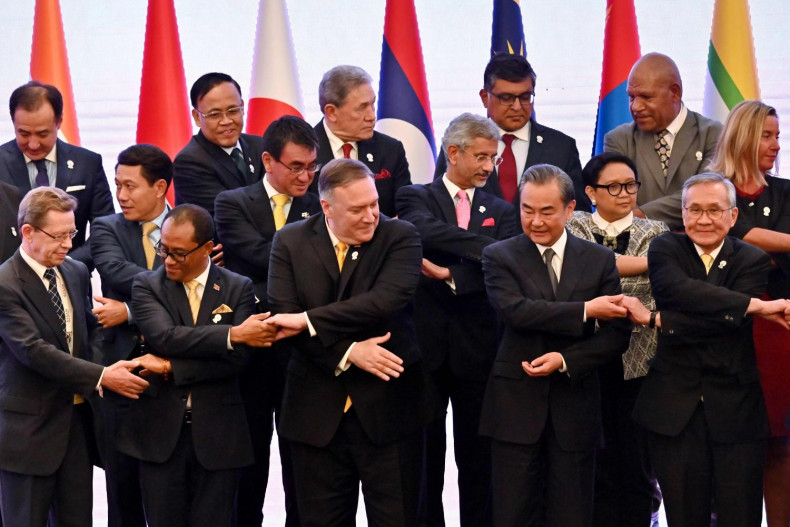
» The coronavirus pandemic is fundamentally global but its impact is mainly local because of the international system of state sovereignty, borders and divergent national interests. What is needed to cope with, contain and overcome the pandemic is more international cooperation and coordination. But we are seeing less international efforts to fight the virus together and more self-help where every nation fends for itself. The upshot from this fractured and fragmented international system during Covid-19 is the primacy of domestic determinants of international outcomes. Nowhere is this reality clearer than the competition and confrontation between the United States and China.

Lockdown peril haunts abusive homes
Oped, Boonwara Sumano, Published on 22/04/2020
» Some of the key policies to curtail the widespread transmission of the coronavirus or Covid-19 are city-lockdowns and self-isolation. The Thai government has been urging people to stay at home and shut down places for mass gatherings, including schools and childcare centres, since March 22.

Taking the fight to Covid-19 using simple mathematics
News, Worsak Kanok-Nukulchai, Published on 18/04/2020
» While the battle against the coronavirus outbreak is both drawn-out and multi-faceted, experts can draw on the intersection of mathematics and biology to arrive at specific simulations and projections.
China's misplaced pandemic propaganda
Asia focus, Minxin Pei, Published on 13/04/2020
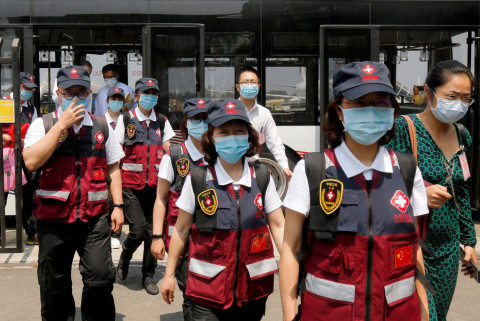
» Barely a month ago, China was in the grip of the Covid-19 coronavirus outbreak. Thousands of new infections were being confirmed every day. Hospitals were overwhelmed. People were dying by the hundreds. People couldn't leave their homes.
East-West divide underscored in Covid-19 controls
Oped, Jeffrey D Sachs, Published on 10/04/2020
» East Asian countries are outperforming the United States and Europe in controlling the Covid-19 pandemic, despite the fact that the outbreak began in China, to which the rest of East Asia is very closely bound by trade and travel. The US and Europe should be learning as rapidly as possible about the East Asian approaches, which could still save vast numbers of lives in the West and the rest of the world.

Mass testing best
News, Postbag, Published on 21/03/2020
» The most effective and cheapest way of controlling the Covid-19 pandemic will be to conduct mass testing of the population, as urged by eminent French infectious diseases expert Dr Didier Raoult. He has pointed out that cheaply mass produced testing equipment is already available and is being used effectively in South Korea. Countries, including Thailand, should build up this mass testing capability as fast as it can and test as many people as possible. That way it will be possible to isolate only those who test positive and it also makes it possible to treat those who start showing symptoms early which boosts the chance of a favourable outcome for them. This will be far more effective than locking down entire populations of people who are not infected and causing a massive economic dislocation in the process. In Thailand's case, it may cost US$325 million (10.5 billion baht) to test the entire population, but that would be a drop in the bucket compared to the $8 billion cost of a 5% decline in GDP.