



Showing 1 - 10 of 65
Adam Smith and the moral economy we have lost
Oped, Antara Haldar, Published on 12/11/2025
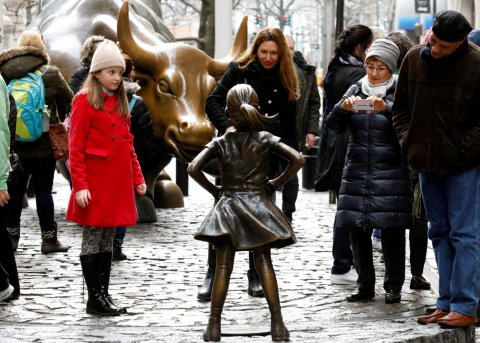
» With the 250th anniversary of The Wealth of Nations approaching next year, the world is gearing up to honour Adam Smith. But which Smith should be recognised? The hard-nosed "founding father" of modern economics, or the philosopher who wrote The Theory of Moral Sentiments? Scholars have wrestled with this question, a riddle known as "Das Adam Smith Problem", for centuries, because it concerns not just dualities within Smith's thought, but also our own uneasy relationship with morality and markets.

Measuring the economic impact of AI
Oped, Diane Coyle, Published on 24/10/2025
» Is AI transforming the economy in any real sense, or is the promise of rapid growth mere hype?

The postwar era's first democratic authoritarian
Oped, Antara Haldar, Published on 08/09/2025
» The 78th anniversary of India's independence last month offers an opportunity to recall one of the most insidious moments in the country's post-independence history: prime minister Indira Gandhi's 1975 decision to declare an emergency and suspend civil liberties. A new book by political scientist Srinath Raghavan, Indira Gandhi and the Years That Transformed India, not only revisits that fateful move, but also traces its lasting impact half a century later.

The high cost of cutting funding for vaccines
Oped, Bjorn Lomborg, Published on 04/09/2025
» Vaccines are a vital tool that save millions of lives every year. Concerningly, the US government wants to cut funding for a key organisation that saves lives around the world through immunisation. And amid vaccine safety debates, the world is seeing rising measles cases.
The incalculable costs of corrupt statistics
Oped, Diane Coyle, Published on 29/08/2025
» With GDP and employment figures dominating political debates, it is easy to forget that they are hardly timeless truths. In fact, how we measure progress has shifted dramatically over time. The Physiocrats -- eighteenth-century French economists who saw agriculture as the source of all wealth -- regarded farms' output as the most important economic indicator. The Soviet Union, for its part, focused exclusively on goods production and ignored services altogether.
Tiny Vanuatu steps up to protect the climate
Oped, Antara Haldar, Published on 28/08/2025
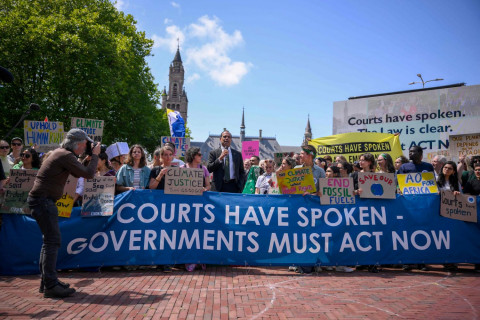
» Although the International Court of Justice (ICJ) turned 80 this year, there is a sense in which it has never felt younger. In a David-versus-Goliath moment, the tiny Pacific Island state of Vanuatu recently changed international law forever by bringing the world's most important issue before its highest court. The result is an ICJ advisory opinion on "the legal obligations of states in respect of climate change", as requested -- at Vanuatu's urging -- by the UN General Assembly (with 132 states co-sponsoring the resolution).

Trump hurting global trade in ideas
Oped, Sally Tyler, Published on 04/08/2025
» Much attention has been focused on Thailand's scramble to achieve a bilateral trade agreement with the United States to avoid a 36% tariff on all exported goods. Yet a different restrictive trade policy has received comparatively less scrutiny -- the Trump administration's clampdown on American universities, including a possible ban on the enrolment of international students.
Building infrastructure for the AI age
Oped, Diane Coyle, Published on 22/07/2025
» The London Underground, the world's oldest subway system, opened in 1863. Around the same time, London's modern sewage system was designed by civil engineer Joseph Bazalgette in response to the Great Stink of 1858, which brought parliament to a standstill. Planning far ahead, Bazalgette built the system to last 150 years. Only now, with the Thames Tideway project, is it being significantly expanded.
China believes it is winning Trump's trade war
Oped, Zongyuan Zoe Liu, Published on 17/07/2025
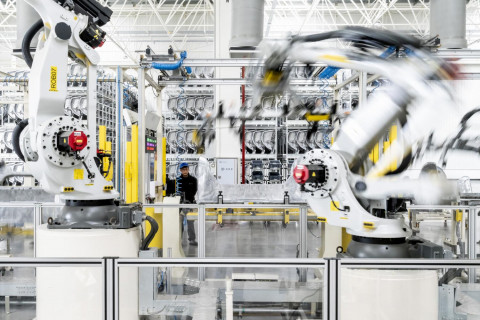
» The most recent trade talks between the United States and China in Geneva and London provided little more than temporary relief in the conflict between the world's two largest economies. Despite US President Donald Trump's efforts to tout the stopgap measures as a "deal" that benefits America, China reads the scoreboard differently -- and believes it is winning. From its vantage point, it has weathered the storm and emerged more confident, more self-reliant, and more convinced that its long game is paying off.
Forgetting what democracy is for and all about
Oped, Antara Haldar, Published on 10/07/2025
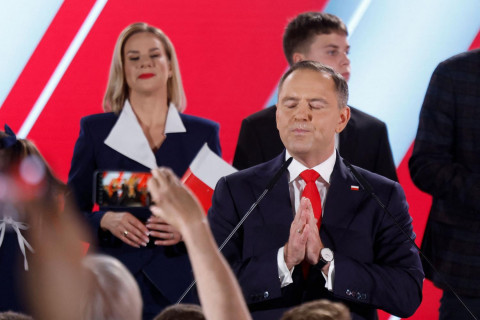
» On June 2, I got a sense of history coming full circle in the Polish town of Sopot, on the Baltic Sea just a few kilometres from the Gdańsk Shipyard. Sharing a stage at the Plenary Session of the European Financial Congress with Lech Wałęsa, the legendary trade unionist who led the 1980 Solidarity strike at the Lenin Shipyard and later became Poland's first post-communist president, I felt I was witnessing the end of an era.