




Showing 1 - 10 of 39
AI as Asia's new growth engine?
Oped, Lee Jong-wha, Published on 27/11/2025
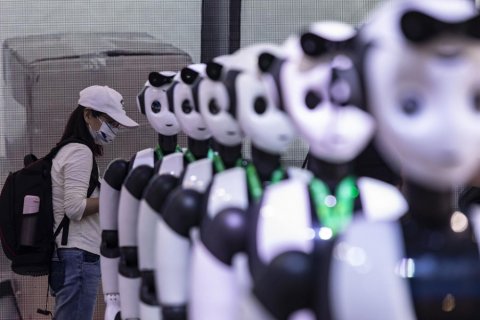
» Two decades after globalisation fuelled a global economic boom, growth has shifted onto a more subdued path, where it is likely to remain for the foreseeable future. Beyond the immediate shock of fragmenting trade and investment ties -- a result of rising geopolitical tensions, particularly between the United States and China -- lie structural headwinds, including population ageing, stagnant productivity, and the growing costs of inequality and natural disaster. These challenges strike at the heart of Asia's growth model.

China's unbeatable new export is not a product
Oped, Jeffrey Wu, Published on 24/07/2025
» The Chinese "cannot be allowed to export their way back to prosperity", argues US Secretary of the Treasury Scott Bessent, who claims that China's economy is the "most unbalanced in history". Such remarks reflect the growing fear in Washington that China's overcapacity, subsidies, and dumping are distorting global trade.

Thailand at intelligence crossroads
Oped, Worsak Kanok-Nukulchai, Published on 23/06/2025
» As the United States and China pour vast investments into artificial intelligence, we stand on the brink of a power shift more profound than the atomic age--one where machines, not humans, may soon drive the pace of progress. On the horizon is Artificial General Intelligence or AGI, where machines can perform any intellectual task that humans can do, but also think, reason, adapt and innovate. The signs are clear: we may be approaching the end of the pre-AGI era.
Centre-left parties must regain relevance in Germany
Oped, Bartosz M Rydlinski, Published on 01/03/2025
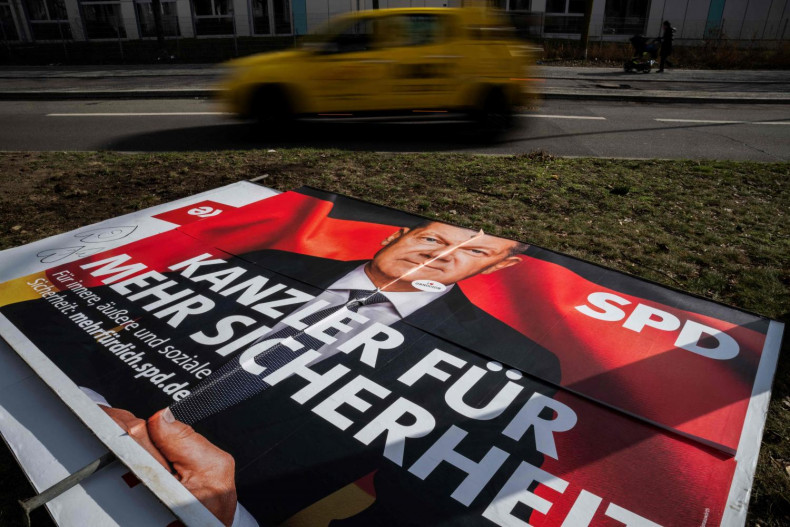
» Germany's Social Democrats are one of the West's oldest political parties, with a legacy of advocating parliamentary democracy, opposing Nazism, and leading the modernisation of postwar Germany. In addition to many notable labour, economic, and human-rights reforms the party has implemented over the years, ex-SPD leader and West German chancellor Willy Brandt's Ostpolitik in the 1970s laid the groundwork for Germany's reunification in 1990.

What's happened to the Asian Century?
Oped, Thitinan Pongsudhirak, Published on 14/02/2025
» Until recently, the "Asian Century" seemed a compelling narrative but now it is not what it used to be. It was supposed to herald a shift in global economic power from the West to the East, driven by China's rapid rise, India's economic dynamism, and the broader development of Asia. But a quarter of the way into the 21st century, the promise of Asian dominance appears less certain. The enduring technological and economic might of the United States, coupled with its geopolitical backlash against China, has lowered expectations. While Asia remains formidable, the trajectory of global power is open and fluid, with potential dominance shifting not necessarily to any nation or region but perhaps to a non-state entity.

Making sense of performance figures
Oped, Chartchai Parasuk, Published on 31/10/2024
» I have the duty of reviewing quarterly economic performances and making economic growth projections for a private research firm.

Kids: quality not quantity
Oped, Editorial, Published on 25/10/2024
» Labour Minister Phiphat Ratchakitprakarn recently floated a way of resolving the declining birth rate by increasing the amount of financial support to parents from 1,000 baht to 3,000 baht per month per child for a period of seven years.
'Time tax' rises despite modern tech innovations
Oped, Diane Coyle, Published on 04/07/2024
» Despite the rapid proliferation of artificial-intelligence chatbots and virtual assistants, finding an answer to a question that a company's software is not programmed to address can be frustrating. Searching through countless options on price-comparison websites for the best insurance policy or airline ticket can be equally exhausting. Yet, we tend to view this "time tax" as the cost of doing business in today's digitised global economy.

Democracy really needs to be more pro-worker
Oped, Daron Acemoglu, Published on 25/06/2024
» Even if the feared extremist wave did not quite materialise in the European Parliament election this month, the far right performed well in Italy, Austria, Germany, and especially France. Moreover, its latest gains have come on the heels of major shifts toward far-right parties in Hungary, Italy, Austria, the Netherlands, and Sweden, among others.
Beyond the hype: Gauging AI's true economic impact
Oped, Daron Acemoglu, Published on 30/05/2024
» According to tech leaders and many pundits and academics, artificial intelligence (AI) is poised to transform the world as we know it through unprecedented productivity gains. While some believe that machines soon will do everything humans can do, ushering in a new age of boundless prosperity, other predictions are at least more grounded. For example, Goldman Sachs predicts that generative AI will boost global GDP by 7% over the next decade, and the McKinsey Global Institute anticipates that the annual GDP growth rate could increase by 3-4 percentage points between now and 2040. For its part, The Economist expects that AI will create a blue-collar bonanza.