



Showing 1 - 10 of 15

Understanding an AI's 'thinking'
Life, James Hein, Published on 22/10/2025
» Over the past couple of weeks, I dived deep into the Alice In Wonderland-like rabbit hole of chatbots and AI systems. This was not your typical "ask a few questions", but more along the lines of jailbreaking the AI to get behind the scenes. You may remember earlier commentary on the code behind the query. This is where the guardrails and biases of the model are coded and why the majority of all AI systems are currently leaning to the Left of the political spectrum.

Android is now the new Apple
Life, James Hein, Published on 10/09/2025
» Some may be wondering why have I used an Android phone up to now compared to, say, Apple iPhone? In the beginning, it was for the following four reasons -- a headphone jack, a removable battery, the ability to insert an SD card for storage and the ability to load a program into the computer. That last part may sound a little strange but a 12GB device with 1TB of storage and a graphics unit built in is a computer now. The "program" loading here means you can put your own operating system on the device and install applications, bypassing the Play Store. So where are we now? No headphone jack, no SSD support, no removable battery and based on a recent announcement, no ability to "side-load" programs any more. In other words, Google phones have now or will soon be turned into iPhones.
AI will overpromise and underdeliver
Life, James Hein, Published on 27/08/2025
» Let's start with a few brief comments on the current state of artificial intelligence. Specially targeted and trained AI models are improving. These are things like detecting something in an X-ray or hunting for potential chemical candidates for a compound to attack a specific condition. Generating pictures and videos is also improving rapidly, and by the end of the year the majority of people will not be able to tell the difference between the real thing and the AI fake. Large Language Models are still unpredictable and can give false or fake answers depending on the structure of the prompts, so be careful with the answer you get from these. The current corporate buy-in for AI is well beyond what it can deliver. This is driven by marketing, not the actual state of capabilities. My prediction is there will be a lot of out-of-pocket organisations of all types disappointed by results.

Online Safety Act is a bad joke
Life, James Hein, Published on 13/08/2025
» The UK now has their Online Safety Act (OSA) and Australia is blindly following in their footsteps. In the UK it didn't take very long for the tech aware under-18s to bypass all the rules and regain access to adult content. Think about it, if China can't completely block everything do you think the UK had any chance? There were some creative solutions but the most common was a simple Virtual Private Network (VPN). In related news, some VPN companies reported a 1,400% increase in sign-ups since the OSA came into force.
Will Tesla's camera-only autonomy prove its mettle?
Life, James Hein, Published on 02/07/2025
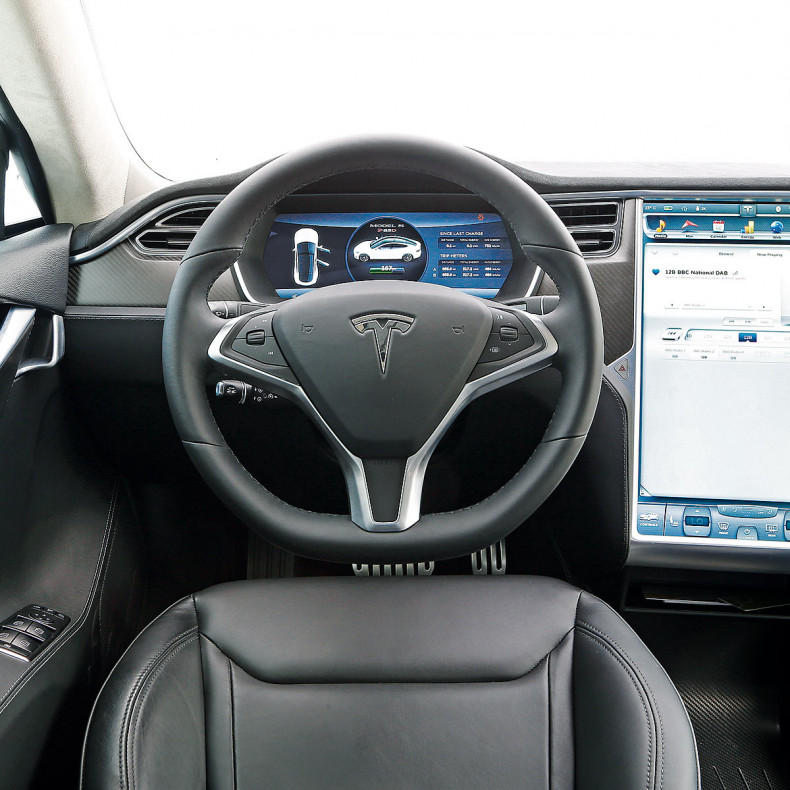
» I'm still not convinced that Tesla's camera-only approach will work well in all situations. According to a quick AI search, Elon doesn't like Lidar based on "cost, complexity, and philosophical disagreement with its necessity". Other manufacturers seem to have no problem with the first two of these and I challenge his last reason. I would have thought that a combination of available technologies would give you the safest options for all circumstances.

OpenAI's search for profit is a risk
Life, James Hein, Published on 26/02/2025
» Is Sam Altman potentially the most dangerous person on the planet? An interesting question. Sam Altman is the CEO of OpenAI, the company that made the AI that everyone knows as ChatGPT. The original aim of OpenAI back in the day, when Elon Musk was involved, was a fully open-source product that would be scrutinised and controlled by the wider population. In contrast, the focus of Altman appears to be money. OpenAI is currently looking for an injection of funds to make it a fully commercial enterprise. When that is the focus, safety is a secondary consideration and you can end up with Skynet. The current estimate for GAI or AGI (artificial general intelligence) is as soon as next year, but perhaps two to three. Readers will know my opinion on these estimates. So OpenAI may just as well now be called ClosedAI because it's all about the potential income and is really one of the potentially dangerous AI platforms available today.

What is an AI PC?
Life, James Hein, Published on 19/06/2024
» Last week I suggested that you would need something like a PC to run deep AI on your device. At Taiwan's recent Computex, there was the claim that they will sell tens of millions of "AI PCs". The problem is that the definition of an AI PC and what specs it needs is still vague.

Imagining a world without cash
Life, James Hein, Published on 08/05/2024
» How safe are you in a purely digital economy? If you are carrying cash, someone can of course rob you, or you can lose it or give it to someone. You can also have a stash of it at home for emergencies or for buying something from a garage sale. For the most part, you retain control over any cash you manage. Electronic cash can still be stolen and your ability to spend it can be taken by someone else if your details get into the wrong hands. However, it's convenient, just tap and go, or in some cases, just wave your smartphone over a pad. While you have no idea where your money actually is, a small piece of plastic, your watch or a phone can retrieve it for you for a payment. You can even use it to get cash from a wall.

AI is causing concern again
Life, James Hein, Published on 06/12/2023
» There have been two big stories in the IT world over the past couple of weeks. The biggest one concerns OpenAI and its three-day boardroom drama. In a nutshell, the board voted Sam Altman and other members out of the company. The next day, Microsoft picked them up and anyone else who wanted to head over to a new division. That same day, 700-plus employees of OpenAI signed a letter saying they would go if a rogue board member did not quit and bring Sam Altman back. On the third day, Sam was back and three board members were gone.

The new normal of AI fakes
Life, James Hein, Published on 11/10/2023
» Following on from my last article, consider the following scenario. You've grabbed enough clear speech of someone to make a good AI model of them. You write up some text, pass it through the model and verify that the result sounds exactly the same as that individual. This is a little different from the previous example because it's a text to speech model, but essentially the same as using one voice to change to another. You now take a speech or interview from that person, change one word that will essentially change the context, and process this.