



Showing 1 - 10 of 71
What to expect in the year ahead
Life, James Hein, Published on 31/12/2025
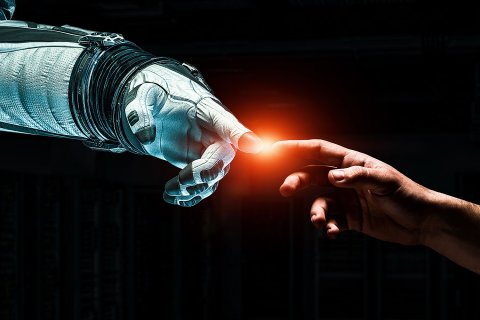
» The coming year will be full of artificial intelligence, robots and a Starlink communications experience that will have many moving from their current providers. Let's dig in with my predictions for 2026.

Sabine has the science you're after
Life, James Hein, Published on 08/10/2025
» Sabine Hossenfelder is one of the people I regularly watch on the YouTube platform. She is a physicist but also veers into other areas such as artificial intelligence and quantum computing. For her latest video -- In Which I Lose Faith In Quantum Computing -- she makes a number of interesting observations. In short, apart from some very specific applications, quantum computing, even if it is scalable from current technology, has limited application. It also has the potential of bringing down a number of current companies highly focused on this technology, or at least some of their divisions. Artificial intelligence takes up a lot of the space that quantum computing could do well in, but for the present at least, AI does it better. The next 10 years, or less, will be important to see how both of these directions develop, or not. If you are interested at all in physics, maths and occasionally quantum computing, then Sabine Hossenfelder provides some interesting perspectives.

Android is now the new Apple
Life, James Hein, Published on 10/09/2025
» Some may be wondering why have I used an Android phone up to now compared to, say, Apple iPhone? In the beginning, it was for the following four reasons -- a headphone jack, a removable battery, the ability to insert an SD card for storage and the ability to load a program into the computer. That last part may sound a little strange but a 12GB device with 1TB of storage and a graphics unit built in is a computer now. The "program" loading here means you can put your own operating system on the device and install applications, bypassing the Play Store. So where are we now? No headphone jack, no SSD support, no removable battery and based on a recent announcement, no ability to "side-load" programs any more. In other words, Google phones have now or will soon be turned into iPhones.
Will Tesla's camera-only autonomy prove its mettle?
Life, James Hein, Published on 02/07/2025
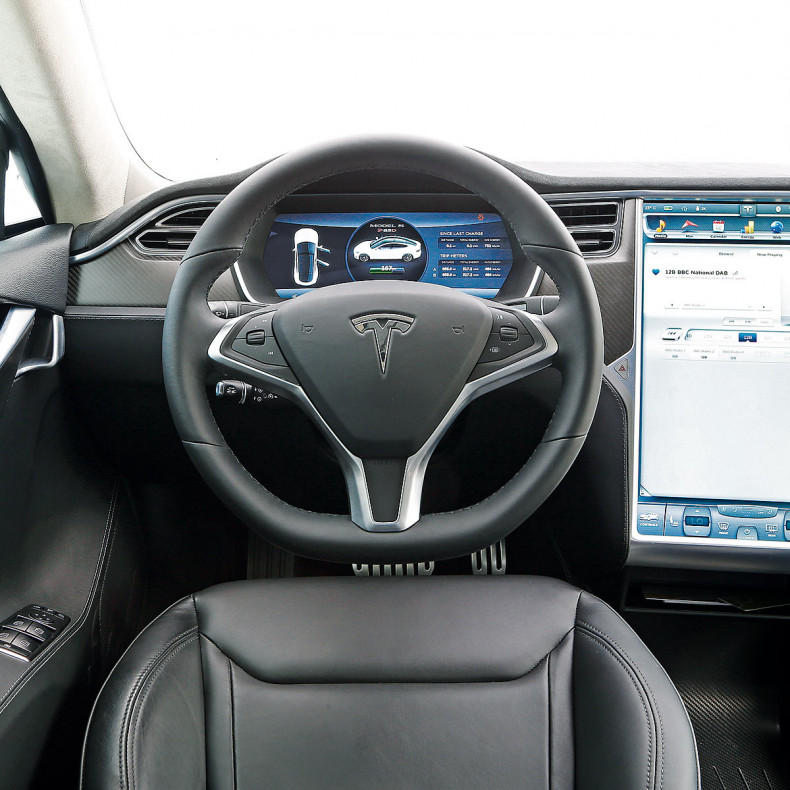
» I'm still not convinced that Tesla's camera-only approach will work well in all situations. According to a quick AI search, Elon doesn't like Lidar based on "cost, complexity, and philosophical disagreement with its necessity". Other manufacturers seem to have no problem with the first two of these and I challenge his last reason. I would have thought that a combination of available technologies would give you the safest options for all circumstances.

Connectivity conundrums
Life, James Hein, Published on 18/06/2025
» I'm travelling as I write this, so I thought it would be a good time to cover things like connectivity and the kind of issues I face even in 2025. Connectivity will typically revolve around your smartphone and I recommend you prepare for this in advance. Option one is a new sim card that you put in when you get to your destination.

Is your internet speed too slow?
Life, James Hein, Published on 09/04/2025
» How important is a good internet connection? This is one of those how long is a piece of string or what computer should I get questions. Back in the day, it was a huge jump from zero bits per second to a 2400 Baud modem. People and businesses were willing to pay a large sum to get connected because it opened up a new world of possibilities, ranging from not needing to go to the library as often and being able to sell and market products online. When and how often you paid for the next upgrade depended on your use case and the capabilities it provided. The next major jumps in speed were 4800, 9600 and 14400bps and everyone jumped to one of these as a next step. During this period, the mid 90s, the T1 at 1.544Mbps was the imaginary godlike speed we all dreamed about but didn't have money to afford. That speed provided real time video conference calls and was limited to government and large business concerns that typically involved a dedicated screening room. This was also when the concept of data compression started to gain popularity as you could send more with less bits.

AI, LLMs still got those data blues
Life, James Hein, Published on 12/02/2025
» The past weeks have been very heavily tilted towards artificial intelligence (AI) news. Before I cover some of it, a reminder that generative AI (gAI) is not the same as General AI (G-AI). The former is where the model can make some inferences, the latter is an AI system that can perform just like a human across multiple subject areas.

What's the state of AI today?
Life, James Hein, Published on 28/08/2024
» Recently, I've talked with a few people about artificial intelligence and watched a few presentations. The gap between what some people think are AI capabilities and actual capabilities is a big one.

Rabbit R1's AI action intrigues
Life, James Hein, Published on 31/01/2024
» A new device out of CES 2024 in Las Vegas caught my eye. At first glance, the Rabbit R1 doesn't look all that interesting. It's a US$199 (in America), orange, handheld device that looks like an old-style gaming machine of some kind about the size of a stack of Post-It notes. It comes with a 2.88-inch touchscreen, a camera, a voice command button and a 4G LTE SIM card slot for connectivity beyond Wi-Fi. This is not a smartphone and won't replace it as there are no onboard apps, it won't pair with your smartphone and it doesn't talk to application APIs like cloud service gateways.
AI is the new marketing buzzword
Life, James Hein, Published on 08/11/2023
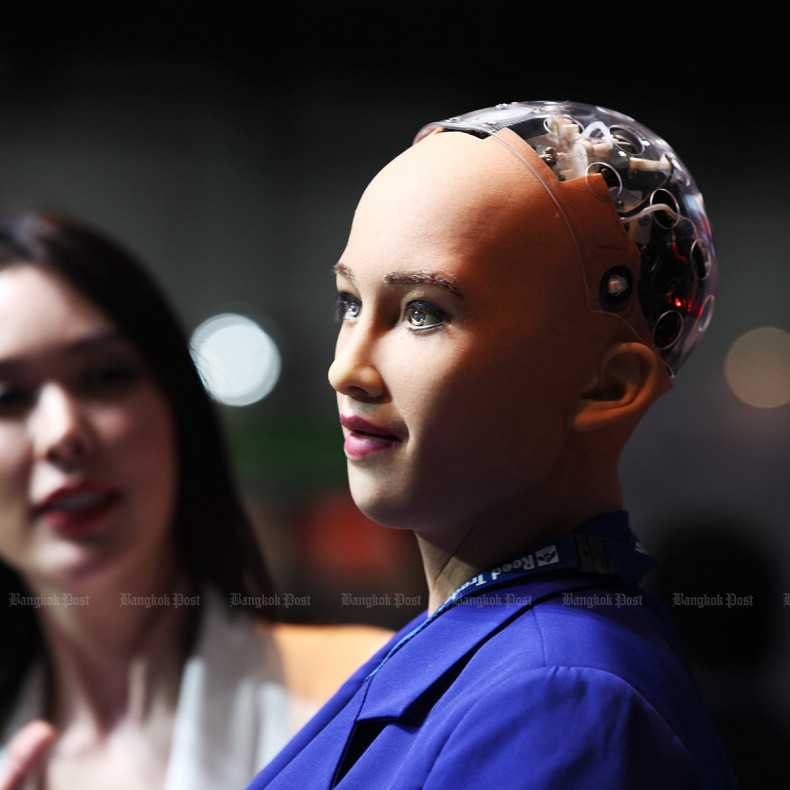
» Some readers will remember back a decade or three when the big term was "turbo". Everything was turbo something. Turbo speed, turbo clearing, turbo graphics and so on. Today, the equivalent term is AI. I saw an advertisement recently for glasses described as AI technology that adapts to your sight. It was a regular lens with some design elements, perhaps from an AI, perhaps not, with claims of predictive focus. Rubbish. There was no inherent active or dynamic AI technology in the lenses to back up this claim and I don't think such a technology at that level is even available at any price in the current time. The same goes for many other claims preceded or appended by the AI moniker. Like turbo, it is the current marketing buzzword and since many don't understand it and what the current engineering and technological limitations are in 2023, it has become part of the mindscape.