



Showing 1 - 10 of 298
Japanese PM Takaichi comes out on top
Oped, Taniguchi Tomohiko, Published on 11/02/2026
» Japanese Prime Minister Sanae Takaichi has just scored an unprecedented victory in the country's general election. The ruling Liberal Democratic Party (LDP), which she leads, won 316 seats in the 465-member House of Representatives (the Diet's lower house), up sharply from 198. The combined strength of two parties that had merged hastily -- despite their fundamentally opposing platforms -- in an effort to bring Ms Takaichi down fell from 167 seats to just 49. The LDP, which celebrated its 70th anniversary last year, has never looked more robust.

Future of AI will be written in nuts and bolts
News, Anuj Ranjan, Published on 02/02/2026
» For private equity investors, the real question surrounding artificial intelligence isn't whether it will transform industries. It's how those transformations will translate into real returns.

Future will be decided in classrooms
Oped, Ken Legins and Somchai Jitsuchon, Published on 26/01/2026
» On Feb 8, people across Thailand will head to the national election.

Plentiful policy on offer
Oped, Editorial, Published on 19/01/2026
» Thailand is heading towards a consequential general election on Feb 8. In the weeks leading up to polling day, voters have been bombarded with policy proposals from across the political spectrum. Many are attractively packaged and, if fully realised, would seemingly transform the country overnight.

‘Mai pen rai’ paradox: from kindness to toxic silence
Juranan Soranet, Published on 07/01/2026
» "Mai pen rai" (It’s okay/never mind) is perhaps the most classic Thai phrase, symbolising kindness, compromise and a go-with-the-flow attitude. It is the hallmark of Thai charm. However, in a modern world driven by consumer rights and accountability, the harmless phrase is becoming a double-edged sword. We are witnessing the rise of "Toxic kreng jai" — an excessive form of considerateness where we suppress our own rights just to avoid being labelled "demanding".
How world order looks after 2025
Oped, Yuen Yuen Ang, Published on 05/01/2026
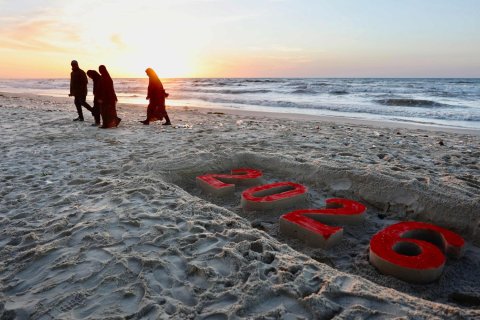
» For mathematicians, 2025 may stand out as a "perfect square": 45 multiplied by 45, a rare symmetry. But its significance goes far beyond numerical elegance -- it marks the year the postwar global order expired and a new one began.
Not even the penguins were spared
Roger Crutchley, Published on 28/12/2025
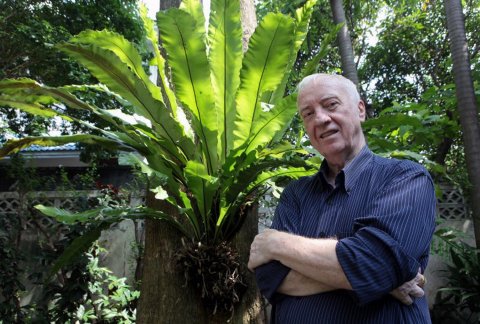
» Well, we've just about slithered our way through the Year of the Snake. Suffice to say, 2025 wasn't much fun. At least the previous year we had the "Happy Hippo" which kept us vaguely amused in a daft sort of way.
Early education transforms lives
Oped, Justin van Fleet & Pia Rebello Britto, Published on 09/12/2025
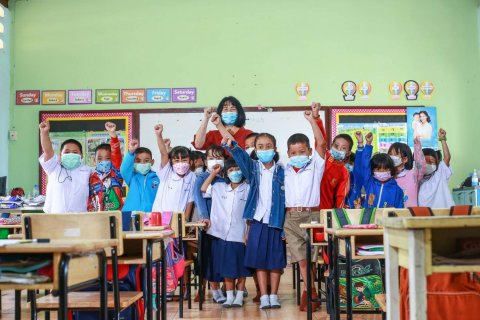
» The leaders' declaration adopted at the end of the recent G20 summit in South Africa reaffirmed the group's commitment to tackling some of the world's most pressing challenges, from inequality and long-running conflicts to AI and climate change. It also marked a historic milestone: for the first time, the G20 identified education as one of its top global priorities.
AI as Asia's new growth engine?
Oped, Lee Jong-wha, Published on 27/11/2025
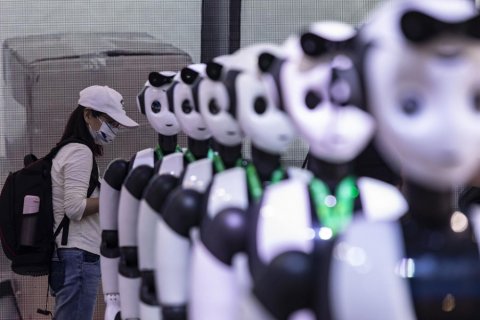
» Two decades after globalisation fuelled a global economic boom, growth has shifted onto a more subdued path, where it is likely to remain for the foreseeable future. Beyond the immediate shock of fragmenting trade and investment ties -- a result of rising geopolitical tensions, particularly between the United States and China -- lie structural headwinds, including population ageing, stagnant productivity, and the growing costs of inequality and natural disaster. These challenges strike at the heart of Asia's growth model.

Land Bridge built on shaky science
Editorial, Published on 23/11/2025
» The planned Land Bridge megaproject and its deep-sea ports in the South pose no environmental threats because the seas there are already barren -- or so the government's study claims. Science, however, shows the opposite.