




Showing 1 - 10 of 3,391

Navigating between global superpowers
News, Vitit Muntarbhorn, Published on 14/02/2026
» Both China and the US issued new national security policies over the past year. At first glance, they seem to diverge markedly, portending a deep rupture in the world order. Yet, they may also bear some similarities in terms of self-interest and self-advancement. Collateral to that, other countries seeking to forge a middle path may wish to navigate a perspicacious route towards global equilibrium.

Thin buyer guide
Oped, Postbag, Published on 11/02/2026
» Re: "Choosing the right air purifier for Thailand's rising air pollution", (Life, Feb 8).

Thailand reconsiders its foreign policy
News, Kavi Chongkittavorn, Published on 10/02/2026
» Thai foreign policy was elevated to a high priority on the policy platforms of many political parties during Sunday's general election. The stakes have risen enormously due to growing public interest following the conflict with Cambodia.

Today's date with national destiny
Oped, Editorial, Published on 08/02/2026
» Thailand has a double date with destiny today. As the polls open across all 77 provinces, it is imperative for citizens to exercise their right to vote in both the general election and the constitutional referendum.

All eyes trained on coalition maths
News, Chairith Yonpiam, Published on 07/02/2026
» As the election campaign enters its final stage, with more than 53 million eligible voters heading to the polls tomorrow, experts are making their final tea-leaf readings.

Rethinking global health finance
Oped, Walter O Ochieng & Tom Achoki, Published on 06/02/2026
» For the past half-century, the economics of global health were straightforward. Under the so-called "grant-based" approach, rich countries donate to poor countries, which use the funds to meet their populations' health needs. Success was measured by services provided or lives saved, rather than by balance sheets. While this model was far from perfect, the latest approach replacing it -- focused on using tools like guarantees and blended finance to crowd in private capital -- threatens to produce even worse outcomes.
Our tariff-era dollar, your problem
Oped, Qiyuan Xu, Published on 04/02/2026
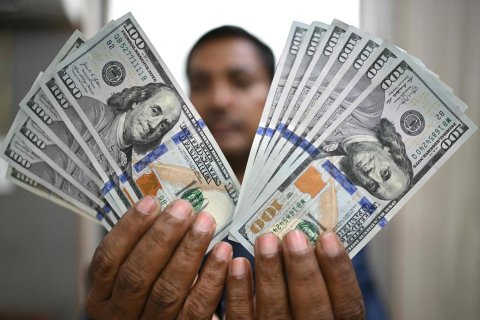
» In 2025, the dollar index, which measures the greenback's strength against a basket of major currencies, fell by roughly 9.4%. Over the same period, the United States' average effective tariff rate rose by around 14.4 percentage points, from 2.4% to 16.8%, according to the Yale Budget Lab. Taken together, these shifts imply that, in the import trade domain, the US experienced an effective exchange-rate depreciation of around 24%.

Future of AI will be written in nuts and bolts
News, Anuj Ranjan, Published on 02/02/2026
» For private equity investors, the real question surrounding artificial intelligence isn't whether it will transform industries. It's how those transformations will translate into real returns.

EC must act, not observe
News, Editorial, Published on 02/02/2026
» With less than a week to go before the national election, reports of vote-buying are growing louder -- and more brazen.
Middle powers can do their bit
News, Moreno Bertoldi & Marco Buti, Published on 02/02/2026
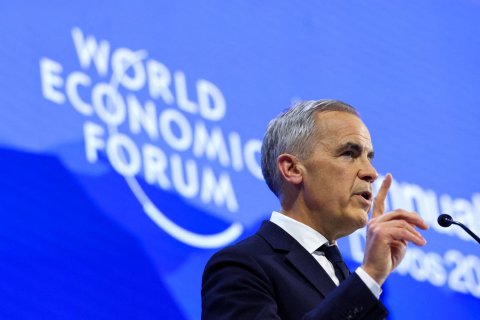
» Amid escalating geopolitical tensions, the world is increasingly caught between the United States -- an extractive superpower -- and China, a "dependency superpower" whose global influence rests on making other countries reliant on its exports. In the absence of meaningful resistance, both are likely to remain on this course, leaving middle powers to comply with their demands or face retaliation.